
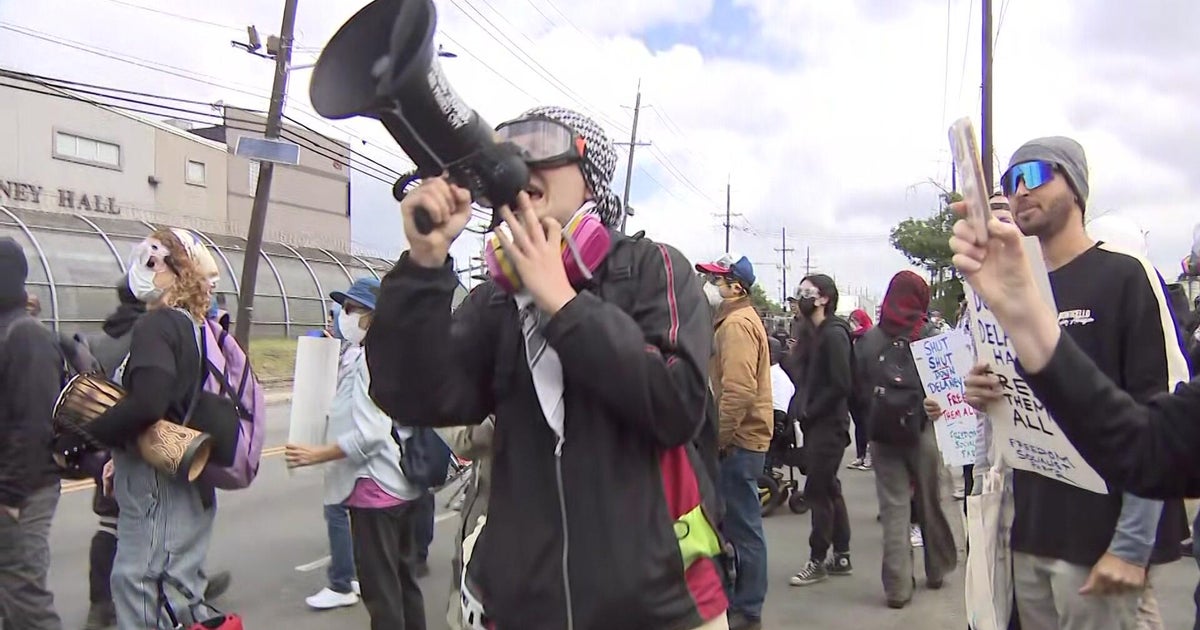
Protests outside the Delaney Hall ICE detention center in Newark escalated into clashes with state police, with protesters given 15 minutes to leave the designated zone and at least three people detained. Gov. Mikie Sherrill said New Jersey State Police intervened to protect public safety, while DHS denied claims of poor food and medical care and said detainees receive three meals a day and comprehensive medical access. The story is primarily a domestic politics and law-enforcement issue with limited direct market impact.
The market impact here is less about the protest itself and more about the probability that ICE becomes a persistent political flashpoint into the next few news cycles. For the ticker in scope, the setup is asymmetric to the downside if legal or operational scrutiny expands: even without a direct revenue hit, heightened visibility raises the odds of injunctions, permit delays, staffing friction, and higher security/compliance costs. In other words, the near-term risk is not demand destruction but execution drag and headline discounting.
The second-order effect is that the issue can migrate from a local law-enforcement story into a broader campaign issue on detention capacity, private facility oversight, and state-federal friction. That matters because once governors and AGs are publicly involved, the narrative can stretch from days to months, which is when procurement, contracting, and financing assumptions start to matter. If additional facilities become focal points, peers tied to detention operations, security services, and border-enforcement infrastructure could see a sympathy de-rating even if they are not named in the coverage.
The contrarian angle is that the current move may be modest relative to the binary political risk. If inspections find no major abuse, the headline premium can evaporate quickly; if they do, the downside can re-rate hard because this shifts from protest noise to litigation and contract risk. The key monitor is whether the situation remains localized over the next 72 hours or whether it broadens into state-level legal action or federal oversight, which would materially extend the time horizon of the trade.
AI-powered research, real-time alerts, and portfolio analytics for institutional investors.
Request TrialOverall Sentiment
mildly negative
Sentiment Score
-0.20
Ticker Sentiment
