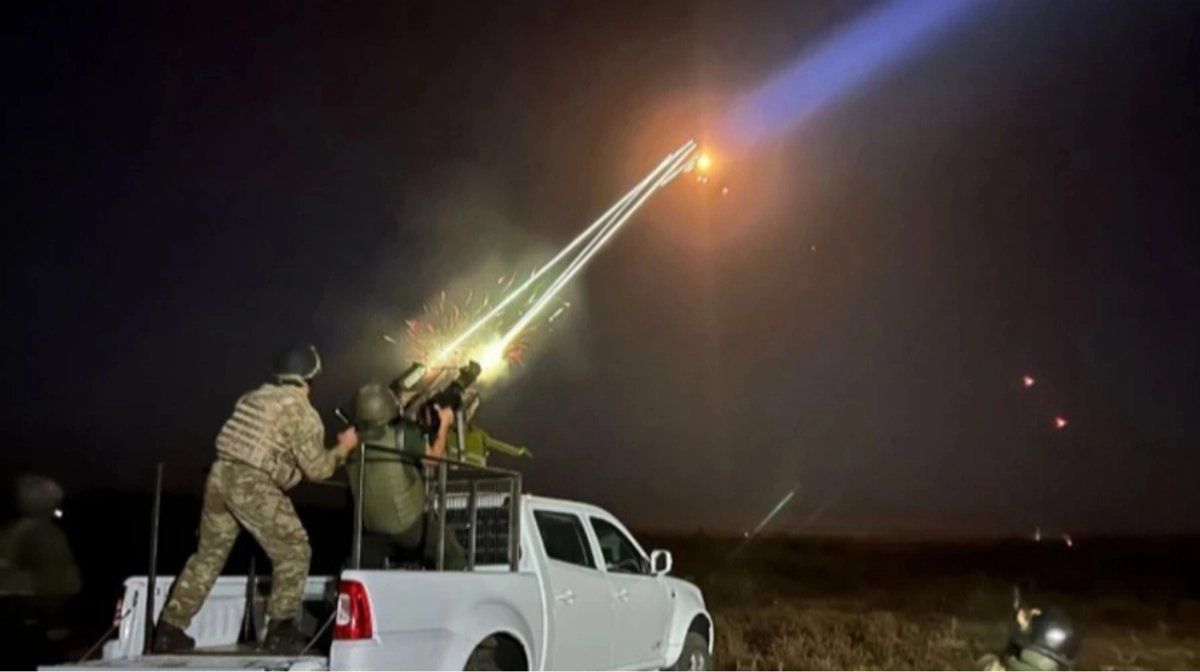
Russia launched 142 drones against Ukraine overnight on 19-20 March, including some jet-powered UAVs, with Ukrainian air defenses reporting 113 drones destroyed or jammed. Authorities recorded 28 hits across 18 locations and debris falls at 6 locations, while the attack remained ongoing. The strike underscores continued escalation in the war and keeps geopolitical risk elevated.
This is less about headline damage and more about the erosion of defensive elasticity. Sustained drone saturation forces Ukraine to spend scarce interceptors, EW capacity, and crew-hours on low-cost inbound systems, which is an unfavorable exchange rate for the defender and a subtle positive for any Russian campaign that relies on volume over precision. The use of jet-powered UAVs matters because it nudges the threat profile upward: faster targets compress reaction time, increase leak-through rates, and raise the marginal value of layered air defenses, sensors, and automated command-and-control.
The second-order winner is the air-defense industrial base, not because this one strike changes the war, but because it reinforces procurement urgency across Europe. Systems that can be delivered in quantity and integrated quickly should see the strongest demand signal, especially point defense, counter-UAS, radar, EW, and munitions replenishment. The longer the conflict persists with this attack pattern, the more the market should separate "headline defense" from companies with actual production bottlenecks and order-book conversion risk.
The contrarian risk is overestimating near-term escalation while underestimating procurement lag. These events are supportive for defense equities over months, but they do not automatically translate into immediate revenue unless contract flow and production capacity are already in place. A ceasefire or successful diplomatic reset would compress the trade quickly, and any evidence that low-cost intercept solutions are improving would reduce the premium for traditional missile-heavy defenses.
Bottom line: the setup favors defense names tied to counter-UAS and missile inventory replenishment over platform-heavy primes, with the best risk/reward in names that can turn urgency into backlog within two quarters. Near term, expect volatility around any follow-on strike data; over 3-6 months, the market should continue to pay up for suppliers that help defend fixed infrastructure at scale.
AI-powered research, real-time alerts, and portfolio analytics for institutional investors.
Request DemoOverall Sentiment
moderately negative
Sentiment Score
-0.35
