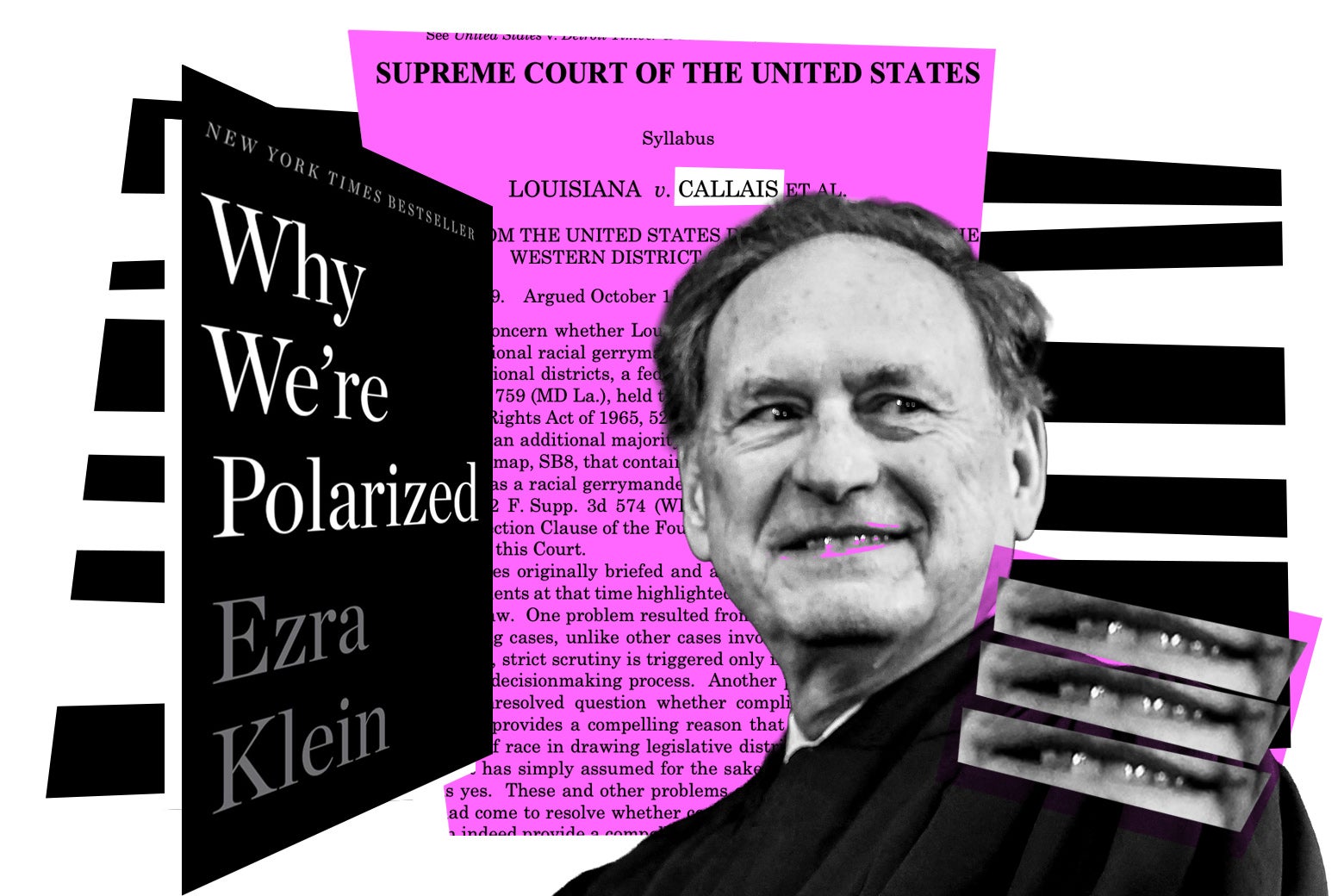
The Supreme Court’s Louisiana v. Callais ruling effectively narrows the Voting Rights Act by allowing racially discriminatory maps to be reframed as partisan gerrymanders. The article argues this could nullify key protections against racial vote dilution, with major implications for multiracial democracy and future redistricting challenges. The piece is primarily legal and political commentary, with limited direct market impact.
The immediate loser is not just the VRA as a legal regime, but the entire ecosystem of redistricting services, voting-rights plaintiffs, and civic-tech groups that monetize or support litigation over district maps. If courts can reclassify race-based dilution claims as partisan sorting, the economic moat around voting-rights enforcement narrows materially: fewer meritorious cases, lower settlement values, and a longer-run decline in fee-generating litigation tied to map challenges. The second-order winner is any incumbent political machine capable of maximizing map efficiency without explicit racial language, because the ruling raises the evidentiary bar for challengers while preserving plausible deniability.
For markets, the relevant horizon is months to years, not days. The most acute catalyst is the next wave of post-2026 redistricting and election-cycle litigation, where plaintiffs will face a higher probability of dismissal before discovery. That creates a tail risk for state-level democracy reforms, municipal election contests, and NGO funding flows, because donors tend to retreat when legal efficacy falls below a threshold. The more durable effect is institutional: law firms and advocacy groups may shift capital away from VRA litigation toward state constitutional claims, DOJ investigations, and ballot-access fights, which are slower, costlier, and less scalable.
The contrarian view is that the ruling may be over-read as a clean win for one side. By explicitly collapsing race into party, the Court gives future litigants a more coherent record to attack maps under disparate-impact and First Amendment theories, and it may accelerate legislative responses in blue states that create new compliance burdens. In other words, the short-term underpricing is in legal defense budgets and political consulting demand, while the longer-term overhang is a broader legitimacy premium on institutions that can credibly certify elections and maps. That supports a tradeable divide between firms exposed to public-sector democracy administration and those tied to election litigation or redistricting advisory work.
AI-powered research, real-time alerts, and portfolio analytics for institutional investors.
Request DemoOverall Sentiment
strongly negative
Sentiment Score
-0.55
Ticker Sentiment
