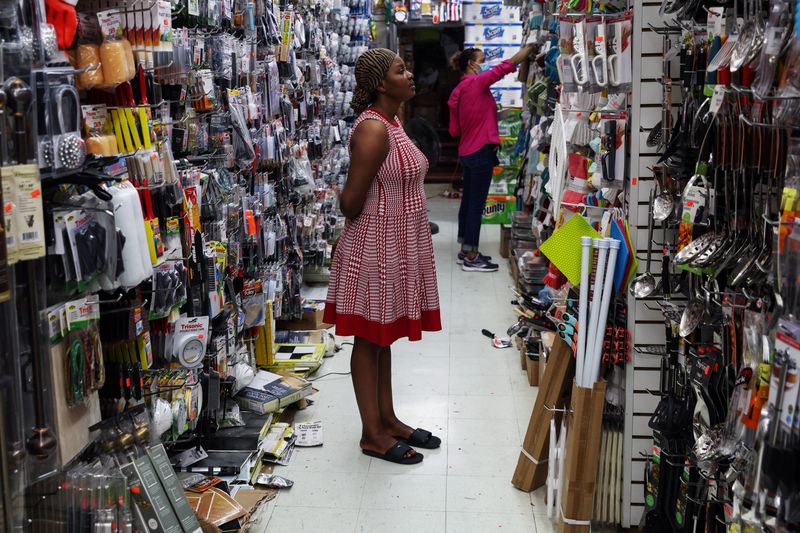
Bernstein estimates the U.S. has ~24 sq ft of retail space per person and that 2–6 billion sq ft (roughly 15,000–40,000 large-format stores) could become redundant as e-commerce rises to ~17% of retail from 3% in the early 1990s. The report expects many closures to be repurposed into gyms, healthcare, self-storage, schools, housing or logistics/dark stores, with warehouse clubs and home-improvement chains relatively resilient while traditional mass retailers face greater structural pressure. This is a long-term structural shift that should pressure mall and big-box landlords but create opportunities in last-mile logistics and adaptive reuse.
The largest non-obvious impact is capital-allocation flow: converting 2–6bn ft² of retail into logistics/medical/self-storage is a multi-hundred-billion dollar capex and muni/zoning exercise that shifts cashflow from traditional retail landlords to industrial/logistics owners and local service providers (construction, HVAC, racking, automation). If conversion averages $30–$80/sqft, the implied capex pool is roughly $60bn–$480bn spread over a multi-year cycle, creating durable demand for last-mile footprints and contractors while pressuring mall-specialist balance sheets that lack scale or access to cheap capital.
Second-order winners are landlords with flexible zoning, low-cost balance sheets and dense urban portfolios — they can monetize option value by subdividing footprints into fulfillment nodes, healthcare clinics, or residential overlays. Losers include small-cap mall operators, regional banks and CMBS tranches concentrated in tertiary retail markets where conversion economics fail (high remediation cost, poor demographics, zoning resistance); those pockets will see slower recovery and higher loss severities.
Key catalysts and timing: expect the first wave of economically rational conversions within 12–36 months for suburban strip centers (lowest friction), with more complex mall-to-mixed-use transformations taking 3–7 years. Reversals occur if (a) e-commerce growth stalls due to macro shock, (b) rates remain elevated so cap-rate expansion makes conversion uneconomic, or (c) local political resistance raises carrying costs — any of which compress the capex pool and favor opportunistic buyers over operators.
Alpha will come from optionality — owning high-quality industrial landlords and shorting undercapitalized retail landlords while hedging rate risk and municipal/zoning execution risk. Focus on assets where physical conversion is low-capex and high-demand (single-floor big-box to dark store/last-mile) rather than headline mall repositioning, which is capital and calendar intensive.
AI-powered research, real-time alerts, and portfolio analytics for institutional investors.
Request DemoOverall Sentiment
neutral
Sentiment Score
0.00
