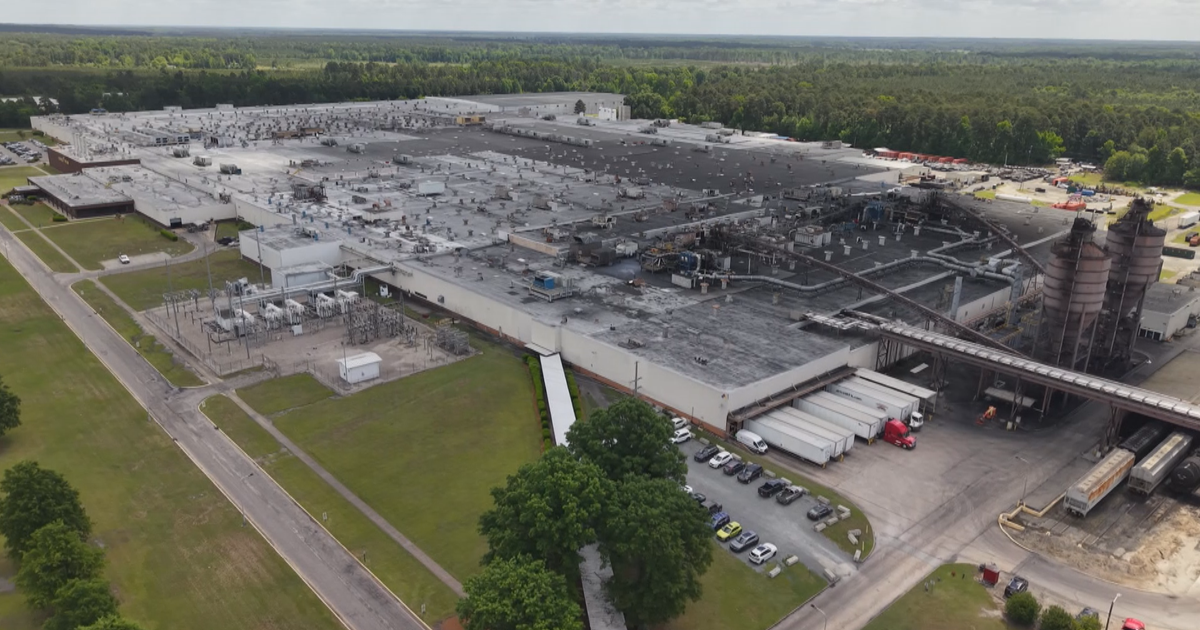
Goodyear will close its Fayetteville plant next year, eliminating 1,700 jobs and ending decades of local manufacturing activity. Fayetteville-Cumberland County officials said industrial shutdowns have now cost the area 2,300 jobs over the past five years, though about 2,000 jobs have been added through recent industrial expansions and another 375 are in construction or newly announced projects. The closure is a clear local economic headwind but is unlikely to move broader markets.
The key signal is not the single plant closure; it is the widening gap between legacy heavy manufacturing exit and replacement demand from logistics, warehousing, and light industrial users. That mix tends to favor names tied to site development, lease-up, and distribution buildout rather than capital-intensive production, so the near-term equity winners are the landlords, developers, and infrastructure enablers that can absorb displaced labor and repurpose brownfield capacity faster than greenfield peers.
For NVR specifically, the setup is subtle: a regional manufacturing shock can be a medium-term housing tailwind if laid-off workers stay local and reallocate from industrial wages into residential demand, but that effect is usually delayed 6-18 months and only matters if hiring elsewhere remains strong. The bigger second-order effect is on municipal incentives and land pricing: local officials will likely overcompensate with tax abatements and expedited permits to land replacement employers, which compresses returns for new industrial entrants while improving probability of announcement flow.
The bearish angle is that repeated closures can become self-reinforcing if talent starts to view the region as structurally unstable, which raises labor turnover costs for future employers and can slow absorption of the exact sites being marketed. The contrarian case is that the market may be overestimating the economic drag and underestimating replacement velocity: logistics and e-commerce users often care more about workforce availability than the specific prior use, so asset re-tenanting could happen faster than consensus expects if local wage rates reset downward.
From a timeline standpoint, the first-order equity impact is mostly months, but the real P&L catalyst is 12-24 months out: whether the county converts job losses into taxable industrial investment or slips into a slow-decline narrative. If replacement announcements continue, the closure becomes a one-time disruption; if not, local commercial real estate, tax receipts, and housing affordability all deteriorate together.
AI-powered research, real-time alerts, and portfolio analytics for institutional investors.
Request DemoOverall Sentiment
strongly negative
Sentiment Score
-0.55
Ticker Sentiment
