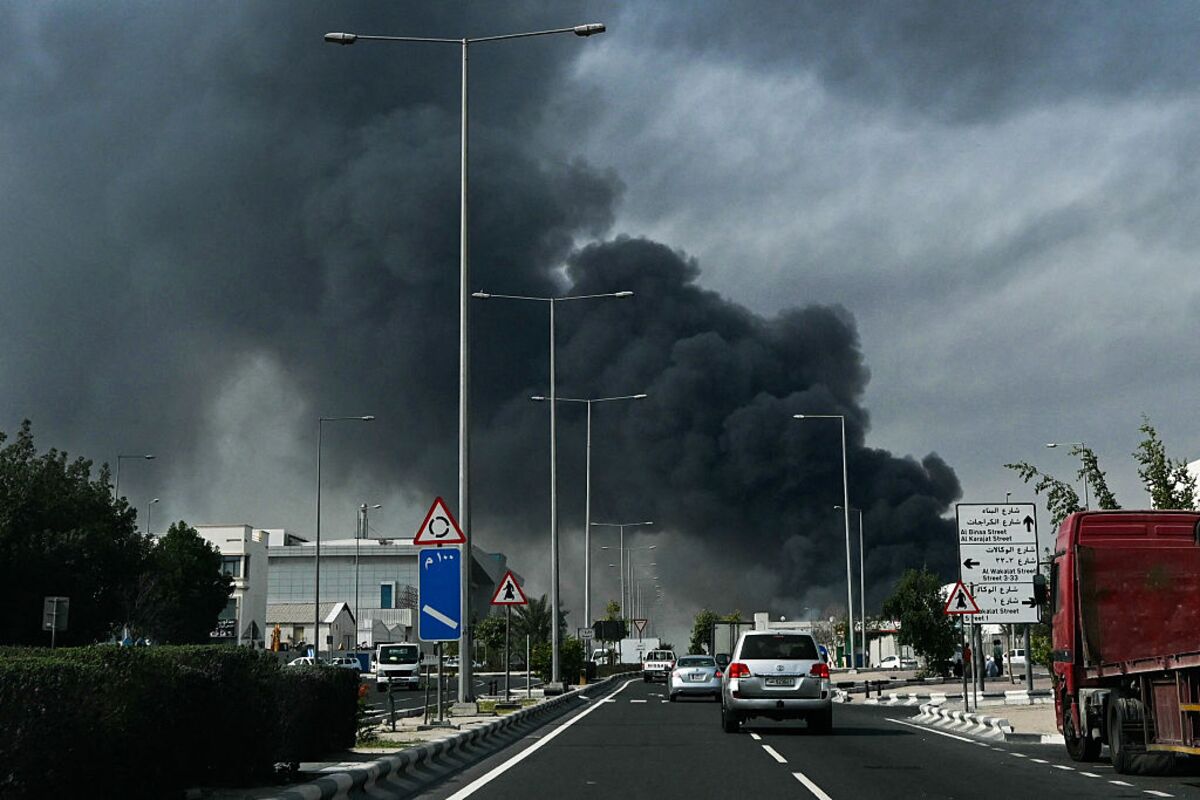
Qatar and Kuwait could each see GDP contract by 14% this year if the Iran conflict continues through April, assuming a two-month halt of the Strait of Hormuz, according to Goldman Sachs economist Farouk Soussa. The Iran war threatens major blows to Gulf heavyweights (Saudi Arabia, UAE, Qatar) and risks the region's worst economic slump since the 1990s, with significant implications for energy flows, trade chokepoints and broader market and sovereign stress.
Winners on a near-term shock are not only commodity producers but service providers that price volatility into contracts: shipping, war-risk insurers, and energy midstream operators with take-or-pay contracts will see margin expansion even if headline oil moves are volatile. The second-order effect is an acute working-capital squeeze for trade-heavy Gulf corporates — higher freight and insurance premia combined with wider L/C fees will force inventories down, capex deferment, and higher short-term borrowing, which amplifies equity underperformance beyond pure GDP sensitivity.
Tail risk clusters around duration: a days-to-weeks disruption creates a sharp commodity spike with mean reversion once routes reopen or reserves are released; months-long disruption forces structural re-routing, prolonged insurance repricing, and meaningful sovereign funding draws that reprice credit curves. Key reversal catalysts are diplomatic de-escalation, coordinated strategic reserve releases, or credible naval escort/insurance solutions that restore commercial flow economics within 30–90 days.
The consensus is underestimating the fiscal backstop optionality. Large sovereign wealth and central-bank FX buffers give Gulf states asymmetric coping tools — targeted liquidity injections, accelerated transfers to domestic banks, and temporary subsidy adjustments can stabilise domestic consumption faster than markets price, compressing downside for local assets. That argues for differentiated positioning: prefer pure commodity plays and protective options over outright long/short directional bets in local equities without hedges.
AI-powered research, real-time alerts, and portfolio analytics for institutional investors.
Overall Sentiment
strongly negative
Sentiment Score
-0.75
Ticker Sentiment
