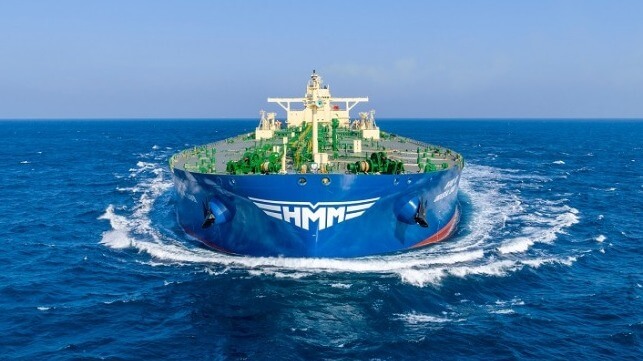
Only about 6 VLCCs have transited the Strait of Hormuz so far this month, with roughly 17 million barrels moving after 28 million barrels in April, underscoring continued disruption risk around the key oil chokepoint. Iran says 26 vessels crossed in the last 24 hours under IRGC coordination, while South Korea confirmed its first tanker through the strait carrying about 2 million barrels of crude to Ulsan. The slow pace of transits, redirection of up to 90 vessels by CENTCOM, and ongoing Iran-U.S. tensions keep a meaningful geopolitical risk premium on energy and shipping flows.
The market should treat this less as a hard blockade and more as a selective tolling regime that creates dispersion rather than a clean macro shock. The second-order effect is that Iran is implicitly separating “cooperative” barrels from everyone else, which favors Asian refiners and state-linked shippers with the political latitude to secure passage while punishing spot-sensitive buyers, smaller independent cargoes, and any vessel lacking a clear bilateral channel. That tends to widen time-charter rates, insurance premia, and voyage uncertainty even if headline throughput does not collapse.
The near-term winner is not crude itself so much as regional price differentials and logistics optionality. If China and Korea can clear cargoes while others wait, the premium shifts into access rights: sanctioned or semi-aligned counterparties gain bargaining power, and non-Asian Atlantic Basin barrels become more attractive as substitute supply into Europe and the U.S. Gulf. Over the next 1-4 weeks, this can support tanker earnings and crude prompt spreads without necessarily delivering a sustained Brent spike unless the passage regime becomes more arbitrary or a real kinetic incident interrupts flows.
The contrarian read is that Iran is trying to monetize control without triggering a full closure, which means the most likely path is continued theater with intermittent bottlenecks, not an immediate 1970s-style supply shock. That argues for trading volatility and logistics, not outright beta longs in oil. The biggest tail risk is a miscalculation around another strike allegation or a detained vessel, which would flip this from a managed flow problem into a genuine inventory drawdown story within days, but absent that, the more durable impact is elevated shipping friction and Asian buyer advantage over 1-3 months.
AI-powered research, real-time alerts, and portfolio analytics for institutional investors.
Request DemoOverall Sentiment
mildly negative
Sentiment Score
-0.20
