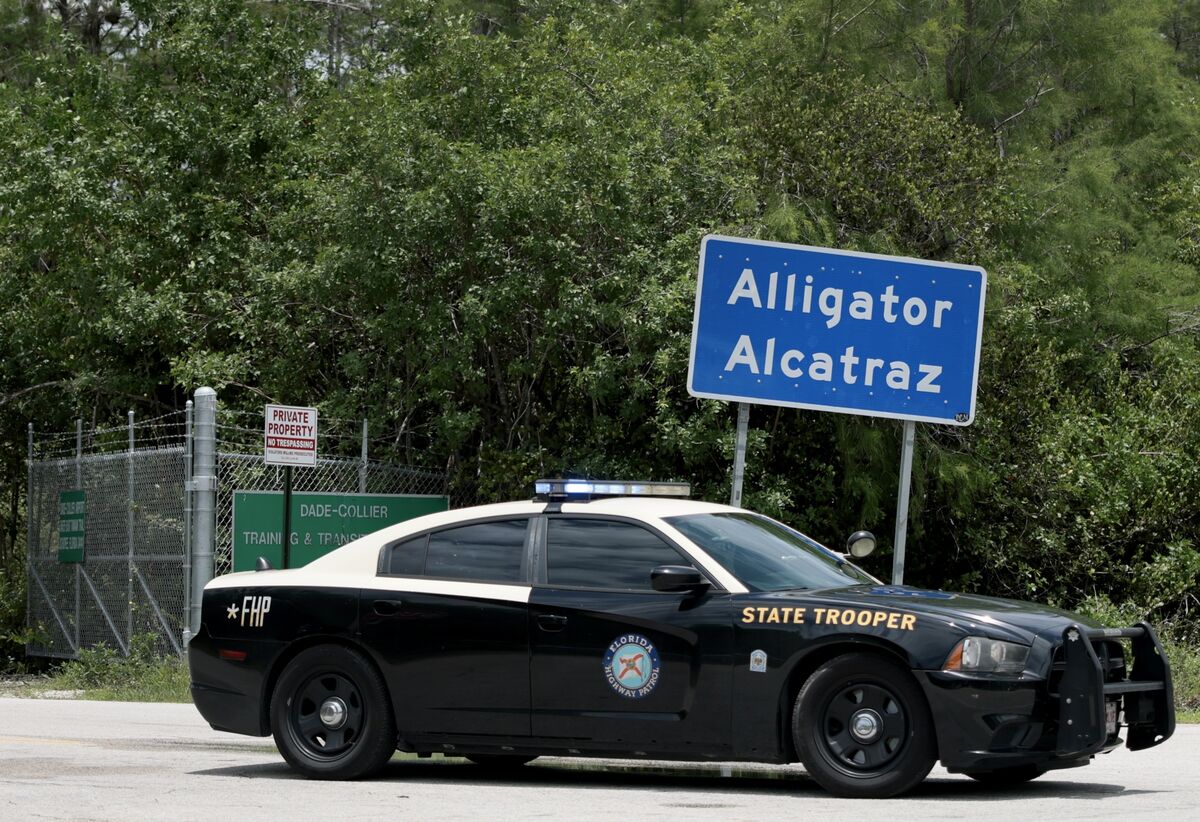
Florida emptied the Alligator Alcatraz immigration detention camp after spending hundreds of millions of dollars on the high-profile facility tied to Trump’s deportation agenda. The closure reflects cost pressure and operational coordination with state and federal authorities as hurricane season begins. The article is primarily political and fiscal in nature, with limited direct market impact.
The immediate market read is not about detention capacity; it is about political capital being converted into stranded operating costs. A visibly underutilized, emergency-style buildout raises the probability of procurement scrutiny, reimbursement disputes, and a slower pace of future “mission-driven” state spending, which is negative for contractors tied to rapid-deployment government infrastructure, temporary housing, security, and logistics.
Second-order, the hurricane angle matters more than the policy optics. If the site is being vacated because storm risk makes the facility operationally fragile, it reinforces a broader thesis that hardening and resilience spending must be baked into all Gulf/Florida public infrastructure projects, which can shift spend away from cheap tent-and-trailer solutions toward more modular, defensible, higher-spec assets. That’s a tailwind for firms with disaster-response, temporary power, water, sanitation, and rapid construction capabilities, and a headwind for low-bid temporary structure providers whose economics depend on political urgency.
The contrarian point is that the headline may overstate the durability of the setback. In election-adjacent policy, failed or embarrassing programs often get relaunched under a different name, with a different budget line, after a short cooling-off period of weeks to months. The more important signal is not cancellation but iteration: if federal-state coordination tightens, the spending may simply migrate to more compliant vendors and better-sited facilities rather than disappear.
For investors, this is a short-duration political headline with medium-duration budget implications. The tradeable edge is in contractors and infrastructure names exposed to emergency response and resilient buildout, while avoiding companies tied to speculative rapid-assembly detention or low-margin temporary facilities. The risk is that the issue becomes a one-off political embarrassment with no budget impact, in which case any shorts on specific vendors would need to be covered quickly.
AI-powered research, real-time alerts, and portfolio analytics for institutional investors.
Request DemoOverall Sentiment
mildly negative
Sentiment Score
-0.20
