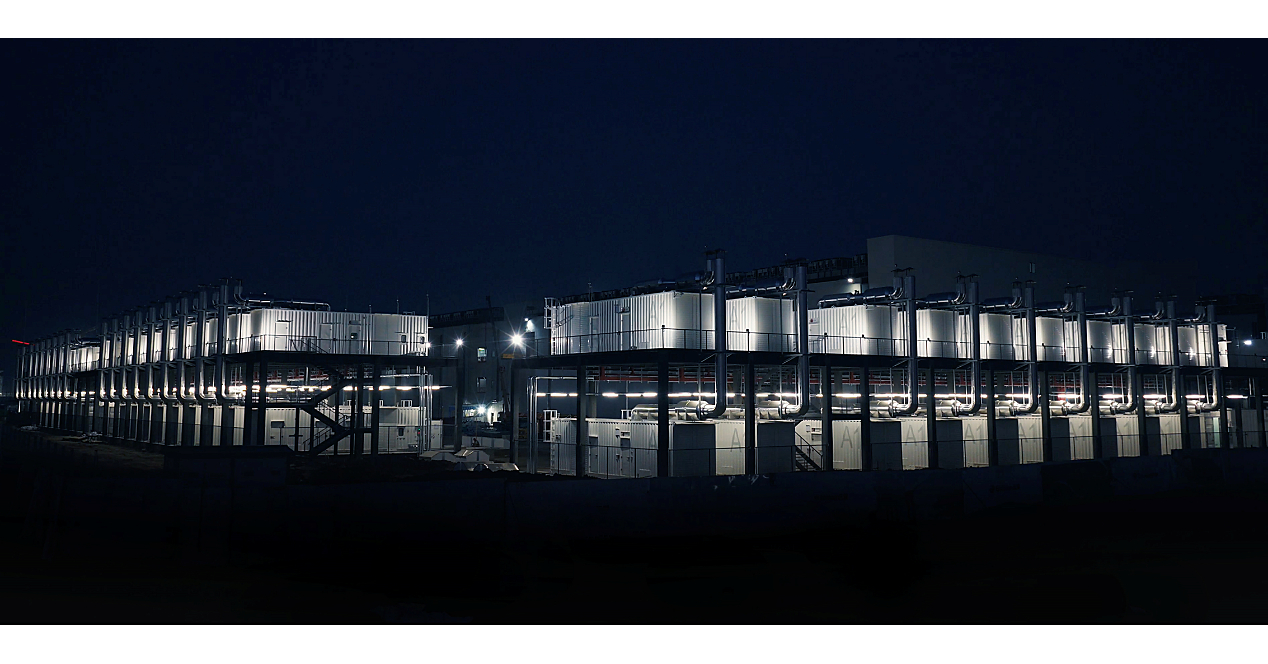
Envision a mis en service le Galaxy Campus à Ulanqab (Mongolie intérieure), conçu pour plus de 2 GW et un centre IA de 120 000 m² (capacité de production de tokens et calcul dédiés). L’installation vise 1 million de PFLOPS de puissance de calcul et jusqu’à 1 million d’accélérateurs IA, alimentés directement par des renouvelables via un système d’alimentation IA. Le projet s’inscrit dans la “Mission Gobi” visant 5 GW d’IA verte d’ici 2030.
This is less a single-project story than a signal that AI capex is migrating from a chip-scarcity trade to a power-and-thermal-infrastructure trade. If even a fraction of this model is replicable, the durable winners are electrical gear, grid interconnect, storage, and liquid-cooling vendors, because those are the gating items when workloads move from hundreds of MW to multi-GW campuses.
The market may initially read this as bullish for semis, but the second-order effect is mixed: more compute demand is good for accelerators, yet a geographically expandable campus model lowers the scarcity premium embedded in GPU narratives over 6-18 months. The cleaner expression is in picks-and-shovels names such as ETN, VRT, PWR, NVT, and, on the renewables side, FSLR/FLNC, where backlog and pricing power can improve if AI operators standardize on dedicated renewable-fed campuses.
Contrarian risk: this is still a press-release framework, not proof of monetized utilization. The key failure mode is that power is available but accelerator supply, export controls, network latency, or interconnect approvals prevent full loading, leaving a stranded asset story rather than a true demand inflection. If the next two quarters of hyperscaler commentary do not show tighter power constraints or higher capex intensity, the trade should be faded.
The bigger takeaway is that AI buildout may be forcing a re-rating of utility-adjacent industrials versus pure software multiples. If the thesis is right, the next leg is not just more data centers; it is higher spending on transformers, switchgear, substations, and storage as the hidden bottleneck moves from compute chips to electrons.
AI-powered research, real-time alerts, and portfolio analytics for institutional investors.
Overall Sentiment
moderately positive
Sentiment Score
0.35
