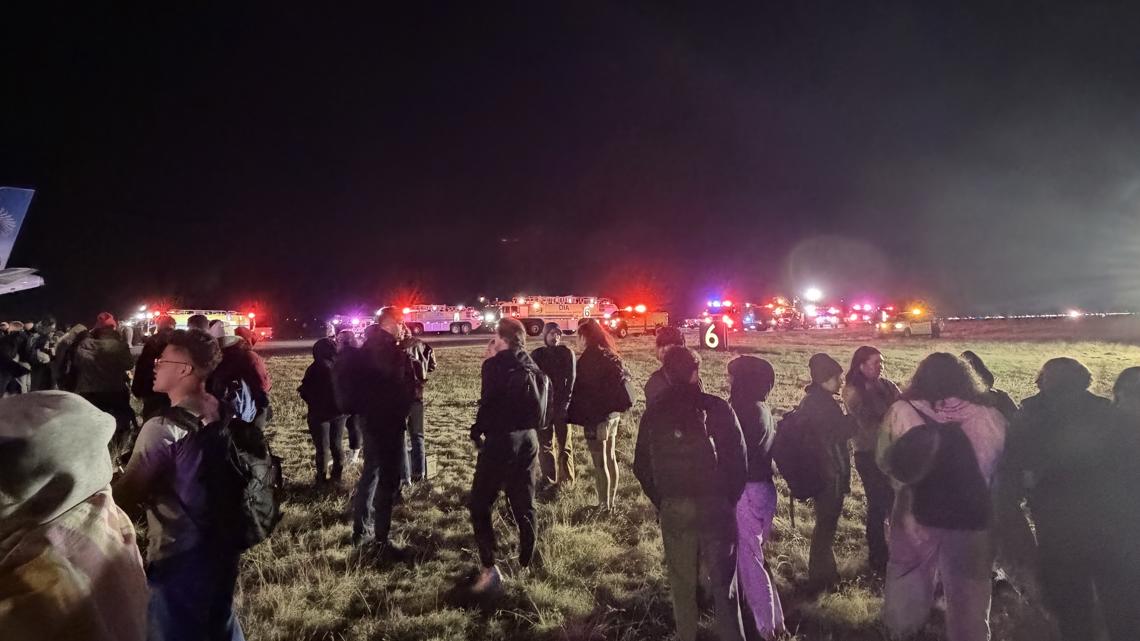
A Frontier Airlines Airbus A321 carrying 224 passengers and 7 crew aborted takeoff at Denver International Airport after striking a person who breached the perimeter fence, triggering smoke in the cabin and a brief engine fire that was extinguished by firefighters. Passengers were evacuated after several minutes on the runway and later rebooked to Los Angeles International Airport. The FAA, NTSB, and Denver Police are investigating, making this a serious operational and safety incident for the airline and airport, though likely limited in broader market impact.
This is a micro-event for airlines operationally, but a macro-event for risk pricing in an industry where consumers have very low tolerance for perceived safety failures. The immediate loser is the carrier involved, but the second-order effect is broader: every low-cost airline with a thin customer-trust moat may see a temporary rise in booking friction, especially on leisure-heavy routes where travelers can switch based on headline risk rather than price. The real economic damage is less about one flight and more about the potential for higher disruption costs, more conservative takeoff/dispatch behavior, and a jump in customer-care expense across the sector over the next few weeks.
The legal/regulatory overhang matters more than the physical incident. Aviation events with visible panic tend to trigger a long tail of litigation, internal review, and scrutiny of airport perimeter security, and that can force airports and carriers to spend on monitoring, fencing, and runway-adjacent security protocols. The second-order winner may be security vendors and airport infrastructure contractors, not airlines: this kind of incident creates a politically durable budget line item, while the airline bears the reputational hit immediately and the legal risk for months to years.
The contrarian read is that the market may overestimate the persistence of the demand shock if there is no evidence of systemic fleet or maintenance issues. If this is framed as an airport security breach plus isolated engine damage rather than a fleet problem, bookings tend to normalize quickly after the first news cycle. The key catalyst is the investigation scope: a narrow finding should cap downside to sentiment, while any finding of procedural failure, runway incursion vulnerability, or recurring operational lapses could extend the discount to the carrier and potentially to peers with similar cost structures.
From a trading perspective, this is better expressed as a relative-value and event-risk trade than a directional airline short. The highest expectancy setup is a short-dated hedge against the most exposed carrier while going long an aviation-security or airport-services beneficiary, because the market tends to underprice procurement follow-through after headline incidents. Options are preferable because the event decay is fast: most of the equity reaction should be captured within days, while the legal/regulatory leg can persist for quarters.
AI-powered research, real-time alerts, and portfolio analytics for institutional investors.
Request DemoOverall Sentiment
strongly negative
Sentiment Score
-0.72
