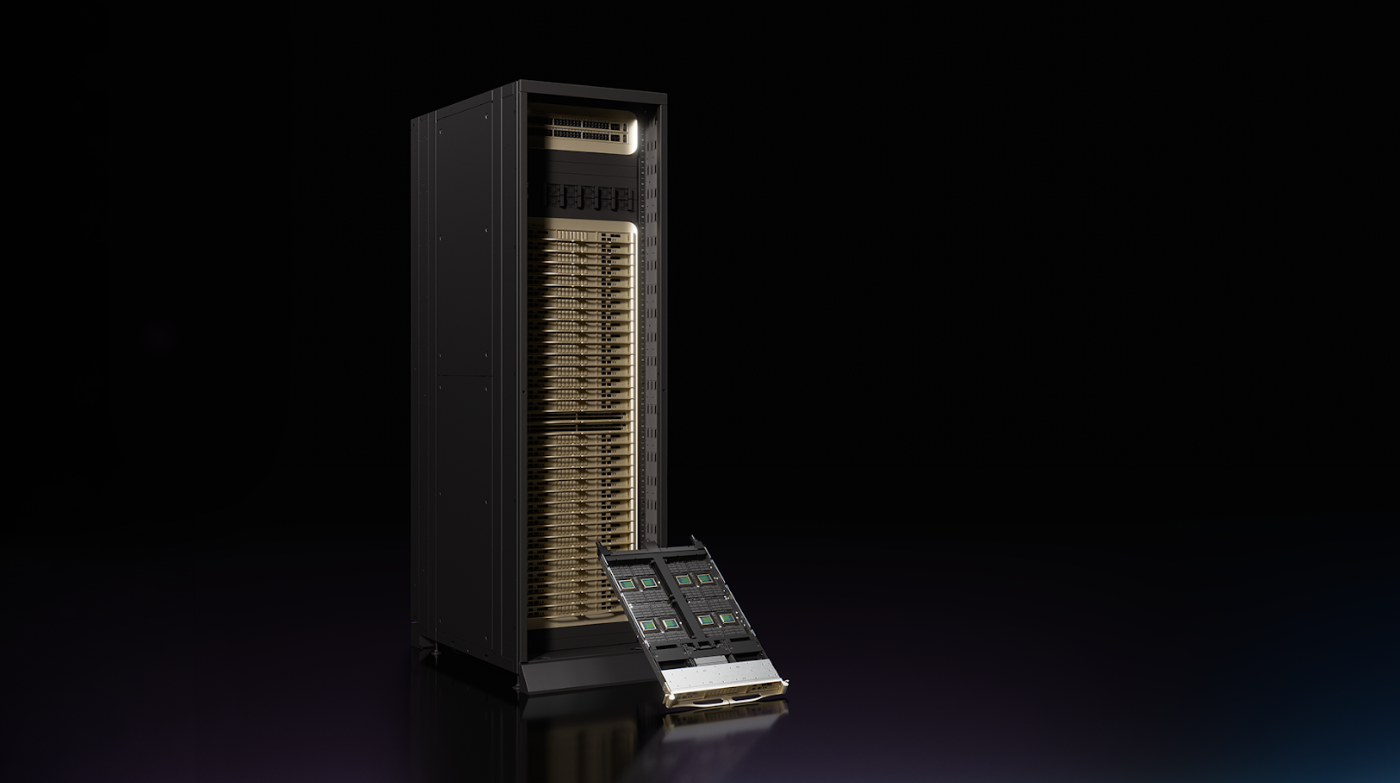
Nvidia said Vera Rubin is entering volume production and will be the foundation of its next-generation AI factory platform, with first complete systems expected to ship this fall. The platform is described as delivering 10x agentic AI throughput versus Grace Blackwell, 5x better power efficiency for new network switches, and up to 5x higher inference throughput via BlueField-4 storage offload. The launch reinforces Nvidia’s AI infrastructure leadership and could support near-term demand across a 350+ partner supply chain spanning 30 countries.
This is less a product announcement than a capacity signal: Nvidia is converting AI infrastructure from a chip cycle into a system-level supply chain with higher switching costs and longer lead times. The immediate incremental winner is NVDA, but the larger second-order effect is that OEMs and network/storage partners become more tightly tethered to Nvidia’s design language, which should improve attach rates while compressing differentiation for standalone server builders over the next 2-4 quarters.
The market may still be underestimating how much of the value pool shifts from GPU count to full-stack orchestration. If agentic workloads truly drive more CPU, networking, security, and storage per token, then the spend migrates toward vendors that can sell integrated rack economics, not just accelerators. That favors Dell and HPE over more commoditized box sellers only if they can preserve margin on system integration; SMCI likely sees the fastest top-line impulse but also the greatest pricing pressure as volume ramps and customers benchmark against Nvidia reference designs.
The key risk is not demand — it is execution bottlenecks and digestion. A production ramp narrative can stay bullish for months, but any slip in co-packaged optics, liquid-cooling, or multivendor qualification would delay revenue recognition and invite a near-term multiple reset in NVDA. There is also a contrarian angle: the more Nvidia optimizes cost per token, the faster hyperscalers and enterprises may force price competition in inference, which could cap long-run margin expansion even if unit shipments surge.
On balance, the setup is bullish but likely over-owned in the most obvious expression. The cleaner trade is to own the infrastructure enablers with less headline risk, while fading the weakest implementation link if procurement shifts toward reference architectures and away from bespoke build-outs.
AI-powered research, real-time alerts, and portfolio analytics for institutional investors.
Request DemoOverall Sentiment
strongly positive
Sentiment Score
0.78
Ticker Sentiment
