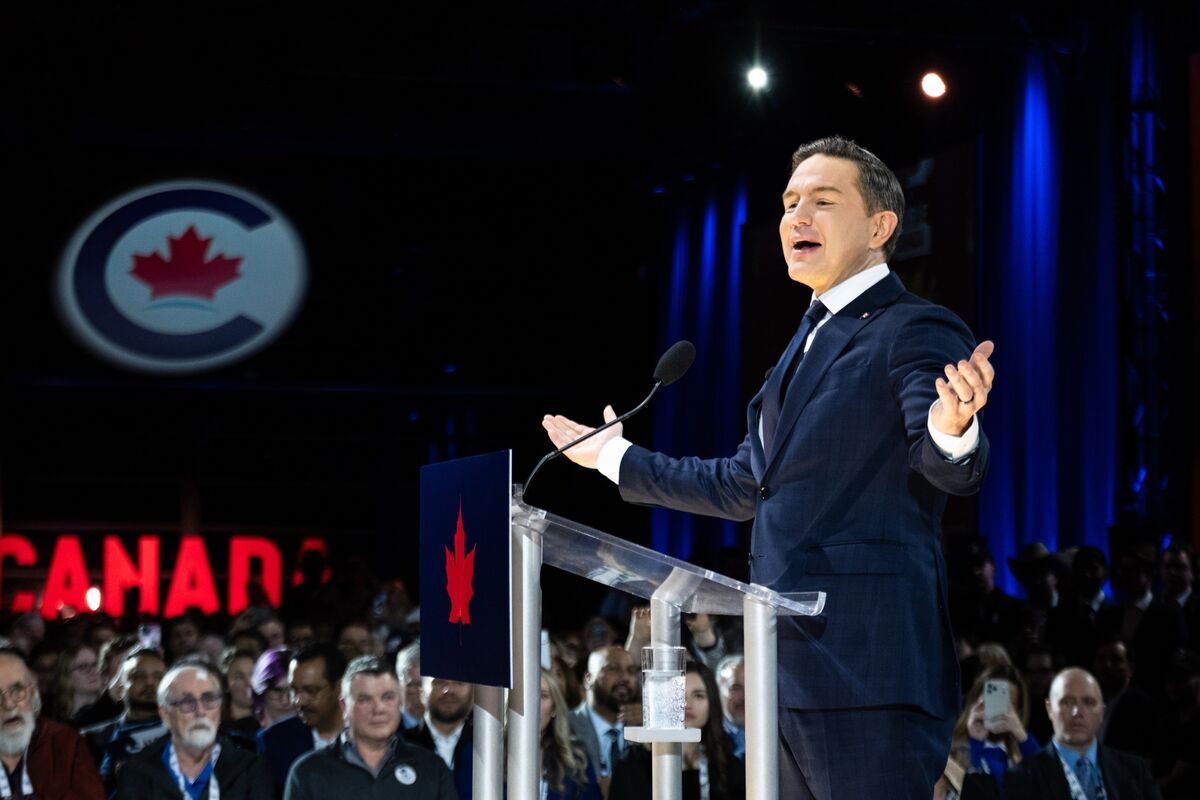
Conservative Leader Pierre Poilievre said Canada can use its oil and mineral exports as leverage to persuade U.S. President Donald Trump to remove tariffs and deepen bilateral ties, in a Bloomberg interview. The comment outlines a political negotiating strategy rather than a policy action; immediate market impact should be limited, though energy and mining sectors could react if diplomatic pressure translated into concrete tariff changes.
If Ottawa actually leverages energy and critical minerals as bargaining chips, the market impact will concentrate along chokepoints rather than broad commodity indices — midstream capacity and specific ore-concentrating operations will see the first and largest price signaling. That means Enbridge/TC Energy style tolling economics and near-term cashflows are more exposed to political risk than commodity producers with spot-price sensitivity; a temporary export squeeze raises tolling revenue volatility even as it lifts spot prices for a short window.
Timing and catalysts are asymmetric: public posturing can move sentiment in days, but meaningful supply adjustments (permits, pipeline reversions, export licensing) take quarters to materialize and years to lock in. The larger macro reversal risk is an emergency US procurement pivot—tariff removal buys peace only if the US perceives alternatives as costly; if Washington secures alternate sources (e.g., Latin America, Australia) within 6-18 months the Canadian premium collapses and triggers a multi-quarter re-rating of Canada-heavy names.
Consensus will likely underprice policy friction costs: markets assume tariff talks are binary and short-lived, but even a low-probability export restriction creates options value for commodity producers and duration risk for users. Positioning should therefore prefer asymmetric payoff structures that capture a political-deal upside while capping downside from a plausible pivot by US buyers or a Canadian domestic policy reversal.
AI-powered research, real-time alerts, and portfolio analytics for institutional investors.
Overall Sentiment
neutral
Sentiment Score
0.00
