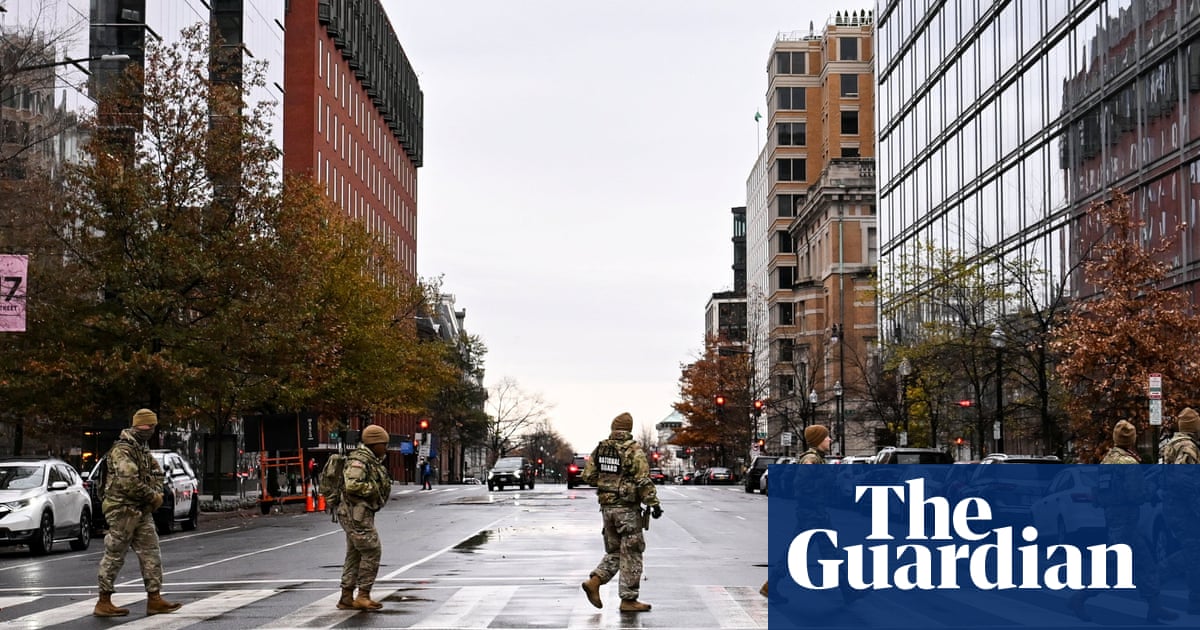
A U.S. appeals court paused a lower-court injunction that would have required National Guard troops to leave Washington, D.C., by Dec. 11, allowing President Trump to continue a deployment he began in August and expanded after a Nov. 26 shooting. More than 2,000 guard members from DC and multiple states remain in the capital amid a lawsuit filed Sept. 4 by DC Attorney General Brian Schwalb alleging unlawful usurpation of local law enforcement and bans on federal troops performing civilian police work; a separate district judge had found the presence “probably unlawful.” The dispute — which has prompted similar legal challenges in Los Angeles, Chicago and Portland and may reach the U.S. Supreme Court — sustains political and legal uncertainty around federal troop deployments in U.S. cities.
Market structure: Immediate winners are domestic government IT/security contractors (BAH, LDOS, CACI) and short-term logistics contractors that service National Guard deployments; expect a modest 3–6 month revenue boost equivalent to ~1–3% of quarterly revenue for mid-tier contractors if deployments persist. Losers are city-center consumer-facing names (urban hotels, restaurants, mall REITs) in DC/targeted cities where foot traffic and conferences may decline by 5–15% near-term; broad defense primes (LMT, GD) see only marginal impact (<1% rev) because federal procurement cycles dominate. Pricing power shifts toward niche surveillance/intel services and private security vendors where near-term demand is inelastic and contract durations are 1–12 months.
Risk assessment: Key tail risks include a Supreme Court ruling that either green-lights nationwide deployments (10–25% probability, high-impact) or rules broadly against federal troop domestic roles (20–30% probability) — both would reprice political-risk premia across equities and muni credit spreads by 10–50bps. Immediate (days) risk is localized volatility around court orders; short-term (weeks–months) is elevated event volatility and potential consumer-spend pullback in targeted cities; long-term (quarters+) is regulatory/legal precedent affecting federal-state roles and municipal budget reallocations. Hidden dependencies include state National Guard budgets and DHS grant flows that could shift ~$100–300m annually into private contractors.
Trade implications: Tactical long bias to domestic government IT/security contractors for 3–6 months, paired with short exposure to urban hospitality/retail REITs in DC/target cities, and a small volatility hedge around the SCOTUS timetable (30–60 days). Prefer 1–2% portfolio positions in equities and 0.25–0.5% in event-driven volatility instruments; increase short-duration Treasury cash (1–5%) as a risk-off ballast if deployments escalate. Close or re-weight positions within 5 trading days of definitive court rulings or a >10% relative move.
Contrarian angle: Consensus treats this as political theatre with negligible market effect — underestimates concentrated budget flows into private security/IT services where procurement is fast; these niches can re-rate by 8–15% on a few medium-sized contracts. Conversely, reaction could be overdone in urban real-estate names; a temporary 10–20% sell-off in marquee city REITs would present contrarian longs if deployments are reversed within 90 days. Watch for unintended consequences: prolonged militarization could depress corporate event bookings and tourism for multiple quarters, creating asymmetric short opportunities.
AI-powered research, real-time alerts, and portfolio analytics for institutional investors.
Request DemoOverall Sentiment
mildly negative
Sentiment Score
-0.25
