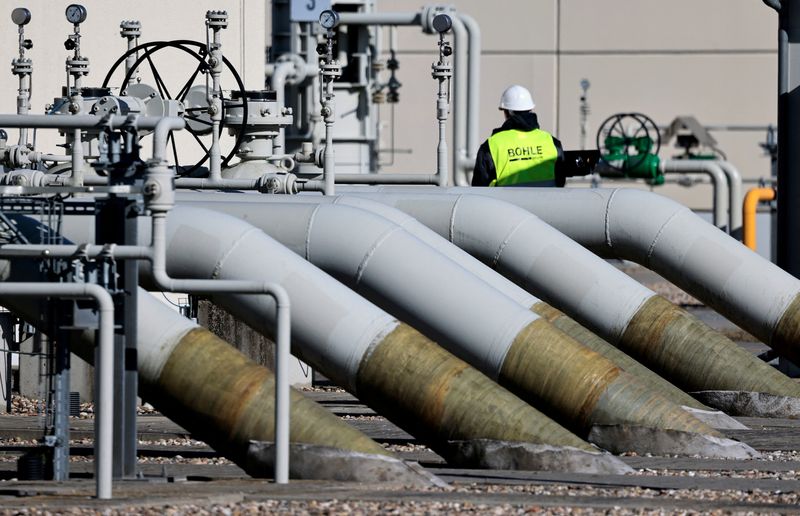
European natural gas prices fell 2.5% to 43.75 euros/MWh as traders reassessed stalled U.S.-Iran peace talks and the risk to the Strait of Hormuz. Iran’s reported proposal to ease the strait closure did not resolve key sticking points, while U.S. and Tehran remain far apart on naval and port access issues. The TTF benchmark remains well above pre-war levels, keeping energy markets sensitive to further geopolitical developments.
The key market issue is not the immediate direction of European gas, but the optionality embedded in a narrow set of physical chokepoints. When geopolitics is driving a supply premium, the market tends to underprice tail risk on the way down and overreact on the way up; that creates repeated squeeze opportunities in front-end energy contracts and in equities with high gas exposure. The more important second-order effect is that persistent uncertainty around Gulf flows raises procurement and inventory costs for European industrials even if prompt prices ease, which can bleed into margins with a 1-2 quarter lag.
A partial détente would likely hit the same names that rallied on scarcity, but not evenly. The biggest losers are merchant gas shippers, European utilities with uncovered short positions, and commodity-sensitive manufacturers that have been hedging at elevated levels; their earnings sensitivity remains asymmetric because prices can fall faster than pass-through rates. By contrast, LNG logistics, storage, and pipeline-adjacent infrastructure benefit from volatility itself, not just direction, because contract renewals and balancing demand stay elevated when physical reliability is questioned.
The consensus risk is assuming a binary outcome: either war premium stays or disappears. In reality, even failed talks can still lower prices if traders perceive lower probability of immediate escalation, while a superficial agreement that leaves enforcement ambiguous can keep the premium intact. The market is likely underestimating how quickly a single disruption event in the Strait or Qatar can reprice winter hedges across Europe, especially if inventories are rebuilt slowly into shoulder season.
From a timing perspective, this is a days-to-weeks trade in front-month gas and a months trade in European industrial earnings revisions. The best setup is to fade complacency, not to chase headlines, because geopolitical gas risk tends to reprice violently on confirmation rather than anticipation. Any move toward a sustained thaw should be treated as an opportunity to monetize volatility, not to structurally short energy security.
AI-powered research, real-time alerts, and portfolio analytics for institutional investors.
Request DemoOverall Sentiment
mildly negative
Sentiment Score
-0.25
