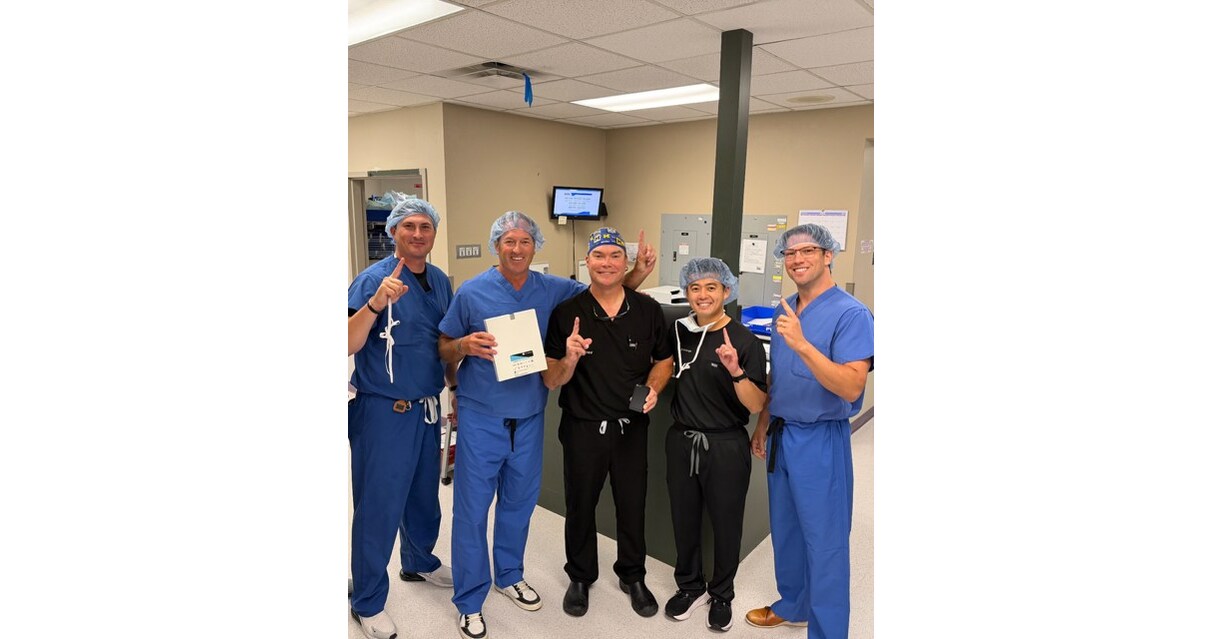
OrthAlign announced the successful completion of the first clinical cases using its Lantern ASC handheld navigation system on June 30, with Dr. Zane Uhland performing 6 total knee procedures in under 4 hours in an outpatient setting. The company positions Lantern ASC as a lower-barrier alternative to robotic platforms, aimed at avoiding major capital purchases, dedicated OR space, service agreements, and implant volume commitments while providing real-time navigation for primary and revision knee arthroplasty. Market impact is likely limited near term, but the milestone supports product adoption potential in ambulatory surgery centers.
This is less a revenue inflection than a positioning signal: the economic prize in outpatient knees is shifting from capital intensity to workflow efficiency. If a lightweight navigation layer can preserve throughput, the marginal winner is the ASC owner, not the device vendor, because the benefit shows up in more cases per room-day and lower dependence on service-heavy platforms. That argues for better operating leverage at outpatient operators and slower wallet share growth for premium robotic systems that rely on equipment spend and contract lock-in.
The second-order risk for orthopedic OEMs is not immediate share loss, but a longer cycle of procurement skepticism: once surgeons see a lower-friction option, the hurdle for large robotic purchases rises. That matters most for names where robotics is used to defend implant pull-through or to justify premium pricing. In contrast, implant-agnostic tools can actually strengthen surgeon loyalty inside ASCs by removing vendor constraints, which may accelerate procedure migration away from hospital settings over 6-18 months.
Contrarian view: the market may overstate disruption risk from a first-case launch. Adoption in orthopedics is usually gated by demonstrated revision outcomes, training burden, and anesthesia/recovery economics, not feature parity. If follow-on usage does not broaden beyond early adopters within 1-2 quarters, this likely remains an incremental workflow product rather than a meaningful competitive threat. Falsifiers are simple: no sustained case velocity, no ASC utilization improvement, or no slowdown in robotic system wins in outpatient settings by the next earnings season.
AI-powered research, real-time alerts, and portfolio analytics for institutional investors.
Request DemoOverall Sentiment
mildly positive
Sentiment Score
0.25
