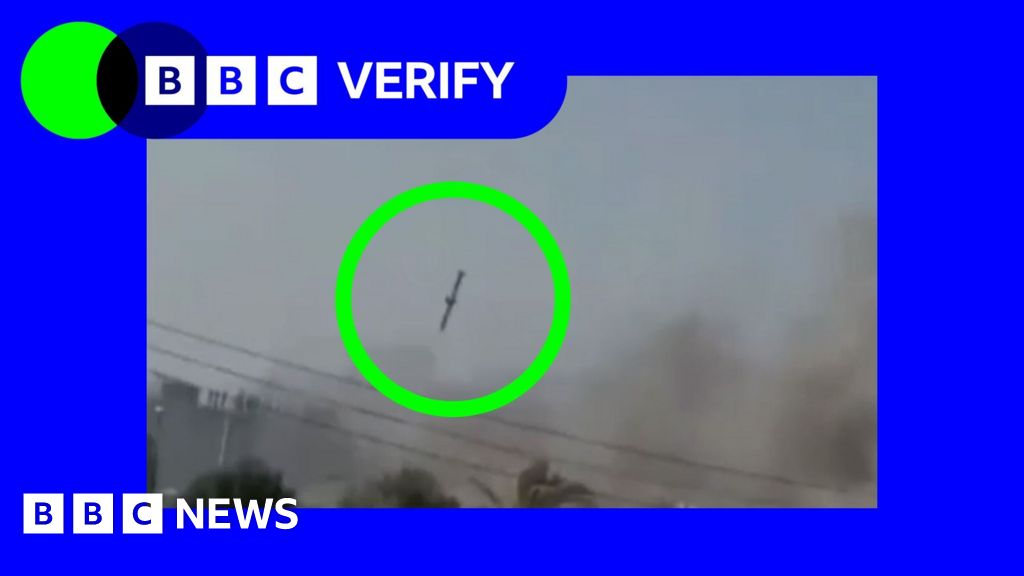
168 people, including around 110 children, were reported killed after a strike on an IRGC base next to the Shajareh Tayebeh primary school in Minab, Iran; verified video analysis identifies a US Tomahawk missile and multiple strikes. Experts and satellite imagery indicate the Tomahawk likely hit a medical clinic ~200m from the school, and a US preliminary assessment says US forces may have been responsible but did not intentionally target the school. The incident materially raises the risk of regional escalation and near-term energy price volatility, while an internet blackout in Iran increases verification uncertainty. Monitor oil markets, regional supply/chokepoints, and any rapid escalation or retaliatory moves that would broaden market impacts.
This incident materially increases tail-risk of protracted kinetic escalation in the Persian Gulf theater, raising the odds of episodic shock events to energy, shipping and emerging-market risk premia over the next 1-3 months. Expect multi-day spikes in Brent/WTI and insurance/freight spreads on any follow-on strikes or Iranian asymmetric responses; if shocks persist beyond a quarter, capital reallocation into defense capex and energy security will become structural rather than transitory.
Defense primes, parts suppliers and precision-guidance vendors stand to capture both near-term order flow and multi-year budget uplift; conversely, regional aviation, shipping dependents and frontier EM credit curves will face immediate margin pressure as rerouting, higher fuel costs and sovereign risk premia bite. Supply-chain second-order effects include accelerated inventory hoarding in energy and semiconductors used in guidance systems, which can widen input-cost dispersion across industrial names over 3-9 months.
Key catalysts to monitor: credible de-escalation talks or transparent attribution that narrows culpability (days–weeks) would quickly compress risk premia and normalize oil/shipping markets; sustained tit-for-tat strikes or formal sanctions regimes (months) would institutionalize higher defense budgets and energy security spending. Market positioning is uneven: option skews and vol term-structure have already priced near-term tail events, so directional exposure should be structured to harvest convexity while limiting theta bleed.
Contrarian lens — the market is leaning toward a permanent supply shock narrative that may be overcooked if Strait traffic remains uninterrupted. Historically, regional kinetic episodes produced sharp but short-lived oil surges (2–6 weeks) absent choke-point closures; if logistics remain open, energy prices and EM dislocations will likely retreat, creating ripe mean-reversion windows for selective commodity and credit shorts within 30–90 days.
AI-powered research, real-time alerts, and portfolio analytics for institutional investors.
Request DemoOverall Sentiment
strongly negative
Sentiment Score
-0.80
