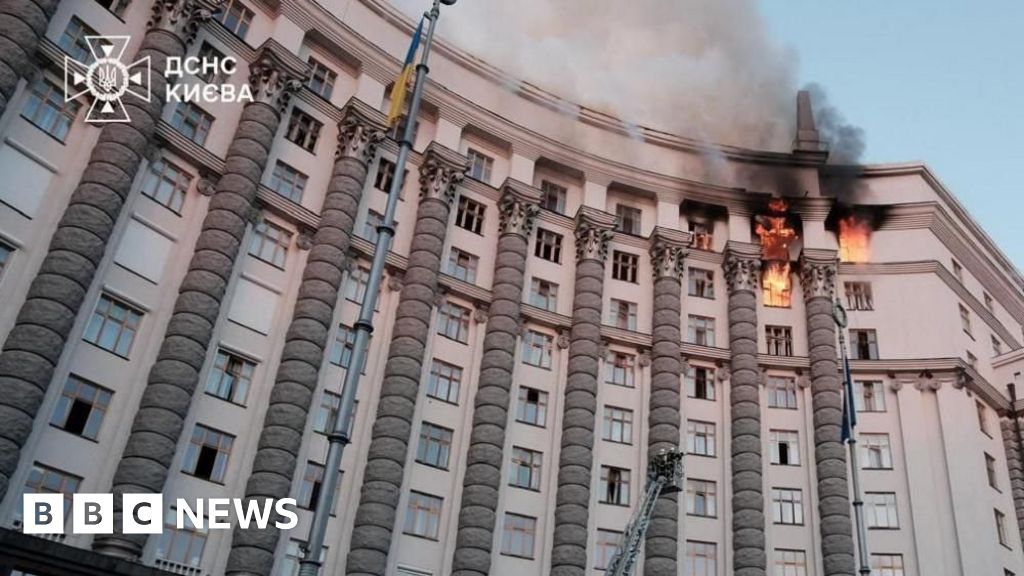
Russian air strikes against Ukraine have intensified significantly, marked by deadlier attacks and larger-scale operations, including a direct Iskander missile strike on a key government building in Kyiv and a glide bomb killing over 20 civilians in Donbas. This escalation highlights the growing pressure on Ukraine's air defenses, further complicated by Russia's increasing domestic weapons production (including microchips) and enhanced drone technology cooperation with China, which are offsetting the impact of Western sanctions and posing new challenges for global supply chain monitoring. Ukraine is urgently reiterating calls for increased military assistance and stricter sanctions.
The conflict in Ukraine is entering a more dangerous phase, characterized by a significant tactical escalation from Russian forces. The recent direct, and reportedly unintercepted, Iskander cruise missile strike on a key government building in Kyiv, coupled with a deadly glide bomb attack that killed over 20 civilians in Donbas, demonstrates a shift towards more audacious and lethal operations. These events highlight the severe strain on Ukraine's air defenses, which are being systematically depleted by large-scale Russian drone swarms used as both attack vectors and decoys. Critically, the effectiveness of Western sanctions is being challenged by Russia's strategic adaptation; Moscow is successfully substituting sanctioned Western components with domestic production, including microchips, and enhancing its drone capabilities through cooperation with China. This development suggests Russia is building a resilient, technologically advancing war machine capable of sustaining a high-intensity conflict, thereby elevating geopolitical risk and signaling a protracted struggle that will require a more robust response from Ukraine's allies.
AI-powered research, real-time alerts, and portfolio analytics for institutional investors.
Overall Sentiment
strongly negative
Sentiment Score
-0.80
