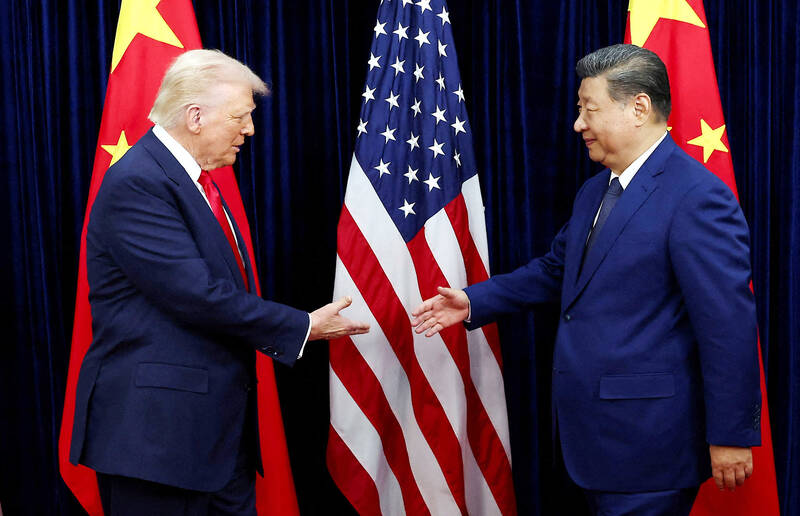
The article argues that pro-PRC voices in Western policy circles are pushing Washington to state it does not support Taiwan independence, framing this as part of Beijing’s broader effort to shift pressure onto the US-Taiwan relationship. It highlights ongoing PRC coercion risks, including cyberwarfare, cable cutting, live-fire exercises, economic pressure on Japan, and gray-zone intimidation. Market impact is limited, but the geopolitical risk backdrop for Taiwan, Japan, and US-China relations remains elevated.
This is less about one opinion piece and more about a recurring pre-event signaling channel: when elite U.S. foreign-policy commentary converges around “stability” language on Taiwan ahead of high-level diplomacy, it often precedes pressure to narrow U.S. commitments without extracting verifiable concessions. The market implication is not immediate kinetic risk; it is a gradual repricing of regional alliance confidence, which tends to show up first in defense procurement timelines, semiconductor capex localization, and currency hedging flows rather than headline equity beta.
The second-order loser is any asset whose valuation depends on uninterrupted Pacific logistics and rules-based trade. Taiwan-listed exporters, Japan industrials with Taiwan exposure, and semicap equipment names can underperform if investors infer a higher probability of coercive gray-zone activity or a softening U.S. security umbrella. Conversely, U.S. defense primes and cyber names gain asymmetrically because even a modest increase in deterrence spending or cyber hardening budgets is sticky and multi-year, while diplomatic de-escalation is reversible in days.
The key tail risk is not invasion; it is policy slippage that makes coercion cheaper. If Washington is perceived as entertaining language that reduces support for Taiwanese autonomy, Beijing can test the perimeter with more frequent air, cyber, and maritime pressure over the next 3-6 months, forcing Taiwan corporates to spend defensively and raising insurance and shipping frictions. What would reverse the trend is a visibly harder U.S.-Japan-Taiwan coordination signal or explicit defense export / basing commitments that restore deterrence credibility.
The contrarian view is that the current rhetoric may be overestimating near-term policy change: U.S. administrations can float ambiguous diplomacy while still preserving practical military support, and markets often overreact to commentary before hard budget or treaty changes appear. That said, the setup argues for hedging, not heroics; the expected return comes from owning names with contractual backlog and budget insulation, while fading assets that rely on low-friction cross-Strait trade assumptions.
AI-powered research, real-time alerts, and portfolio analytics for institutional investors.
Request TrialOverall Sentiment
moderately negative
Sentiment Score
-0.35
