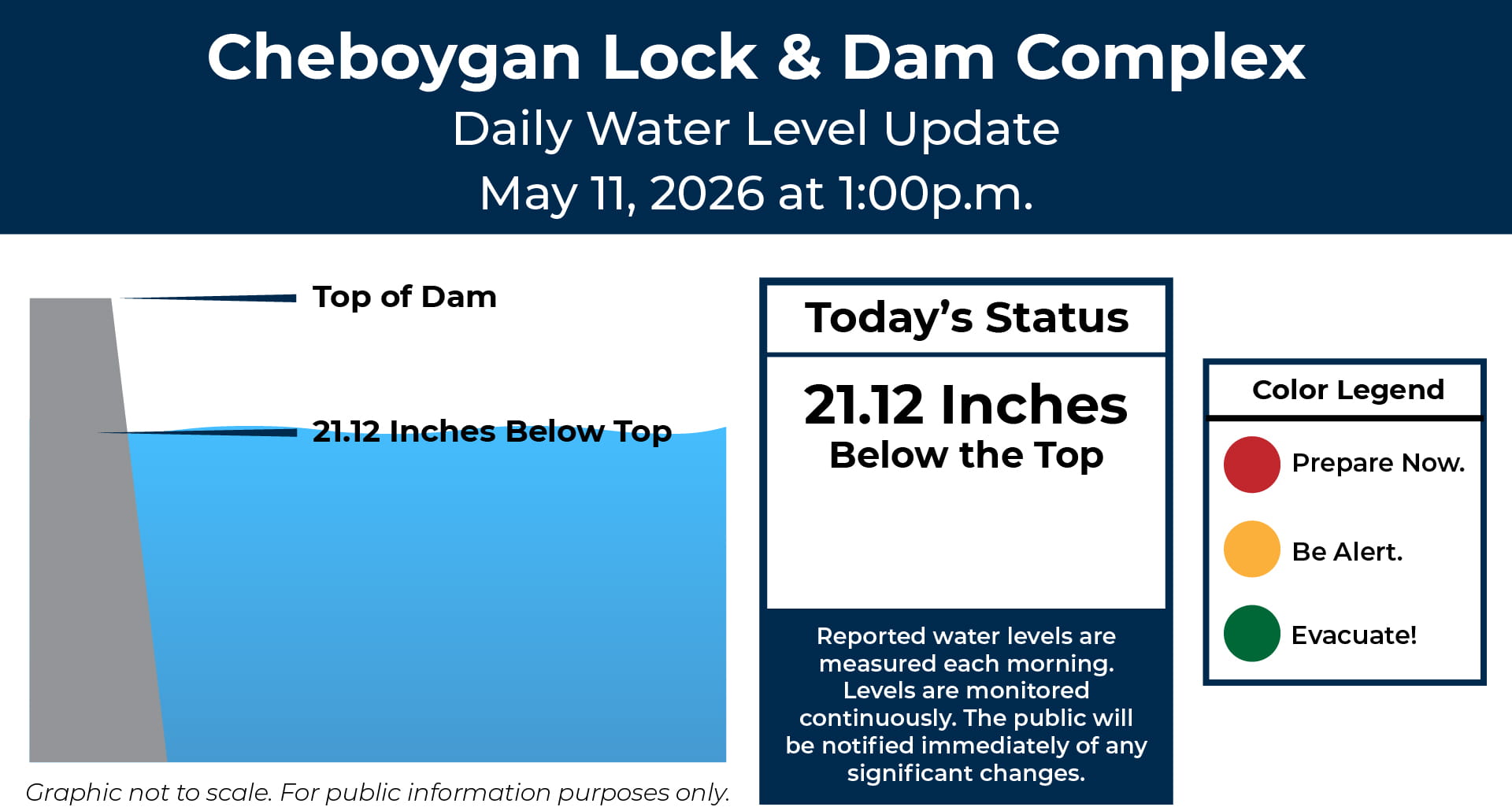
Michigan activated its State Emergency Operations Center on April 10, 2026 and Governor Gretchen Whitmer declared a state of emergency due to rising water levels at the Cheboygan Lock and Dam Complex. Record snowfall and recent rain have raised flood risk for local communities, and a large ice piece damaged safety wire near the dam. The Department of Natural Resources has closed access points upstream and downstream as officials monitor conditions and prepare flood-response measures.
This is a localized, low-beta shock, but the second-order effects matter more than the headline. The immediate beneficiaries are emergency response contractors, temporary housing providers, equipment rental firms, and regional insurers with exposure to Michigan personal/commercial property — but the bigger alpha is in understanding that spring thaw + residual snowpack can create a multi-week “water level aftershock” even if the weather normalizes. That means the event is less about one-time repair spend and more about intermittent disruption to local transport, outdoor recreation, and municipal budget strain.
The clearest loser set is any business with tight regional logistics or recreation-dependent demand around the affected corridor: marinas, tourism, small retail, and road-haul operators can see a demand air pocket within days, then a second hit if access restrictions persist into peak seasonal traffic. For insurers, the near-term risk is not only direct property claims but loss adjustment expense inflation if repeated closures create a cluster of small claims and business interruption notices. Infrastructure repair vendors can benefit, but only if this evolves from precautionary closures into a broader remediation cycle over the next 1-3 months.
The market is probably underpricing the tail that this becomes a template event rather than an isolated one. Ice damage plus elevated water levels suggests compounding vulnerability in aging municipal infrastructure, which can accelerate state-level inspections, capex authorizations, and regulatory scrutiny elsewhere in the region; that is constructive for engineering/inspection firms but negative for municipalities already constrained by debt service. The reversal trigger is simple: a rapid warm-up with sustained drainage and no further precipitation; absent that, the probability-weighted outcome is a slow bleed rather than a sharp event-driven spike.
AI-powered research, real-time alerts, and portfolio analytics for institutional investors.
Request TrialOverall Sentiment
moderately negative
Sentiment Score
-0.35
