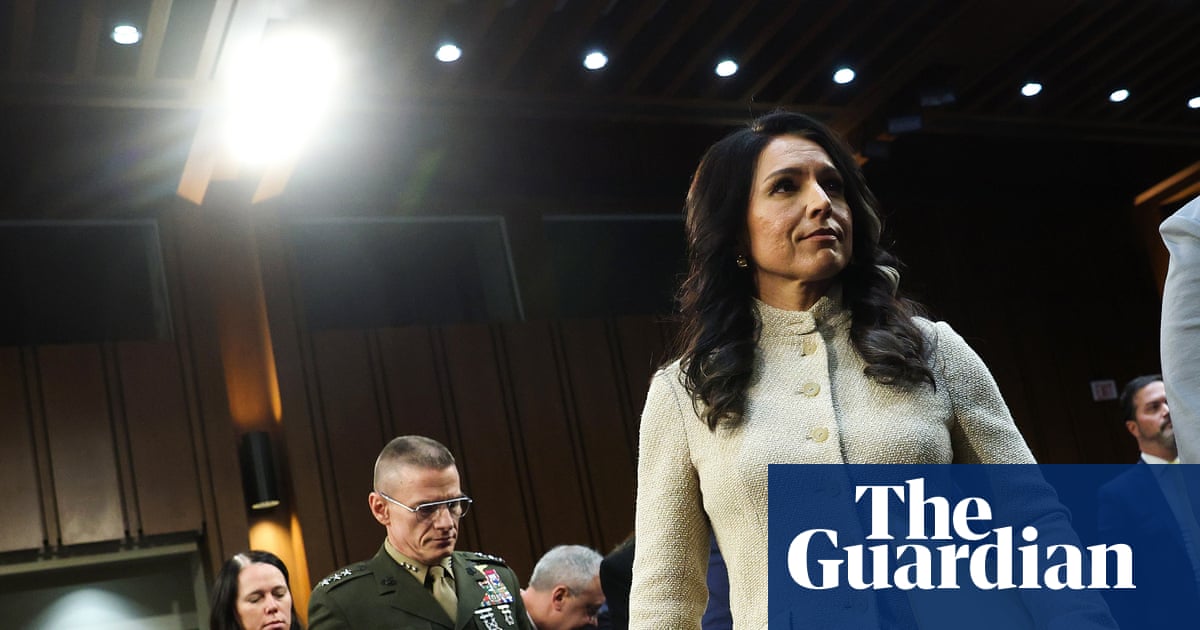
Tulsi Gabbard resigned as US director of national intelligence after a 15-month tenure, with the White House naming Aaron Lukas as acting successor. The article highlights internal tensions over Iran, election-related controversies, staff reductions of 30%, and the dismantling of her Director’s Initiatives Group. The news is primarily political and governance-focused, with limited direct market impact.
The main market implication is not the personnel change itself, but the signal that intelligence coordination is becoming more politicized and less central to policy formation. That raises the probability of sharper policy whipsaws on Iran, election security, and domestic enforcement, which tends to widen dispersion across defense primes, cyber contractors, and adjacent surveillance/security names rather than creating a clean index-level trade. In the near term, the biggest beneficiary is not a single ticker but the administration’s ability to bypass institutional checks, which increases event risk around any headline tied to escalation, covert action, or domestic investigations.
For defense exposure, the first-order move is less important than the second-order sequencing: when national-security decision-making becomes personality-driven, contracting visibility improves for programs aligned with the president’s priorities while non-core oversight and coordination budgets become vulnerable to cuts. That should favor large primes with direct exposure to munitions, missile defense, and classified programs, while hurting firms dependent on ODNI-style analytic spend, data aggregation, or interagency process work. Cyber and election-security vendors could see a short-lived bid on renewed rhetoric, but the lack of stable policy architecture makes those rallies fragile unless appropriations follow within one to two quarters.
The contrarian angle is that markets may be overestimating the durability of any hardline geopolitical shift. A politicized intelligence apparatus can just as easily produce abrupt de-escalation if it becomes a loyalty test rather than an analytic function, especially after a high-profile resignation or if the White House wants to reduce headline risk. That argues for owning optionality, not outright duration: the setup is better for event-driven trades than for a broad thematic allocation.
The cleanest trade is a pairs position favoring defense contractors with direct weapons and missile-defense exposure over names tied to government process and consulting. The risk/reward also supports short-dated upside hedges on select cyber/election-security names into the next Iran or election-integrity headline, but only as tactical trades because implied volatility should decay quickly absent appropriations. Over a 1-3 month horizon, any confirmation of a more hawkish intelligence posture would likely be bullish for defense order flow, while any further signs of internal sidelining would cap that upside.
AI-powered research, real-time alerts, and portfolio analytics for institutional investors.
Request DemoOverall Sentiment
neutral
Sentiment Score
-0.10
Ticker Sentiment
