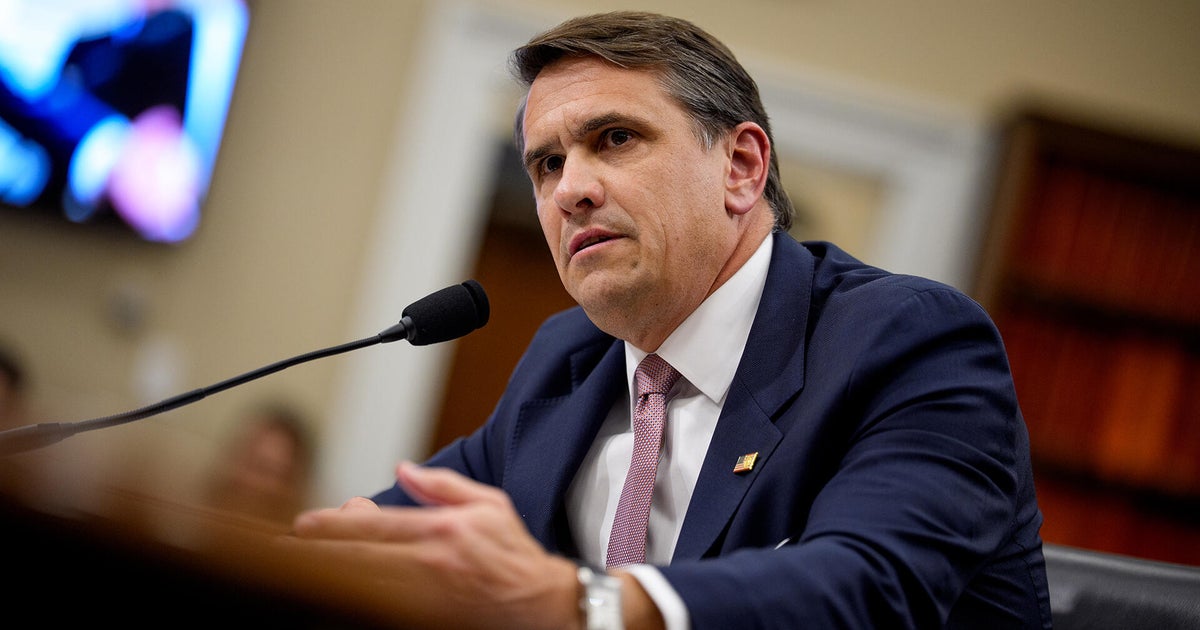
The Justice Department said its proposed $1.7 billion "anti-weaponization fund" is not going forward and asked federal judges to dismiss lawsuits seeking to block it. DOJ filings state the cases are moot, but President Trump has continued to defend the program, leaving some uncertainty despite Acting Attorney General Todd Blanche's written position. The issue remains politically sensitive because the fund was tied to the IRS settlement and drew bipartisan pushback over potential payouts related to Jan. 6.
The immediate market read is not about the fund itself but about the administration’s loss of optionality. By putting the shutdown in writing, DOJ reduces the probability of a durable adverse court order that could have constrained future settlement design; that is incrementally favorable for executive-branch latitude, even if the specific pool appears dead. For IRS-linked equities and broader “tax enforcement intensity” proxies, the signal is that headline risk can persist for weeks, but the path of least resistance is toward de-escalation rather than expansion.
The second-order issue is institutional precedent. If courts accept mootness here, the administration avoids a merits ruling that could have created discovery, injunction, or APA-style constraints on how politically sensitive settlement proceeds are structured in the future. That matters beyond this case: agencies with settlement authority may now be more cautious in earmarking funds with quasi-punitive intent, which slightly lowers the odds of similar populist carve-outs becoming investable political instruments over the next 6-12 months.
For the IRS specifically, the key is not operational disruption but governance overhang. The market should treat this as a low-dollar, high-symbolism event with limited direct earnings impact, but it can still widen discount rates for firms exposed to federal tax policy, audit intensity, and administrative discretion. The biggest tail risk is not the fund resurfacing in its original form; it is a court or congressional response that hardens limits on settlement terms and triggers broader scrutiny of agency discretion, which would be a medium-term negative for transaction optionality across the government contract and tax-adjacent ecosystem.
Contrarian take: the current consensus likely overstates the economic significance of the fund while understating the reputational damage to DOJ credibility. That asymmetry tends to create a short-lived political headline and a longer-lived but smaller governance discount. In other words, this is more likely to fade for the stock tape than for institutional trust metrics.
AI-powered research, real-time alerts, and portfolio analytics for institutional investors.
Request DemoOverall Sentiment
neutral
Sentiment Score
-0.05
Ticker Sentiment
