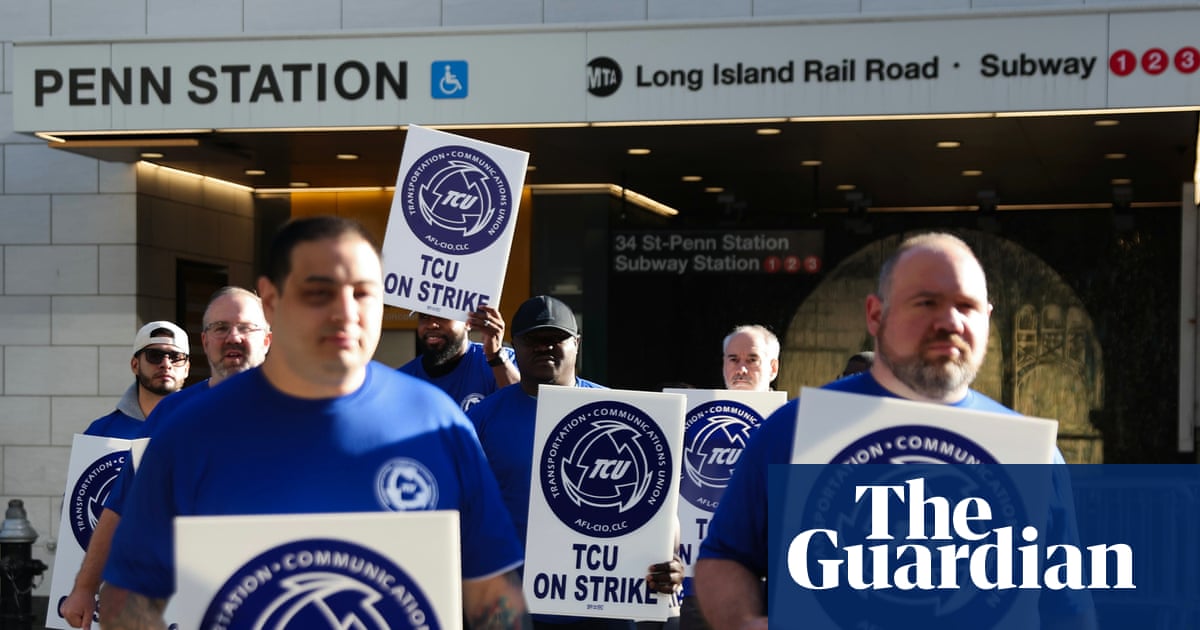
North America’s largest commuter rail system, the Long Island Rail Road, shut down after five unions representing about half its workforce went on strike, halting service for roughly 250,000 weekday riders. The stoppage threatens commutes into New York City, raises the risk of heavier road congestion, and could force shuttle-bus contingency plans to absorb only part of the displaced traffic. The dispute centers on wages and health-care premiums, with potential fare pressure and political implications for Gov. Kathy Hochul ahead of re-election.
The immediate market impact is less about the rail operator itself and more about forced substitution: more car traffic, more rideshare demand, and higher friction costs for suburban labor access. That tends to be mildly inflationary at the margin because commuting becomes costlier and less reliable, which can ripple into service-sector absenteeism and overtime expenses within days. The bigger second-order effect is political: once a commuter disruption starts affecting a swing-county electorate, the negotiating stance usually shifts from wage discipline to service restoration, shortening the expected duration of the strike.
The key risk is duration. A 48-hour interruption is a nuisance; beyond a week, employers begin converting temporary workarounds into permanent behavior tests, especially in office-heavy sectors, and that can weaken long-run transit ridership even after a deal is reached. The MTA’s real vulnerability is not just higher labor cost, but a credibility hit that raises the hurdle rate for future fare increases and bond issuance optics, which can widen financing pressure over the next several months.
Contrarianly, the consensus may be overestimating the union’s leverage on wages and underestimating the agency’s ability to use a fast deal as political damage control. If policymakers conclude that fare hikes are electorally toxic, the eventual settlement could be structured with deferred or back-loaded costs, limiting near-term cash burn but preserving headline pay gains. That makes the trade more about timing than direction: the market may price in an immediate concession package, while the actual economic drag resolves only if the stoppage persists into the workweek.
From a broader macro lens, this is a localized labor shock that can still reinforce the sticky-inflation narrative because it raises transportation inconvenience costs and may force overtime, parking, and last-mile logistics spending higher. The beneficiaries are alternatives that monetize commuter substitution; the losers are transit-dependent retail, office attendance, and suburban consumer discretionary spend if the disruption lasts beyond a few days.
AI-powered research, real-time alerts, and portfolio analytics for institutional investors.
Request DemoOverall Sentiment
moderately negative
Sentiment Score
-0.45
Ticker Sentiment
