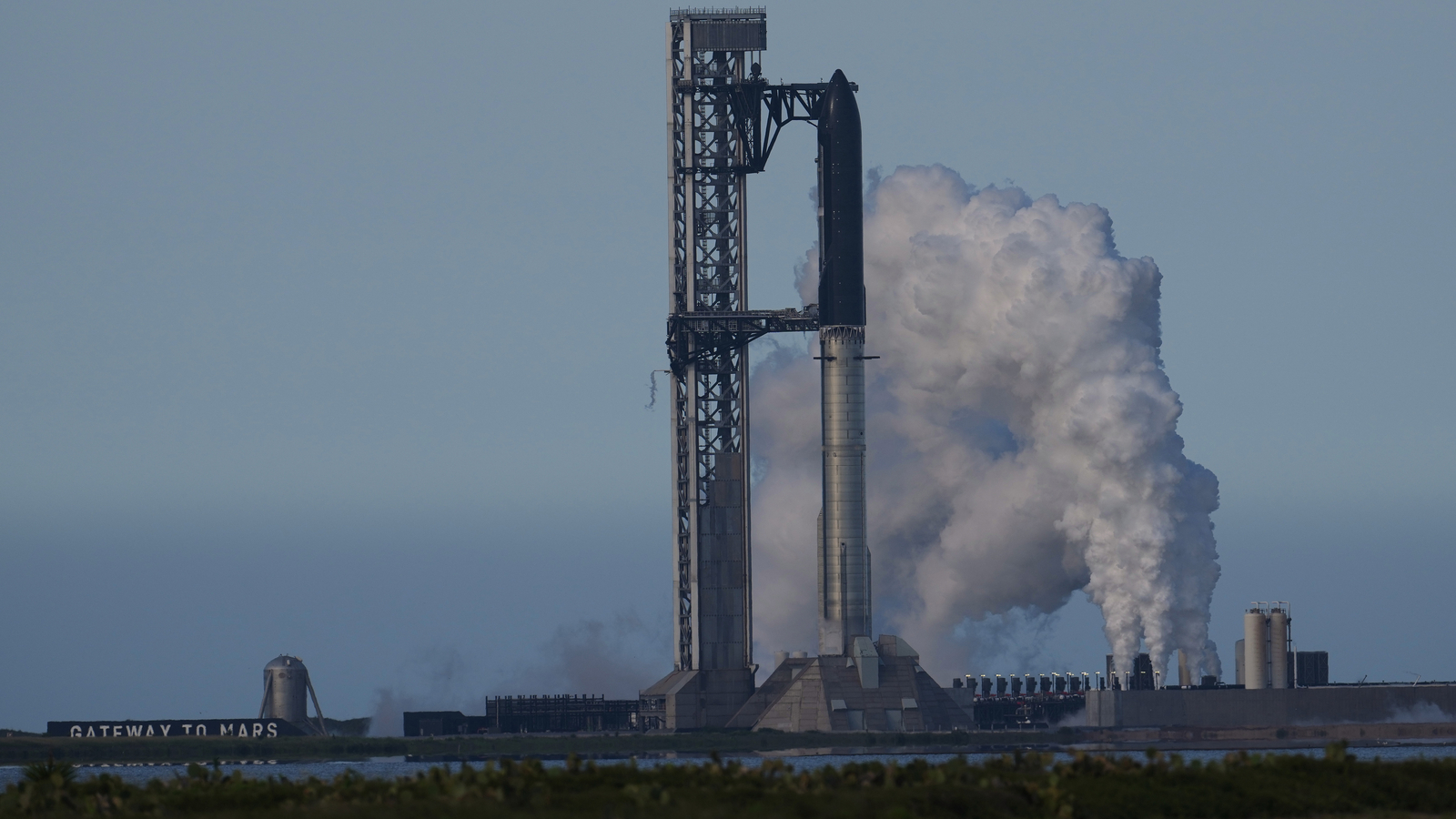
SpaceX's latest Starship test launch was scrubbed within 30 seconds of liftoff due to a hydraulic pin failure at the new Starbase pad, delaying the 407-foot rocket's 12th test flight. A quick fix could allow another attempt Friday. The article also notes Elon Musk said SpaceX will go public, adding a separate capital-markets angle.
The immediate market read is not about a single test delay; it is about execution risk in a program that is being asked to do too many things at once: validate a new launch stack, de-risk a lunar architecture, and support an implied IPO narrative. In the near term, repeated “almost-launched” events can actually help the commercial business by reinforcing technical momentum, but a pad-level failure on brand-new ground infrastructure raises the probability that schedule slips are coming from the ground segment rather than the vehicle itself. That distinction matters because ground systems are harder to monetize and easier for competitors to replicate, so the market should not extrapolate vehicle progress into a clean commercialization timeline.
The second-order winner, if any, is the broader launch ecosystem: suppliers of actuators, hydraulics, range-safety, and launch infrastructure testing see more demand for redundancy, qualification, and preventive maintenance. The loser is any near-term IPO framing that relies on clean operational cadence; public investors will likely discount aerospace multiples if the company is simultaneously telling the market it can scale launch rate while still discovering basic integration failures at the pad. Over months, this can compress the valuation of adjacent private space names if capital starts favoring proven execution over “moonshot optionality.”
The key contrarian point is that a setback here does not necessarily impair the long-run thesis; it may improve it if management treats the failure as evidence to harden the system before human-rated missions. The market often overweights launch optics and underweights the value of identifying failure modes before orbital or crewed operations. The real risk window is the next 1-3 attempts: if the company cannot convert this from a one-off anomaly into a reliable cadence within weeks, confidence in both the NASA timeline and any IPO premium should fade quickly.
For public-market proxies, the best risk/reward is likely a tactical long on established launch/defense primes with space exposure versus a basket of speculative space names that trade on narrative rather than backlog, because schedule slippage tends to shift procurement toward incumbents with higher reliability. The IPO announcement also creates a short-term setup in any listed supplier or competitor that could be re-rated if investors anticipate a capitalization event drawing attention away from the core program. In options terms, the next catalyst is the immediate re-attempt window; after that, the trade becomes about whether the company shows operational repetition or just another isolated headline.
AI-powered research, real-time alerts, and portfolio analytics for institutional investors.
Request DemoOverall Sentiment
neutral
Sentiment Score
-0.10
