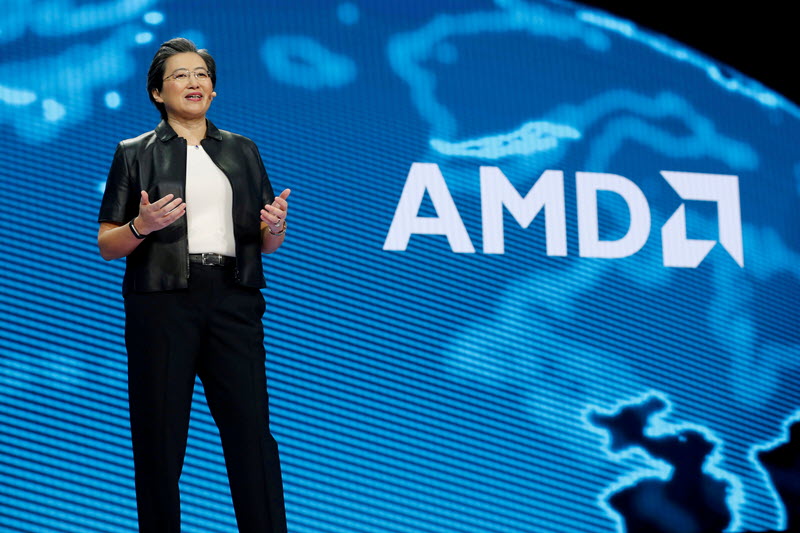
DA Davidson upgraded AMD to Buy from Neutral and lifted its price target to $375 from $220, citing a structural increase in CPU demand and better visibility into AMD’s data center role. The firm raised 2026 estimates by $2B of revenue and $1.5B of gross profit, saying AMD can raise prices and expand margins as demand outpaces supply. The article also highlights multiple positive Intel analyst actions tied to stronger CPU demand from AI workloads, reinforcing the broader bullish read-through for semiconductors.
The key market implication is not simply that AMD and INTC get a demand tailwind, but that the AI capex mix is broadening from accelerator scarcity to a full-stack CPU bottleneck. That shifts pricing power toward x86 suppliers for a longer period than consensus models assume, because agentic inference architectures are more CPU-intensive and create a second wave of server refresh demand even if GPU budgets normalize.
For AMD, the most important second-order effect is margin leverage, not just unit growth. If supply remains tight into next year, the company can force a more favorable product mix and pricing reset, which could pull gross margins meaningfully above current buy-side assumptions; the risk is that investors extrapolate revenue upside without underwriting the supply-constrained realization lag. For INTC, the surprise is less about cyclical recovery and more about validation of its relevance in an AI server world, which could compress the valuation gap versus AMD and reduce the perceived inevitability of share gain loss.
META matters as a demand proxy, but the bigger signal is ecosystem-wide capex durability: if hyperscalers are truly rebalancing toward more CPU-heavy inference, then the “AI winners” basket broadens beyond GPU semis into server OEMs, networking, and foundry/packaging capacity. The contrarian risk is that this enthusiasm is already creating a crowded “AI CPU” trade; if hyperscaler spending pauses for even one quarter, the market may de-rate the entire subgroup faster than the fundamentals deteriorate.
Near term, the biggest catalyst is AMD’s upcoming print: the market is likely still underestimating how much upside can come from guidance mechanics rather than reported results. Over a 3-6 month window, the better trade may be relative value versus INTC rather than outright beta, because the stock most likely to re-rate is the one with the cleanest path to converting demand into EPS revision momentum.
AI-powered research, real-time alerts, and portfolio analytics for institutional investors.
Request TrialOverall Sentiment
moderately positive
Sentiment Score
0.62
Ticker Sentiment
