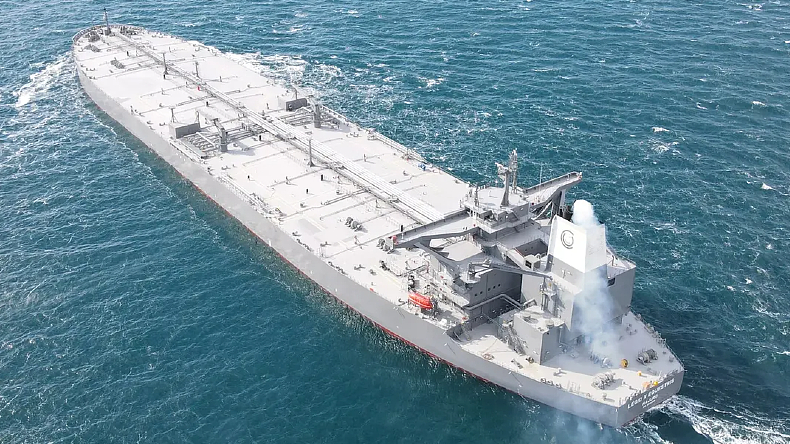
More than 150 non-sanctioned crude and product tankers remain trapped in the Middle East Gulf, including 62 VLCCs, even as limited vessel movements resumed after the April 8 ceasefire. Traffic through Hormuz is still constrained, with a possible first Japanese VLCC departure noted, but major owners such as Cosco, Frontline, Mitsui OSK, NYK and Sinokor still have multiple ships unable to exit. The bottleneck adds near-term logistical risk for global tanker flows and crude/product transport.
The immediate market signal is less about disrupted barrels than about who is forced into optionality decay. Tanker owners with hulls stuck in the Gulf are eating time-charter revenue while still carrying financing, crew, and operating costs; the longer this persists, the more the event turns from a spot-rate spike into a balance-sheet story for highly levered owners. That is a mixed setup for FRO: the headline is supportive for spot rates, but any fleet trapped in the wrong basin can also create near-term idle time and voyage inefficiency that caps the earnings pop.
Second-order, the congestion acts like a hidden supply shock in the Atlantic and Med because cargoes that would normally reposition on schedule will now bunch up later, tightening availability outside the Gulf even if headline volumes are unchanged. That supports near-dated crude and product tanker rates more than longer-duration fundamentals, especially if charterers rush to rebuild inventories once lanes normalize. The benefit is strongest for owners with open capacity outside the conflict zone and weakest for operators with concentrated exposure to Middle East loading.
The contrarian read is that the market may be overpricing permanence. Ceasefires often produce a short-lived rebound in traffic before insurers, port agents, and charterers re-anchor to a wider risk discount; if there is no follow-through incident in the next 1-3 weeks, freight may mean-revert faster than consensus expects. The bigger downside tail is not another spike in rates but a sudden normalization that leaves momentum longs chasing a transient dislocation while trapped tonnage quietly resumes service.
For FRO specifically, the setup is better as a tactical trade than a structural thesis: near-term earnings revisions can improve if outbound sailings stay constrained, but the stock can give back gains quickly once vessel flow resumes. The key variable is not the number of stranded ships, but whether the backlog creates enough rolling congestion to keep spot fixtures elevated into the next fixing window.
AI-powered research, real-time alerts, and portfolio analytics for institutional investors.
Request DemoOverall Sentiment
moderately negative
Sentiment Score
-0.35
Ticker Sentiment
