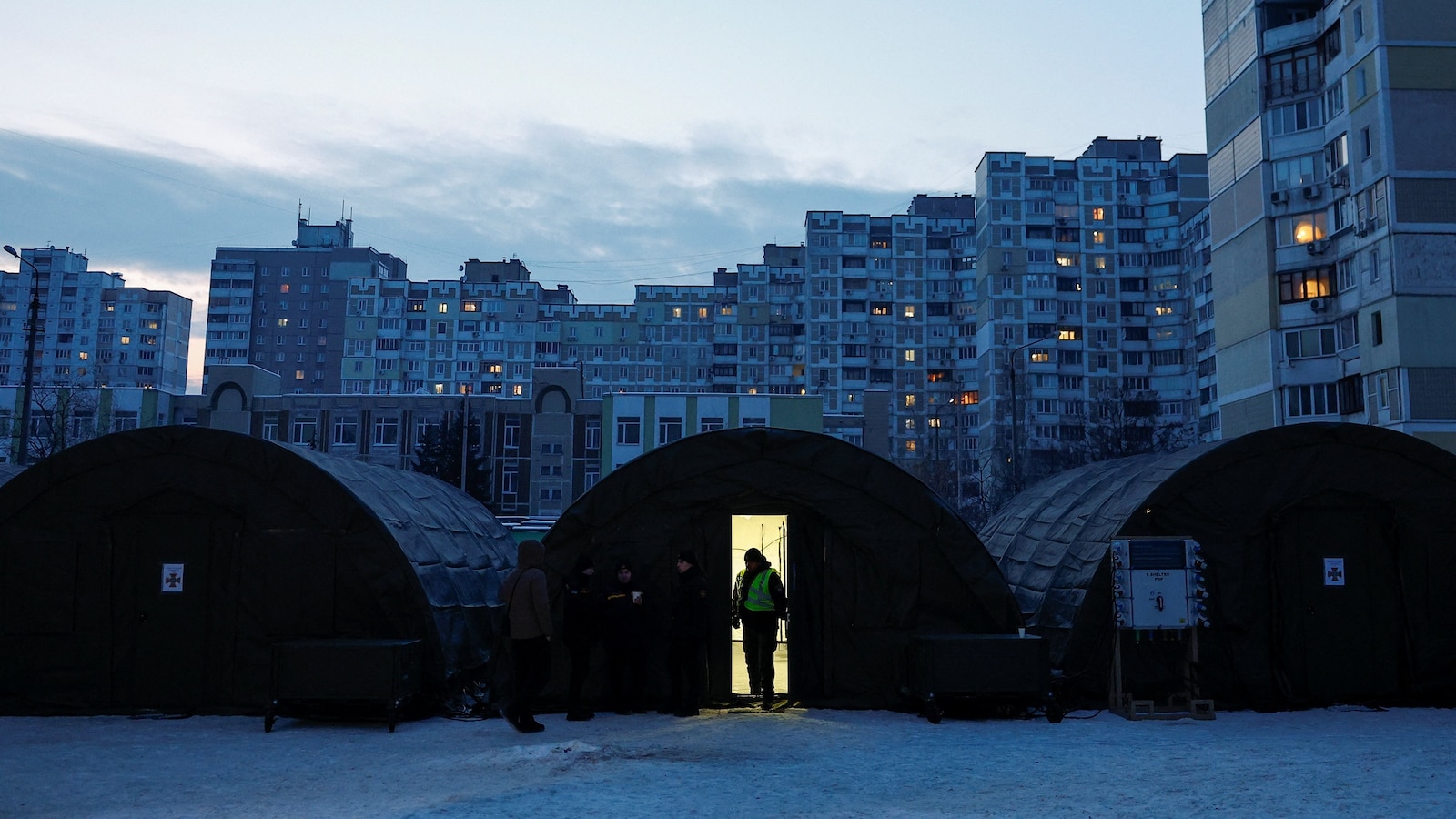
Russia has escalated winter strikes on Ukraine's energy infrastructure, with Ukrainian authorities reporting 4,577 long-range drones and missiles launched in January and large barrages that left an estimated 2.5 million people without power on Jan. 24; air defenses claim to have downed or suppressed ~83% of drones and ~51% of missiles. The attacks have prompted a national state of emergency (declared Jan. 14), displacement (≈600,000 left Kyiv), warnings of a looming humanitarian catastrophe from major energy firms, and mobilization of Western support including hundreds of generators and a modular thermal plant capable of powering roughly 1 million people—an escalation that raises near-term energy security risks, reconstruction and humanitarian financing needs, and potential impacts on regional energy supply chains.
Market structure: Immediate winners are generator manufacturers (e.g., GNRC), defense primes (LMT, RTX, GD) and LNG/exporters (LNG, EQNR) as Europe and Ukraine scramble for backup power, fuels and weapons; losers include Ukrainian utilities, local banks, sovereign bondholders and civilian-dependent consumer sectors. Pricing power shifts to fast-delivery capex suppliers (generators, mobile power, spare-parts) and spot LNG/ diesel sellers; expect front-month TTF and diesel crack spreads to widen 15–40% during acute strike windows.
Risk assessment: Tail risks include escalation that hits EU infrastructure (forcing NATO response) or sanctions that block key western suppliers — both would spike energy/defense volatility and widen Ukrainian CDS by >200–400bps. Timeframes: days-weeks = power price and generator order shocks; months = defense & EPC revenue; years = reconstruction-driven steel/copper demand. Hidden dependencies include logistics/insurance bottlenecks, donor funding cadence and sanction constraints on dual-use equipment.
Trade implications: Direct plays favor near-term longs in GNRC (generators), selected defense primes (LMT/RTX), and LNG exporters; buy front-month TTF or prompt calendar spreads to capture winter premium. Use options (3–6 month call spreads) to express directional views while capping downside; hedge geopolitical tail risk with long-dated puts on broad equities or buy Ukrainian CDS if exposed.
Contrarian angles: Consensus underestimates multi-year reconstruction capex (likely $50–200bn+) driving durable demand for transformers, copper and heavy industry — these suppliers are underowned. Conversely, knee-jerk long on Russian energy names is likely overdone given sanction tail risk; watch donor funding and a Russian pause (political negotiation window) as a quick negative catalyst for generator and power-price trades.
AI-powered research, real-time alerts, and portfolio analytics for institutional investors.
Request DemoOverall Sentiment
strongly negative
Sentiment Score
-0.75
