






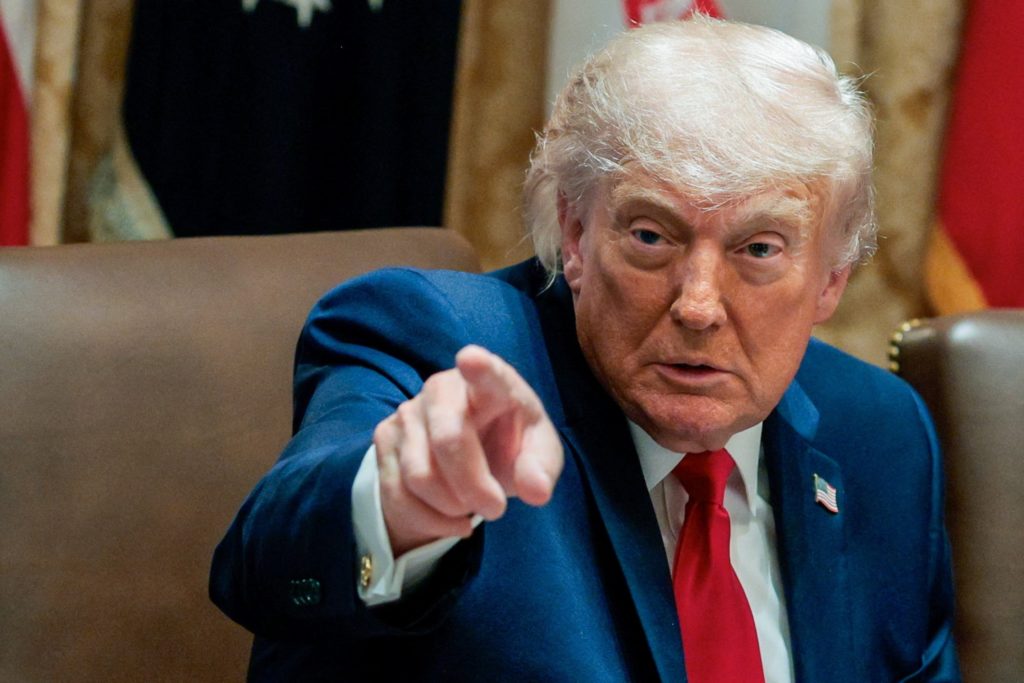
President Trump disclosed more than 3,700 stock trades in the first three months of 2025, raising conflict-of-interest concerns because his portfolio included names tied to government actions such as Palantir, Nvidia, ExxonMobil, Chevron, Lockheed Martin, and General Dynamics. The report highlights a roughly $6.1 billion estimated net worth, up from about $2.4 billion in 2021, and notes trades made around policy and geopolitical developments, including Iran-related headlines and U.S. approvals affecting Nvidia. The main issue is governance and perceived market distortion rather than an immediate macro market shock.
The market implication is less about direct alpha from any one disclosure and more about a policy-signal regime where headline risk becomes a return driver. If the White House is perceived to be monetizing geopolitical and regulatory discretion, then sector dispersion should widen: defense and AI names can still benefit on fundamentals, but they now carry a higher “event premium” because any incremental upside may be followed by political backlash, subpoenas, or tighter oversight. That usually compresses forward multiples even when near-term earnings stay intact.
The more actionable angle is in energy. If officials are seen as shaping the probability distribution around conflict de-escalation, crude-linked equities may trade on newsflow rather than fundamentals over the next 1-3 months. Integrateds like CVX and PSX are the cleaner hedge than pure upstream because their downside is cushioned if the political theater deflates prices while their refining optionality still benefits from volatility; however, any genuine ceasefire or policy thaw would hit the complex fast and reverse the trade within days.
PLTR is the clearest second-order beneficiary because it combines contract intensity with narrative momentum, but that also makes it the most vulnerable to any ethics investigation: the stock can outperform on government AI spend, then de-rate sharply if investors start pricing legal/PR overhang or procurement delays. NVDA and META look less directly exposed on a legal basis, but they are vulnerable to “attention tax” if the administration’s tech picks become a broader governance issue. The consensus underestimates how quickly these debates can shift from ethical concern to actual capital allocation friction, especially among federal counterparties and index-sensitive institutions.
Contrarian view: the immediate selloff risk in defense is likely overstated unless there is a concrete probe or legislative push. In the absence of enforcement, the scandal can paradoxically entrench spending rather than reduce it, because agencies may accelerate purchasing from politically favored vendors to align with the administration’s agenda. That means the cleanest short is not the names in the story, but the governance-sensitive basket that could lose multiple expansion if public trust deteriorates and Congress responds with trading restrictions or disclosure reforms.
AI-powered research, real-time alerts, and portfolio analytics for institutional investors.
Request TrialOverall Sentiment
mildly negative
Sentiment Score
-0.20
Ticker Sentiment
