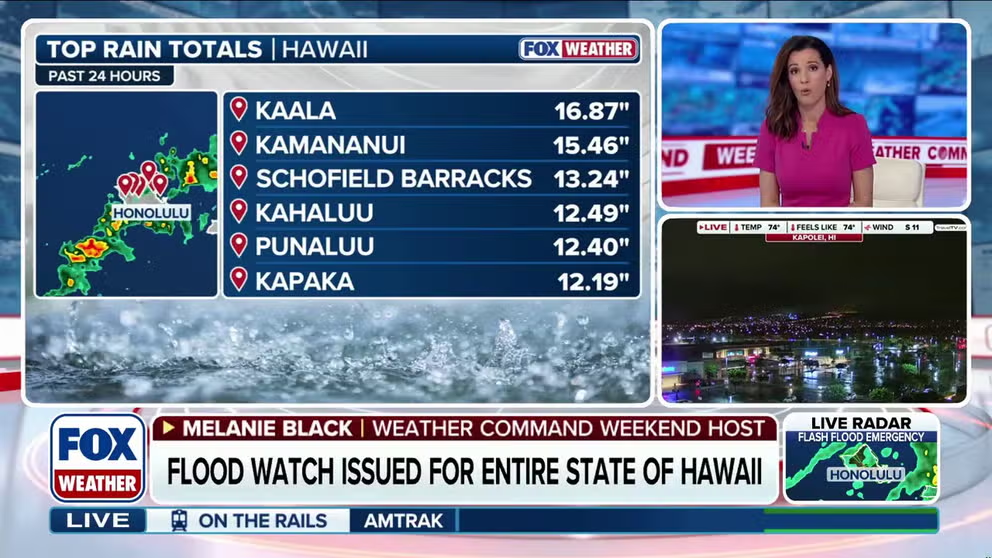
Nearly 196 people have been rescued and widespread evacuations ordered as Hawaii endures its worst flooding in 20 years; a Flash Flood Emergency was issued over concerns of imminent failure at Wahiawa Dam. Governor Josh Green warned damage to a major Maui hospital, airports, schools, homes and roads and said the storm could cost over $1 billion. Honolulu County and Maui County remain under flash flood warnings, and forecasts call for another 3–5" statewide with 8–12" at higher elevations and localized amounts over a foot, prolonging disruption to utilities, transport and local tourism.
This island-specific shock will compress near-term cash flows for businesses whose revenue is concentrated in destination travel and localized utilities, creating a distinct 0-3 month earnings risk window even if national macro is stable. Expect a high-frequency revenue hit (bookings, airport throughput, rental inventory utilization) that can materially widen short-term EBITDA downside for small-cap regionals—larger national players will feel more muted but may see transient margin pressure via disrupted schedules and repositioning costs.
Reconstruction demand creates a 3-18 month asymmetric opportunity: heavy equipment, building-materials and big-box home-improvement channels should see order pull-forward and higher average ticket sizes, while local contractors face supply-chain bottlenecks that lift prices for cement, aggregates and logistics. That flow typically produces 5-15% incremental revenue for national suppliers in affected geographies and can expand sector gross margins before input inflation normalizes.
Financial plumbing will reprice: primary insurers may absorb first-round losses but the real earnings lever is reinsurance pricing and brokerage fees, which typically harden 6-18 months after a concentrated loss event, benefiting brokers and reinsurers while pressuring legacy-exposed carriers. Separately, regulated utilities face a political/regulatory game—near-term cash needs and capex claims vs. potential rate-case offsets—creating idiosyncratic alpha opportunities around regulatory outcomes.
Key catalysts to watch are (1) precise insured-loss estimates and broker commentary over the next 30-90 days, (2) federal/state recovery funding decisions and procurement timelines, and (3) upcoming seasonal amplification from El Niño dynamics that could extend restoration timelines; a catastrophic infrastructure failure would be the low-probability, high-impact downside that would extend the pain into multi-year insurance cycles.
AI-powered research, real-time alerts, and portfolio analytics for institutional investors.
Request DemoOverall Sentiment
strongly negative
Sentiment Score
-0.75
