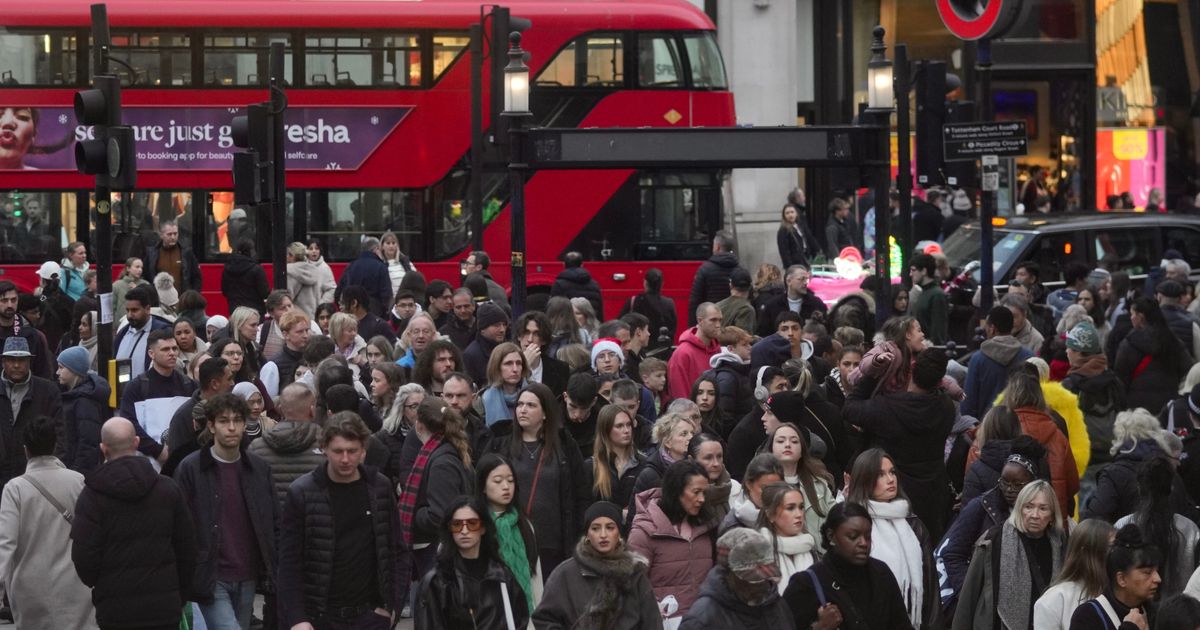
London mayor Sadiq Khan has announced plans to pedestrianize a key 0.7-mile (1.1-km) section of Oxford Street between Oxford Circus and Marble Arch, with works starting in summer and the first traffic-free section due by year-end; the full street is 1.2 miles (1.9 km) and attracts roughly half a million visitors per day. The mayor obtained powers via a Mayoral Development Corporation and Transport for London has taken control of the road, with the stated goal of boosting footfall and spending for flagship retailers such as Marks & Spencer, John Lewis and Selfridges; the plan received reported business support but poses logistical challenges for rerouting buses and taxis and faces execution risk tied to competing road-space priorities.
Market structure: Pedestrianizing 0.7 miles of Oxford Street (c.500k daily visitors) reweights demand from transit-driven convenience spending to experience-led retail/leisure. Expect winners: flagship retailers, leisure operators, and central-London landlords with mixed-use assets (potential 10–20% EBITDA upside for experience-heavy tenants if footfall increases 10–15% year-on-year). Losers: pass-through commuter retail, taxi/bus operators and peripheral retail parks that capture diverted flows; near-term tenant cashflow stress could keep vacancy risk elevated for 6–12 months.
Risk assessment: Key tail risks are political reversal post-election, TfL funding shortfalls delaying works >3–6 months, and operational disruption (construction cost overruns, protests) causing >20% drop in interim footfall. Time horizons: immediate (days–weeks) limited market reaction; short-term (3–12 months) rerouting friction and lease renegotiations; long-term (12–36 months) potential re-rating of property assets and tenants. Hidden dependencies include landlord balance-sheet leverage, lease expiry schedules (if >30% of Oxford Street rent rolls roll in next 24 months, impact is magnified) and tourist recovery to pre-COVID levels.
Trade implications: Direct plays: overweight central-London dominant REITs (e.g., Landsec LSE:LAND, British Land LSE:BLND) and selective leisure/hospitality (Whitbread WTB.L) for 12–24 months; short regional mall/discount retail landlords (e.g., Hammerson HMSO.L) as a relative hedge. Use options: buy 9–12 month call spreads on LAND/BLND (delta ~0.35) funded by selling 3–6 month OTM puts to collect premium and cap downside. Entry trigger: initiate on construction start notice (expected summer); if start delayed >90 days, reduce size by 50%.
Contrarian angles: Consensus assumes universal landlord benefit — miss is heterogeneity: convenience-led small-format retailers and lunchtime food-to-go operators may lose 10–25% of sales if bus access is restricted, pressuring short-term rents. Historical parallels (Carnaby St., La Rambla) show pedestrianization can take 12–36 months to translate into stable ARRs; if online penetration rebounds or rents rebase, central landlords may only capture 30–50% of theoretical upside. Unintended consequence: increased local congestion and business rates reallocation could shift benefits away from landlords to public services, capping NAV upside under 15%.
AI-powered research, real-time alerts, and portfolio analytics for institutional investors.
Request TrialOverall Sentiment
mildly positive
Sentiment Score
0.25
