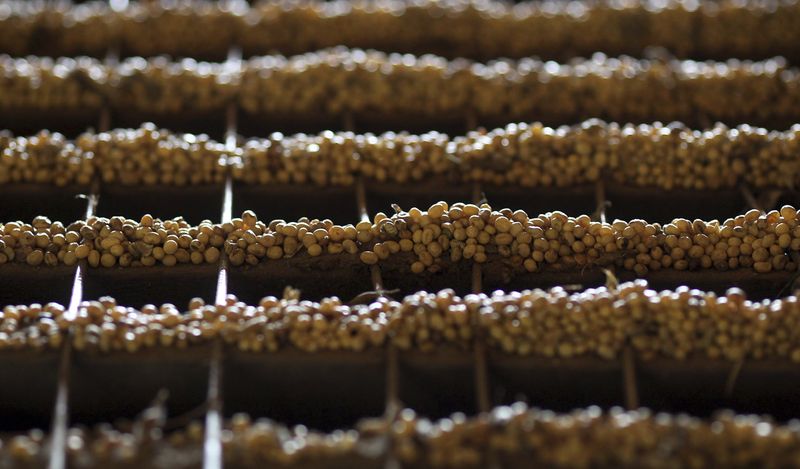
CBOT July soybeans closed up 2-1/4 cents at $12.29 per bushel after touching a two-month high, while July soyoil fell 1.04 cents to 74.32 cents per pound. The move reflected expectations that U.S.-China talks could lead to additional Chinese agricultural purchases, though traders did not expect major new soybean orders beyond the October deal. USDA also projected 2026/27 U.S. soybean ending stocks below analyst forecasts, providing some support.
The market is pricing the headline as a bullish demand event, but the more important signal is sequencing: China can use selective agricultural buying as a low-cost diplomatic concession while keeping hard commodity leverage intact. That means the first-order winner is not U.S. soybeans broadly, but volatility itself — farmers and merchandisers may get a short-lived price pop, while end buyers will likely keep running hand-to-mouth until they see whether any deal translates into actual shipment timing.
The second-order effect is a rotation within the oilseed complex. If China leans into grain and meat purchases instead of large incremental soybeans, crush margins and feed substitution matter more than flat-price soy demand; so meal and livestock inputs can outperform while oil remains capped. The soyoil weakness is consistent with a market that is skeptical of biofuel-linked tightness, implying the soybean complex may struggle to sustain rallies unless there is a broader policy move on renewable blending or Argentine/Brazilian supply risk.
The real risk is that this becomes a classic rumor-buy, fact-sell setup over the next 1-3 weeks. A modestly bullish USDA stock revision can support the front end, but if China confines purchases to the existing October framework, nearby futures likely fade as commercial hedgers reappear and speculative length gets squeezed. Conversely, any escalation in geopolitical rhetoric that disrupts shipping or tariffs would matter more than the ag buying itself, because that would change basis, not just futures pricing.
Consensus seems too focused on the bilateral optics and not enough on substitution. If China shifts even a portion of incremental protein demand toward South American origin, the U.S. response could be less about higher volume and more about forced discounting, especially into new-crop marketing windows. In that case, the trade is not a structural bullish breakout, but a fadeable squeeze with a tight catalyst window.
AI-powered research, real-time alerts, and portfolio analytics for institutional investors.
Request DemoOverall Sentiment
neutral
Sentiment Score
0.10
