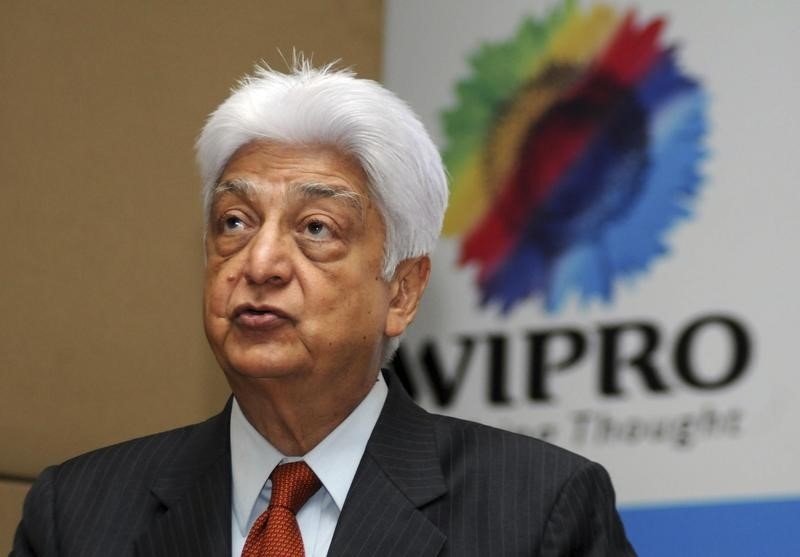
Wipro shareholders approved a buyback of up to 600 million shares, or 5.72% of paid-up equity, at ₹250 per share for a total of up to ₹150 billion ($1.8B). Shareholders also approved the reappointment of Tulsi Naidu and the appointment of Laura Marie Miller as independent directors, reinforcing board continuity. The news is positive for capital returns and governance, but it is routine and unlikely to materially move the stock on its own.
This is less about the optics of governance and more about capital allocation discipline finally becoming monetizable. A buyback of this scale at a fixed price effectively creates a soft floor under the equity while also telegraphing that management sees its own stock as the highest-conviction use of capital versus M&A or larger organic investment. In a market where offshore delivery names are being judged on cash conversion, that can help WIT re-rate from “steady compounder” to “return-of-capital story,” which typically widens the investor base and compresses valuation dispersion versus peers.
The second-order winner is not just WIT shareholders but competitors with weaker payout capacity: if WIT absorbs a meaningful chunk of free float, it can tighten supply of the ADR over the next several months and support relative performance even without an earnings surprise. The risk is execution timing—if the repurchase window overlaps with any currency or macro wobble in India tech spending, the company could end up buying more aggressively into deteriorating fundamentals, which would limit the multiple benefit. Governance changes also matter because a refreshed board tends to lower the probability of capital-allocation drift, but it does not fix weak demand or pricing pressure in the underlying business.
The market may be underpricing the signal value of the authorization relative to the direct mechanical impact. Because the tender is priced well below where long-only holders would usually demand a premium, the program may attract only partial participation, meaning the actual share count retired could be smaller than the headline suggests; that reduces immediate EPS accretion but increases the likelihood the stock trades on sentiment and scarcity rather than pure math. Near term, the key catalyst is whether management announces the repurchase cadence quickly; if they move within weeks, the stock can outperform on flow alone, while a slow rollout would make this mostly a medium-term support story.
Contrarian view: a large buyback in an emerging-market IT services name can be read as a sign that incremental reinvestment opportunities are less attractive than the market assumes. That is bullish for capital returns, but it can also cap the higher-growth narrative and make the stock more bond-like than equity-like. The best setup is not chasing a breakout, but buying on weakness if the market sells the announcement as a sign of maturity rather than discipline.
AI-powered research, real-time alerts, and portfolio analytics for institutional investors.
Request DemoOverall Sentiment
mildly positive
Sentiment Score
0.20
Ticker Sentiment
