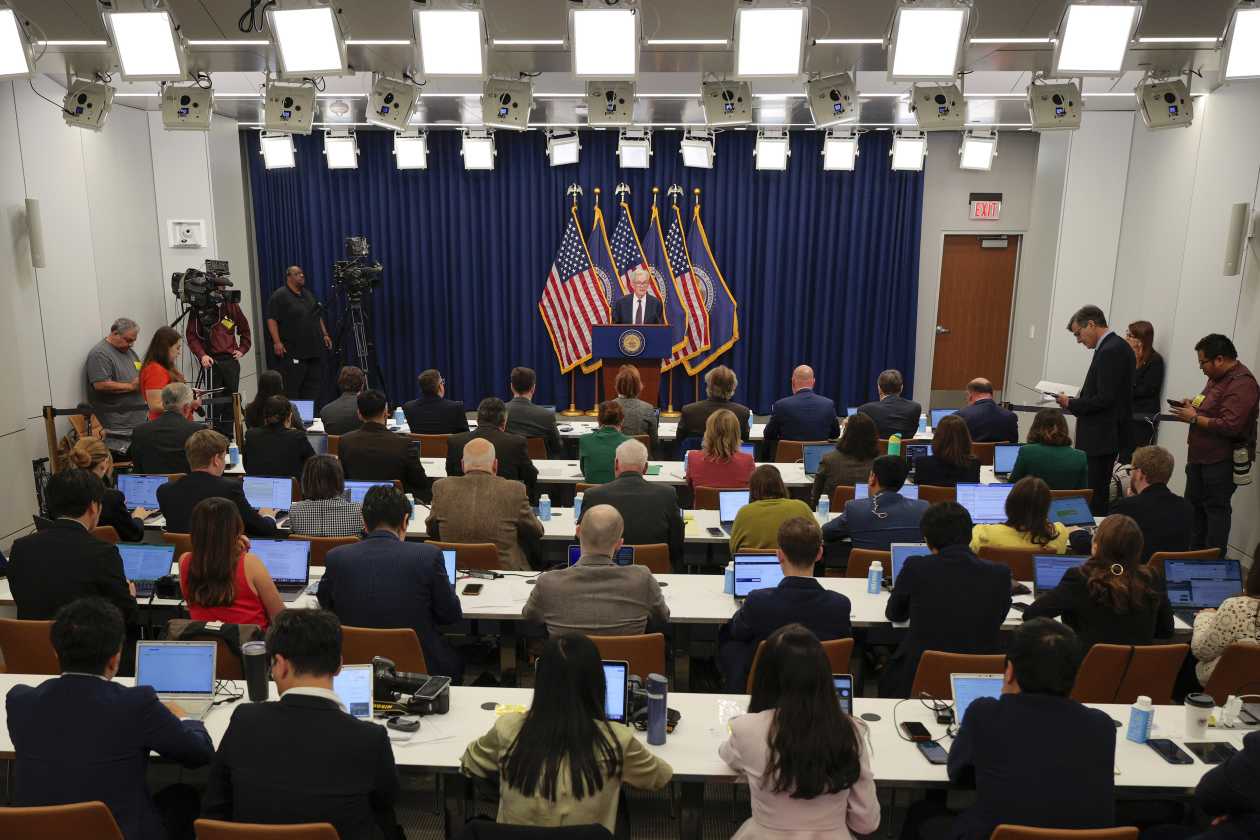
Following its recent 25 basis point rate cut, the Federal Reserve is anticipated by analysts to implement another quarter-point reduction in October, with a December cut being less certain. The Fed is reportedly downplaying persistent inflation risks from tariffs and demonstrated a unified front with minimal dissent, supporting Chair Powell and Fed independence. Analysts also clarify that Powell's 'risk-management cut' comment, initially misinterpreted by markets as cautious, actually signals a proactive stance, indicating the Fed's readiness to act without waiting for further economic deterioration, despite a notable divergence between market and Fed expectations for future rate paths.
Following the Federal Reserve's 25 basis point rate cut, the prevailing analysis from Fed watchers suggests a dovish policy trajectory. A subsequent quarter-point cut in October is seen as the "path of least resistance," though a December move is considered a "closer call" and more data-dependent. The market's initial negative interpretation of Chair Powell's "risk-management cut" remark has been corrected by institutional analysis, which reframes it as a risk-positive signal of the Fed's willingness to act preemptively against weakness. Internally, the Fed committee demonstrated significant unity with minimal dissent, a move interpreted as deliberate support for Chair Powell and central bank independence. Furthermore, officials appear to have reached a consensus to look past tariff-related inflation, viewing it as a "one-off" price event, thereby removing a key barrier to further easing. A critical divergence remains between the market's expectation for rates below 2% next year and the Fed's projection near 3.4%, a gap strategists suggest may reflect market pricing for a potential change in Fed leadership.
AI-powered research, real-time alerts, and portfolio analytics for institutional investors.
Overall Sentiment
moderately positive
Sentiment Score
0.50
Ticker Sentiment
