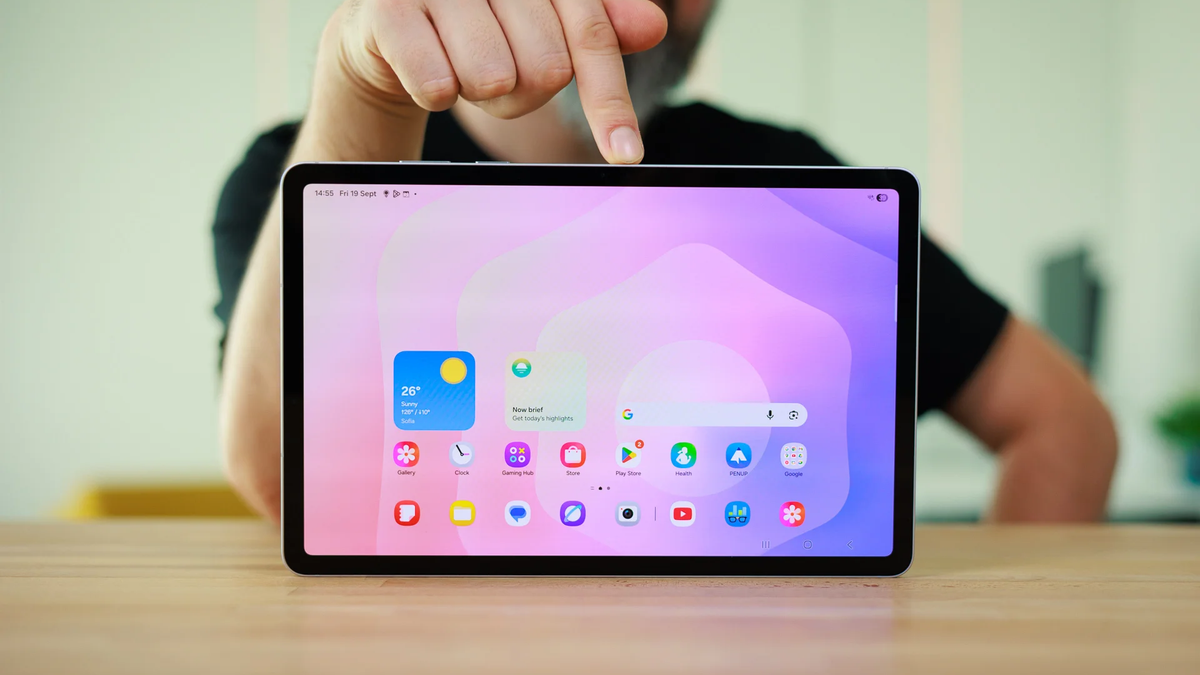
Samsung released One UI 8.5 Beta 3 for the Galaxy Tab S11 and Tab S11 Ultra on April 28, 2026, a 719.94 MB update initially rolled out in South Korea. The patch adds Call Screening and Creative Studio, while also improving split-screen multitasking and Samsung DeX stability, including fixes for Cmd+F in Guest Mode and second-screen use. The news is modestly positive for Samsung’s tablet lineup and highlights more premium AI-driven features for flagship tablets.
This is a subtle but important signal that Samsung is widening the feature gap between premium tablets and older phones, which supports a second-order upgrade cycle in the high-end Android ecosystem. The near-term beneficiary is less the tablet hardware itself than the value of Samsung’s software stack: AI utilities, multitasking, and DeX-like workflows become more monetizable when they are gated to larger-screen devices where the productivity use case is more credible. That should help Samsung defend ASPs on the tablet side and reduce the risk that the Tab franchise is perceived as a commoditized iPad clone.
The more interesting implication is competitive: Apple’s iPad still owns the tablet mindshare, but Samsung is attacking on a different axis—desktop utility plus AI workflow integration. If this keeps progressing, it pressures Windows 2-in-1 makers and low-end laptops more than tablets, because the overlap is in “light productivity on the go,” not media consumption. The software rollout also suggests Samsung is using tablets as a proving ground for features before broader mobile deployment, which can improve beta feedback quality and lower the probability of failed flagship launches.
The contrarian read is that this is incrementally bullish for Samsung but not a step-function demand driver yet. Creative/AI features are nice-to-have until they show measurable engagement lift, and the longer lag to stable release means monetization is probably a 2H26 story rather than immediate. The key risk is that if Samsung over-weights premium software on a small installed base, it may raise expectations without expanding the market; the upside only compounds if it converts into higher attach rates for keyboards, second screens, and Galaxy ecosystem services.
AI-powered research, real-time alerts, and portfolio analytics for institutional investors.
Request DemoOverall Sentiment
mildly positive
Sentiment Score
0.35
