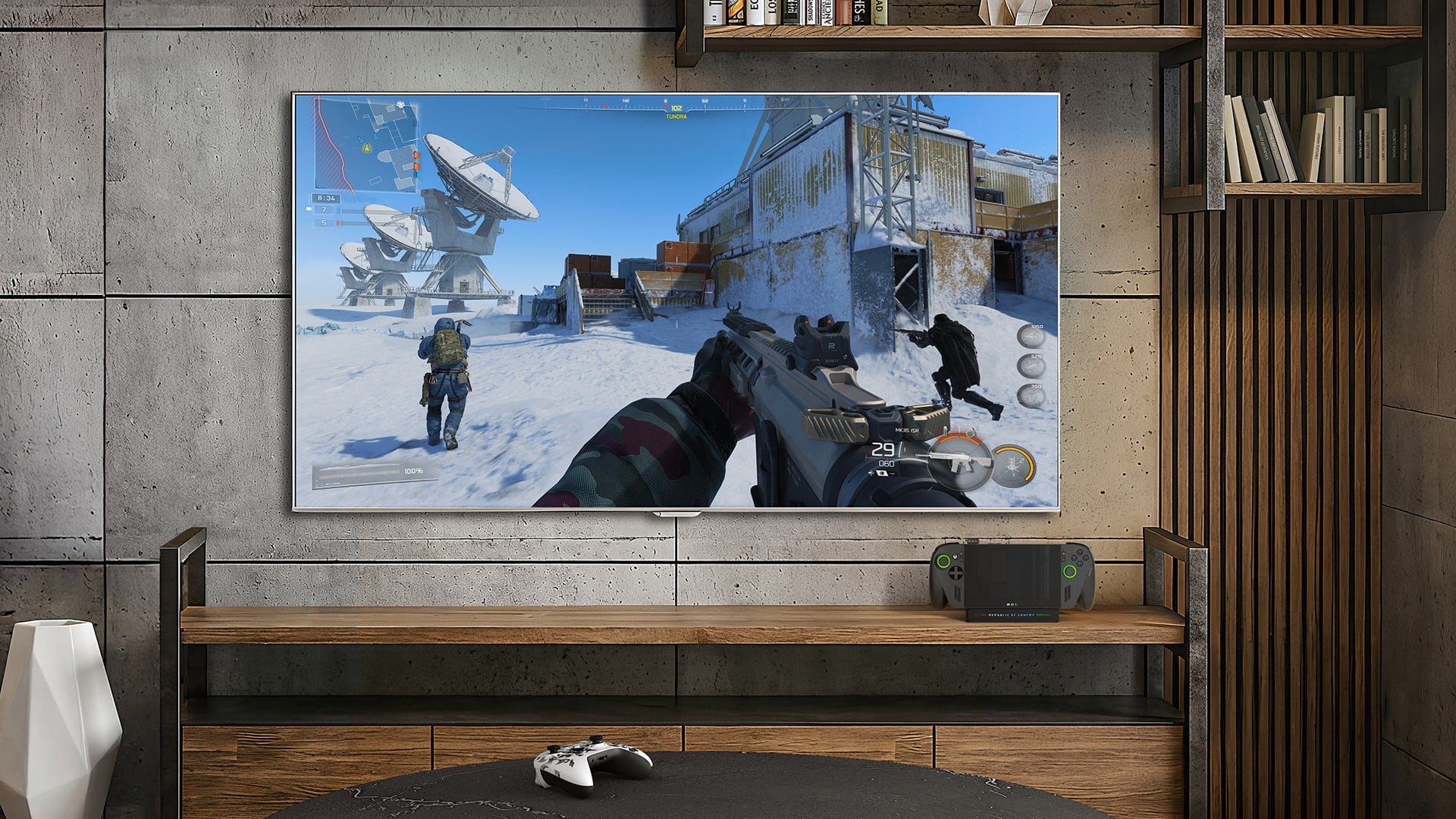
Microsoft is refocusing its AI strategy on player-facing use cases, highlighting Auto Super Resolution as an early example that reconstructs high-frequency detail from lower-resolution frames to improve image quality and performance. Xbox leadership says future AI efforts will center on real-time graphics, discovery, and personalization rather than broader AI features. The update is directionally positive for Xbox's product roadmap, but it is a messaging shift rather than a material financial event.
This is less a product headline than a signal that Microsoft is trying to thread the needle between AI monetization and gamer backlash. The second-order winner is not just MSFT's gaming division but its broader consumer AI positioning: if the company can frame AI as a latency/quality enhancer rather than a cost-cutting/content generation tool, it lowers adoption friction across devices and services. That matters because consumer trust is now a gating factor for AI feature rollouts, and the companies that win that trust can ship faster without triggering the reputational tax that has already hit other GPU-led AI narratives.
For NVDA, the near-term read is mixed: AI-upscaling reinforces the value of accelerated rendering and keeps the gaming GPU ecosystem relevant, but it also normalizes a feature set that can be partially commoditized over time at the platform layer. If Microsoft can make lower-end hardware feel premium through software, that reduces the urgency of hardware refresh cycles and shifts some value capture away from discrete GPUs toward OS/platform owners. The longer-term risk is that “good enough” AI enhancement becomes an embedded standard, compressing differentiation in consumer graphics while preserving demand for compute in training and inference.
The catalyst path is mostly months, not days: watch whether Microsoft extends this messaging beyond handhelds into Windows and the broader Xbox ecosystem. If adoption is smooth and the anti-AI backlash stays muted, MSFT can layer personalization/discovery features into its subscription and storefront economics, improving engagement and conversion without a heavy capital burden. Conversely, any perception that the company is pushing AI for novelty rather than utility could trigger a gamer revolt and force a slower rollout, particularly if latency or visual artifacts show up in early user tests.
The contrarian view is that the market may be underpricing how important product framing is here. AI in gaming is not automatically bullish just because it exists; the relevant variable is whether it expands the installed base and time spent, or merely raises feature parity expectations. The upside case for MSFT is that consumer AI becomes a retention tool with operating leverage, while the downside for NVDA is that the narrative increasingly shifts from proprietary moat to distributed ecosystem capability.
AI-powered research, real-time alerts, and portfolio analytics for institutional investors.
Request DemoOverall Sentiment
neutral
Sentiment Score
0.15
Ticker Sentiment
