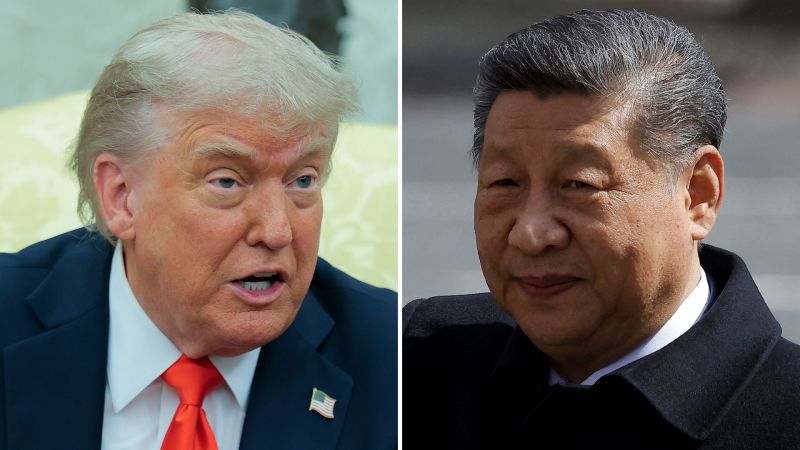
President Trump and President Xi agreed to resume trade talks after a phone call, offering a temporary reprieve from escalating tensions, but without a clear path to resolving deep divisions. Key sticking points include US export controls on AI chips and China's restrictions on rare earth minerals, with China potentially using its dominance in rare earths as leverage. The call also highlighted differing priorities, with the US focusing on trade deficits while China emphasizes territorial integrity and concerns about US policy on Taiwan and Chinese student visas, suggesting continued volatility in the relationship.
The resumption of US-China trade talks, following a 90-minute phone call between President Trump and President Xi, offers a fragile truce in their escalating rivalry but does not forge a clear path to resolving deep-rooted divisions, particularly concerning critical technology supply chains. Key disputes persist, including US accusations that China reneged on pledges from May talks in Geneva to ease export restrictions on rare earth minerals—a sector where China wields considerable leverage, as reportedly acknowledged by US eagerness for the call—and Beijing's strong objections to US moves to restrict its access to advanced AI chips and chip design software. The Chinese leadership is perceived by some analysts, such as Brian Wong from the University of Hong Kong, to be negotiating from a position of relative political strength despite ongoing economic concerns. While the Chinese readout of the call highlighted President Xi's insistence on China's compliance with prior agreements and issued a stern warning regarding US policy on Taiwan, President Trump's public statements focused almost entirely on trade. The inclusion of US Commerce Secretary Howard Lutnick in future negotiations hints that US export controls may be on the table, a potential win for Beijing; however, significant bipartisan consensus in Washington to curb China's technological advancement presents a formidable obstacle to major concessions. Experts, such as Yun Sun from the Stimson Center, anticipate a "three steps forward, two steps back" negotiation dynamic, signaling prolonged uncertainty and the likelihood of recurring tensions over issues deemed vital to national security by both nations.
AI-powered research, real-time alerts, and portfolio analytics for institutional investors.
Request DemoOverall Sentiment
Neutral
Sentiment Score
0.00
Ticker Sentiment
