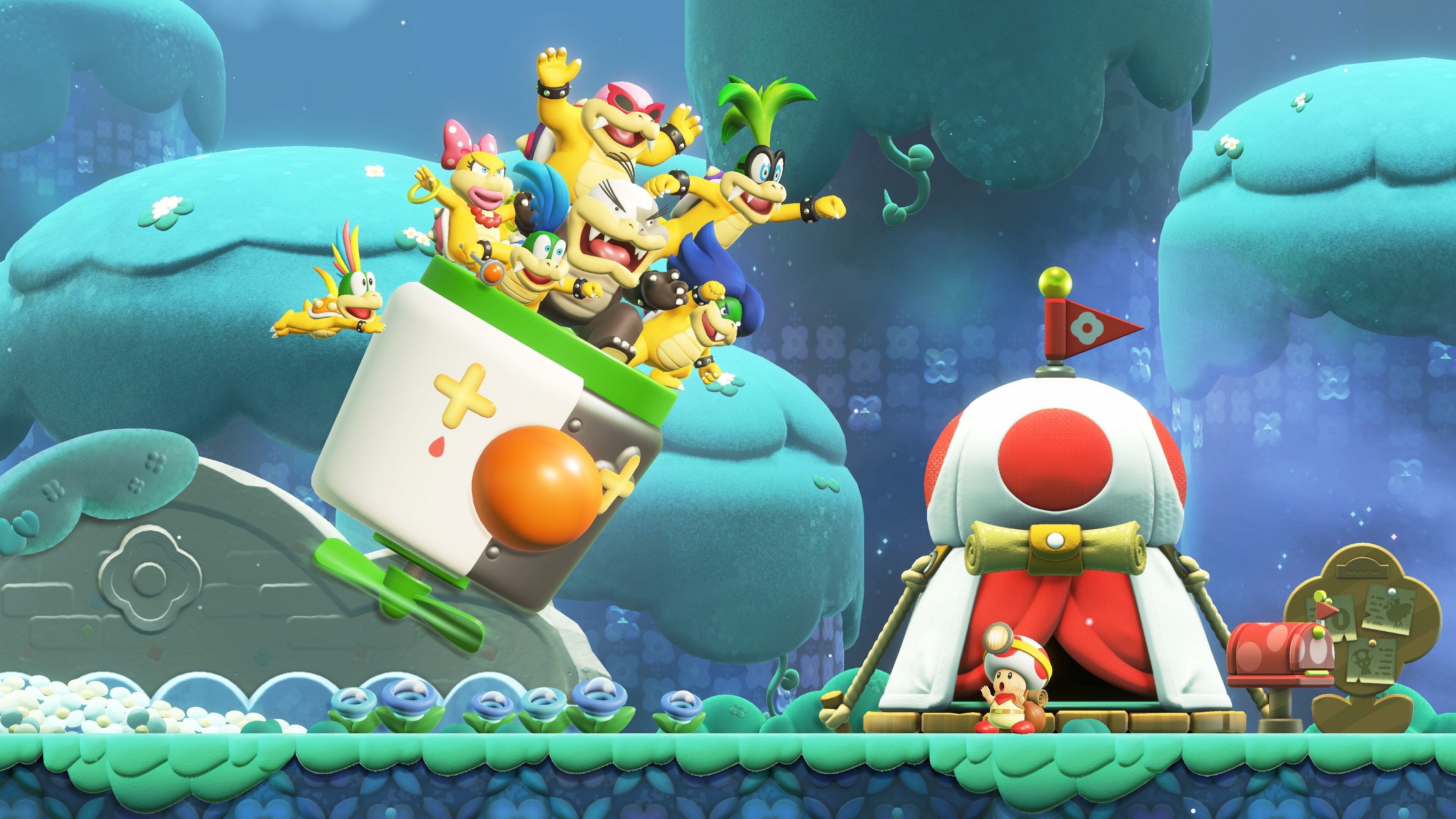
Release date: Super Mario Bros Wonder: Nintendo Switch 2 Edition + Meetup in Bellabel Park launches on March 26. The new six-minute overview trailer showcases 23 versus/co-op multiplayer modes, a 1-4 player Toad Brigade Training Camp with 74 challenges, new playable Rosalina, seven Koopalings boss encounters, the Flower Pot Mushroom power-up, and new double badges; three Amiibo figures (Elephant Mario, Poplin & Prince Florian, Captain Toad & Talking Flower) will be released alongside. Nintendo will sell a standalone Switch 2 Edition (digital/physical) or offer a paid Switch 2 Edition upgrade for existing Switch owners.
Nintendo’s Switch 2 Edition rollout is a near-term catalyst for software attach and ancillary merchandise sales; the key second-order effect is modular monetization — inexpensive digital upgrade paths and park/meeting features lower friction for incremental transactions and increase lifetime engagement per user. Expect a concentrated revenue bump in the first 3–6 months post-launch from upgrades + Amiibo bundles, but the larger profit lever is sustained microtransaction and DLC uptake over 12–24 months as social features drive repeat sessions.
Hardware and component demand is the obvious upstream beneficiary, but the less obvious chain mover is memory and NFC/tag suppliers: a meaningful attach-rate bump (even +5–10% relative to baseline in the first year) translates into tens of millions of additional DRAM/NAND units for suppliers; this is a multi-quarter demand shock for Samsung/ SK Hynix rather than a single-month spike. Conversely, retailers and distributors with exposure to boxed legacy SKUs are at risk as digital upgrade economics favor platform-controlled distribution, compressing wholesale margins across specialty retailers over 6–12 months.
Tail risks center on upgrade conversion and macro wallet stress: if upgrade take-rate falls below 10–15% of installed base, the revenue cadence reverts quickly and promotional discounting will erode margins within one quarter. Another reversal vector is supply constraints—if consoles are tight at launch, scalpers create PR backlash that depresses demand and accelerates aggressive discounting in months 3–9.
From a competitive angle, Sony/Microsoft stand to lose share-of-wallet in portable/social segments, but longer-term the winners are companies that can convert episodic interest into recurring spend; the market may be underpricing this stickiness by treating the release as a one-off content bump rather than a behavioral shift toward social, park-driven monetization over 12–36 months.
AI-powered research, real-time alerts, and portfolio analytics for institutional investors.
Request DemoOverall Sentiment
mildly positive
Sentiment Score
0.15
