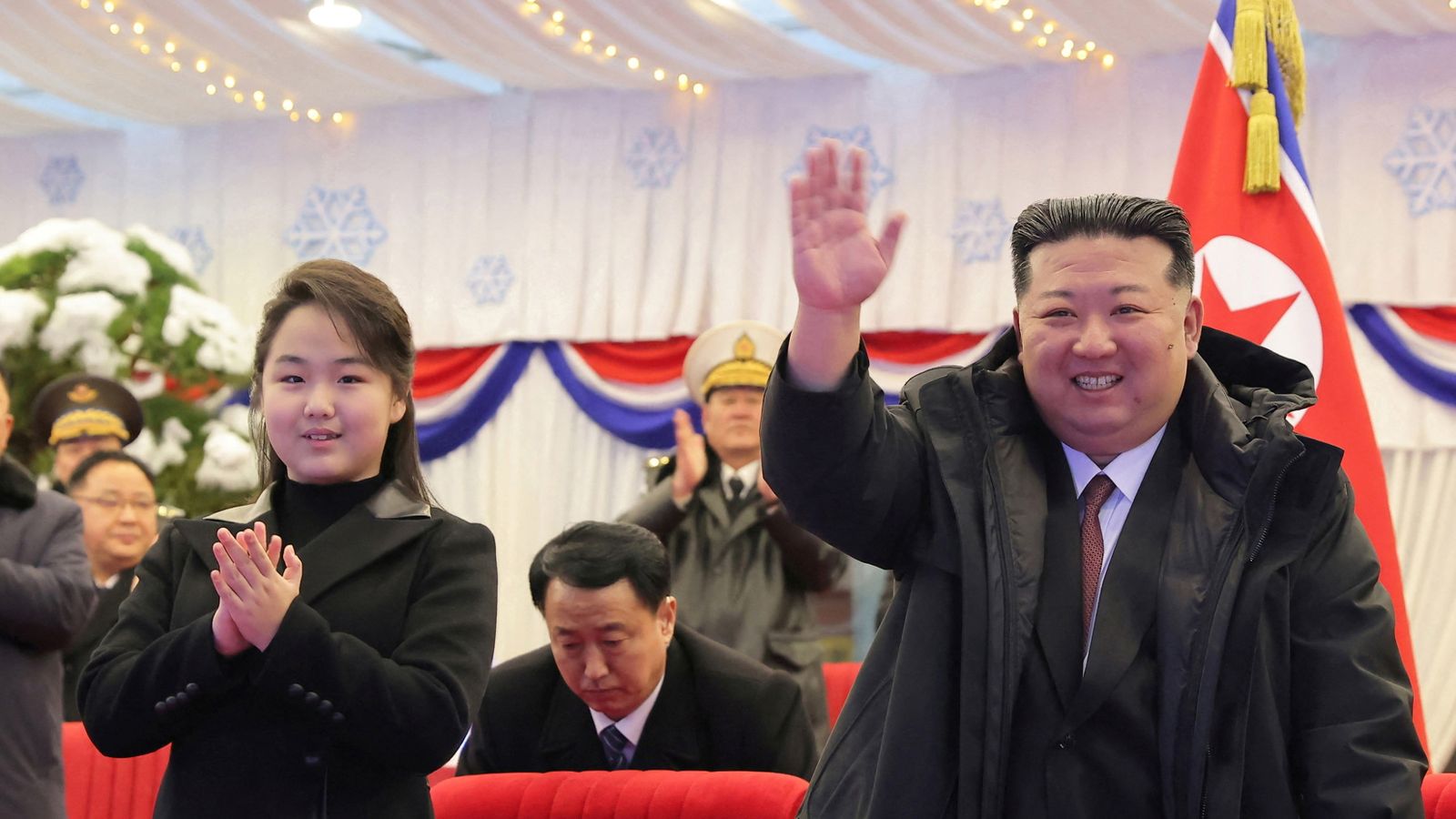
South Korea's National Intelligence Service says Kim Jong Un is poised to confirm his daughter, believed to be Kim Ju Ae, as North Korea's successor at an upcoming Workers' Party congress, potentially with the title of first secretary. Intelligence briefings note her rising public profile and involvement in state events (including a 2022 missile launch and a meeting with Xi Jinping), and Seoul will closely watch her attendance and the regime's rhetoric for signals of a formal succession; the development raises regional political risk but is unlikely to trigger major immediate market moves.
Market structure: A formalized hereditary succession reduces predictability but likely increases demand for hard security and deterrence goods. Expect US and South Korean defense primes (LMT, GD, RTX) and ETFs (ITA, XAR) to see higher order visibility and a potential 5–15% re-rating over 6–12 months if Seoul/Washington accelerate procurement; South Korean equities (EWY) and regional cyclical exporters face near-term downside on risk-premium widening.
Risk assessment: Tail risks include a provocative missile test or limited military incident that triggers a sharp risk-off (S&P down 3–5% in days, KRW depreciation >5%, 10y UST rally). Immediate (days): localized FX/stock volatility in Seoul; short-term (weeks–months): defense capex repricing and supply-chain hedging; long-term (quarters–years): potential realignment with China that alters sanctions dynamics. Hidden dependency: Beijing’s posture — Chinese political/economic support could materially mute Western response and reduce escalation risk.
Trade implications: Direct plays favor long aerospace & defense via ETF or selected names using 6–12 month call spreads; protect Korea exposure via EWY puts or USD/KRW FX hedges. Use pair trades (long ITA, short EWY) to express asymmetric upside in defense vs regional equity risk; size 1–3% each and use tight catalyst-based stops (party congress, missile tests, joint drills).
Contrarian angle: The market may overprice acute conflict risk while underpricing a smooth succession’s stabilizing effect — authoritative successions can reduce elite infighting and lower near-term volatility. If congress signals a cosmetically staged transfer with no external provocation, defense stocks could retrace; consider taking profits into any >15% rally.
AI-powered research, real-time alerts, and portfolio analytics for institutional investors.
Request DemoOverall Sentiment
mildly negative
Sentiment Score
-0.25
