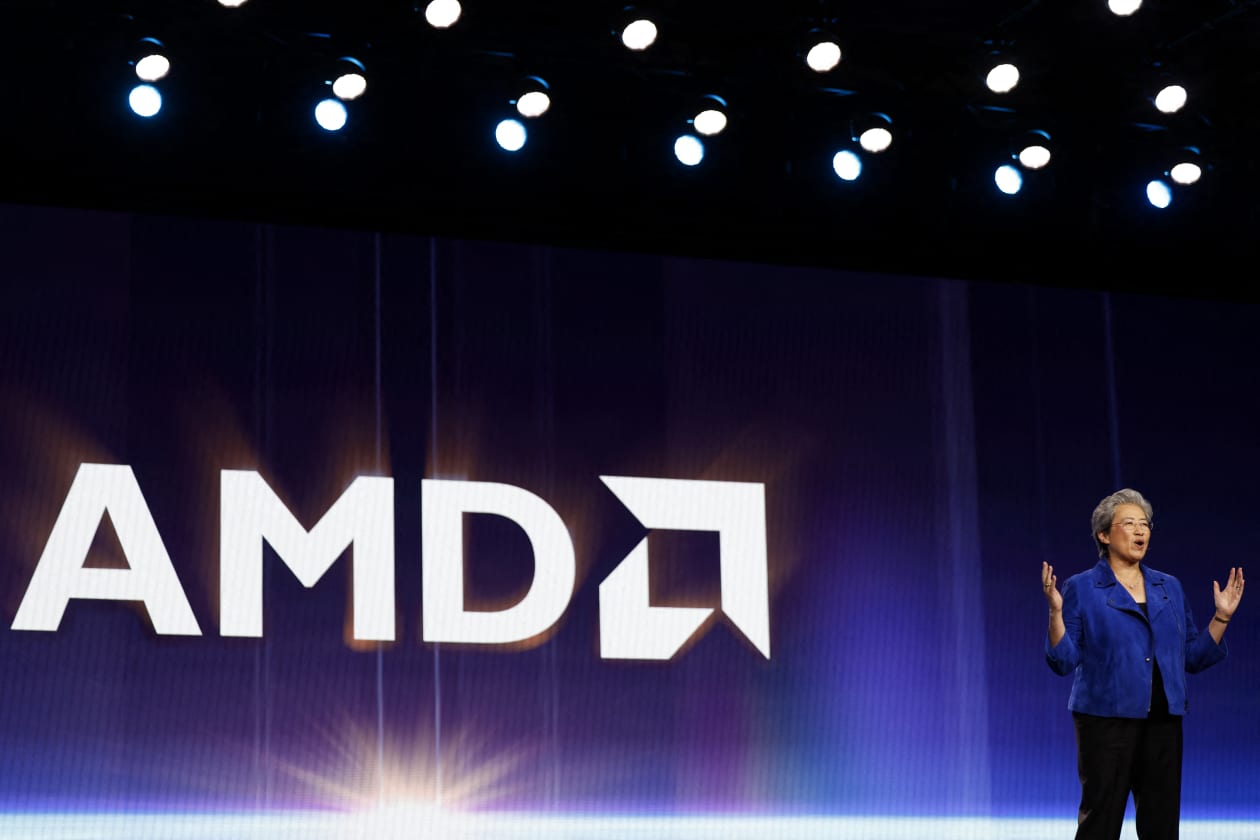
AMD unveiled its 6th-generation EPYC “Venice” server CPUs at its Advancing AI event, targeting data-center agentic AI workloads. The move highlights intensifying competition with Nvidia as AMD expands beyond GPUs into server CPU performance. While no financial targets were provided, the product push is a modest positive for AMD’s AI server positioning.
AMD’s CPU push is strategically relevant because server buyers increasingly evaluate the entire rack, not just accelerators. If AMD can win CPU sockets alongside AI workloads, it improves its bargaining position with hyperscalers and can pull through more platform content; the more immediate loser is Intel, not Nvidia, because the incremental battleground is the control plane around AI deployments rather than the GPU moat itself.
In the next few days this is mostly a sentiment event. Over 1-3 months, the market will care less about product naming and more about whether AMD can show real design wins, qualify into large fleet refreshes, or translate the message into data-center revenue acceleration; server CPU share moves slowly because validation cycles are long. If that evidence does not show up by the next two earnings prints, the current optimism likely fades into a multiple-only move.
The contrarian read is that investors may be over-indexing on rivalry with Nvidia. Nvidia’s value capture is still anchored in software, networking, and GPU supply constraints; AMD’s CPU progress is an adjacent opportunity, not a direct displacement mechanism. The bigger second-order effect is that AMD’s broader platform pitch can force pricing pressure across the AI server stack, which helps buyers and hurts OEM gross margins if competition intensifies.
AI-powered research, real-time alerts, and portfolio analytics for institutional investors.
Overall Sentiment
mildly positive
Sentiment Score
0.18
Ticker Sentiment
