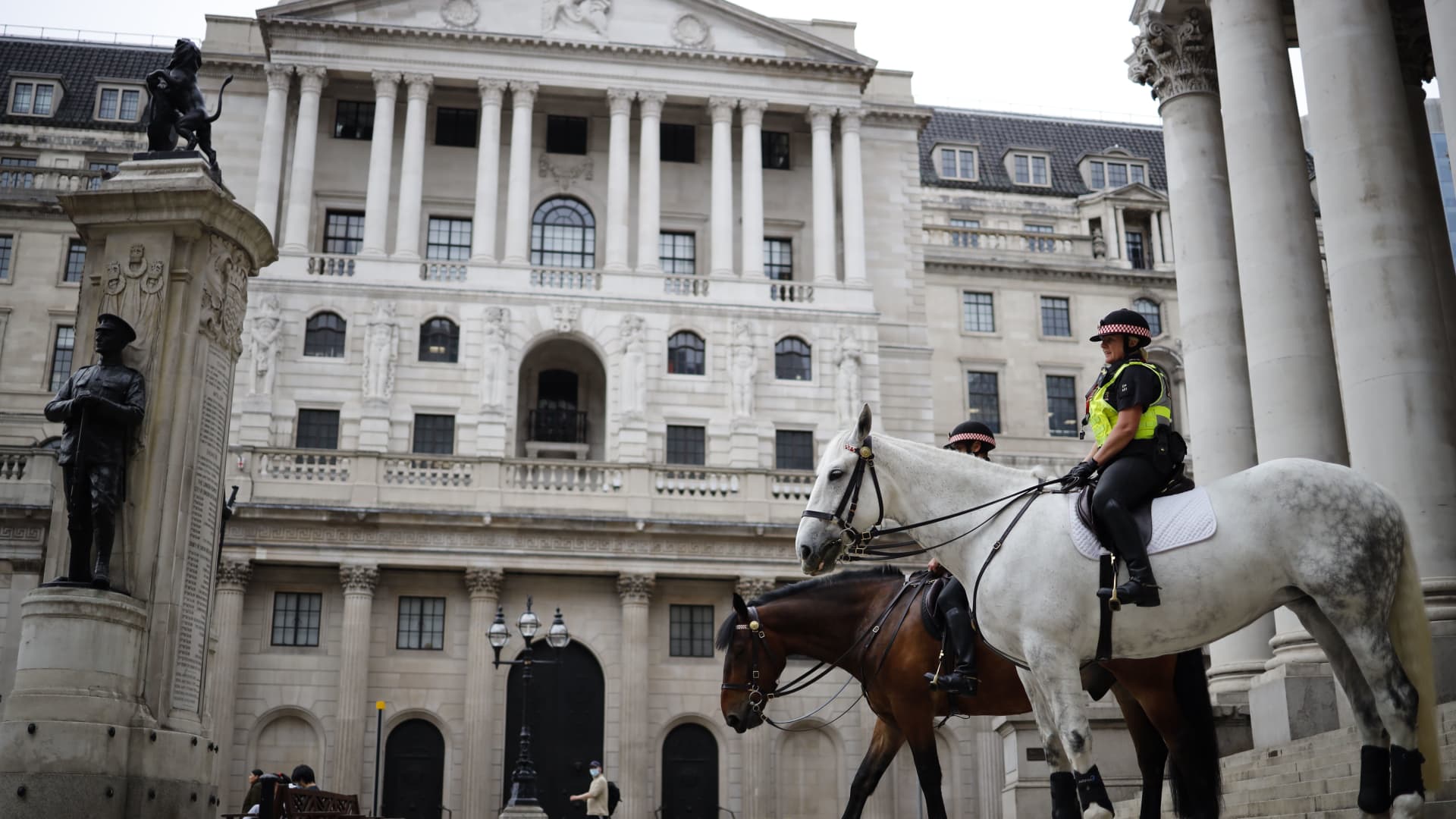
The ECB and Bank of England are expected to hold rates at 2.0% and 3.75%, respectively, as policymakers weigh rising inflation against worsening growth risks tied to the Iran conflict. Euro zone inflation is running at 2.5% and U.K. inflation at 3.3%, while economists say both banks are likely to look through the near-term inflation spike and avoid immediate tightening. Markets remain focused on whether second-round effects emerge, with the ECB potentially considering a 25bp hike in June and the BOE seen as likely to stay on hold for the rest of the year.
The market is underestimating how long central banks can stay on hold while still sounding hawkish. That combination is usually supportive for front-end rates volatility but less so for outright duration: if policymakers keep optionality alive without delivering hikes, the first trade is a flatter path for 2Y yields, not a sustained bear steepener, because growth shocks will dominate once energy pass-through hits real activity. The bigger second-order risk is that banks and cyclicals are forced to absorb margin pressure from higher deposit costs and weaker loan demand before policy actually tightens.
For European financials, the key issue is not the next 25bp move but the delay in relief. A prolonged hold with sticky inflation keeps net interest margins elevated for longer, but also raises the probability that credit costs inflect later as households and SMEs feel the squeeze; that is a worse setup for lenders than a clean hiking cycle. In the U.K., the BOE’s hesitation reduces the chance of an immediate growth shock from policy, but it also leaves sterling vulnerable if investors conclude the bank is behind the curve relative to the inflation impulse.
The contrarian angle is that consensus may be too focused on one-off energy inflation and too dismissive of second-round effects once wage bargaining and services prices reaccelerate. If that starts to show up in the next 4-8 weeks of survey and wage data, the market will have to reprice a June/July ECB move much faster than implied, which would hit rate-sensitive equities and peripheral credit first. Conversely, if energy stabilizes, the entire hawkish repricing could unwind quickly because the policy reaction function is now explicitly data-dependent rather than mechanical.
The cleanest expression is to own volatility rather than direction: central bank meetings can disappoint both bulls and bears when the message is "hold, but hawkish." That tends to compress option-implied carry in rates but increase realized moves in FX and bank equities as investors toggle between stagflation and delayed tightening narratives.
AI-powered research, real-time alerts, and portfolio analytics for institutional investors.
Request DemoOverall Sentiment
mildly negative
Sentiment Score
-0.15
Ticker Sentiment
