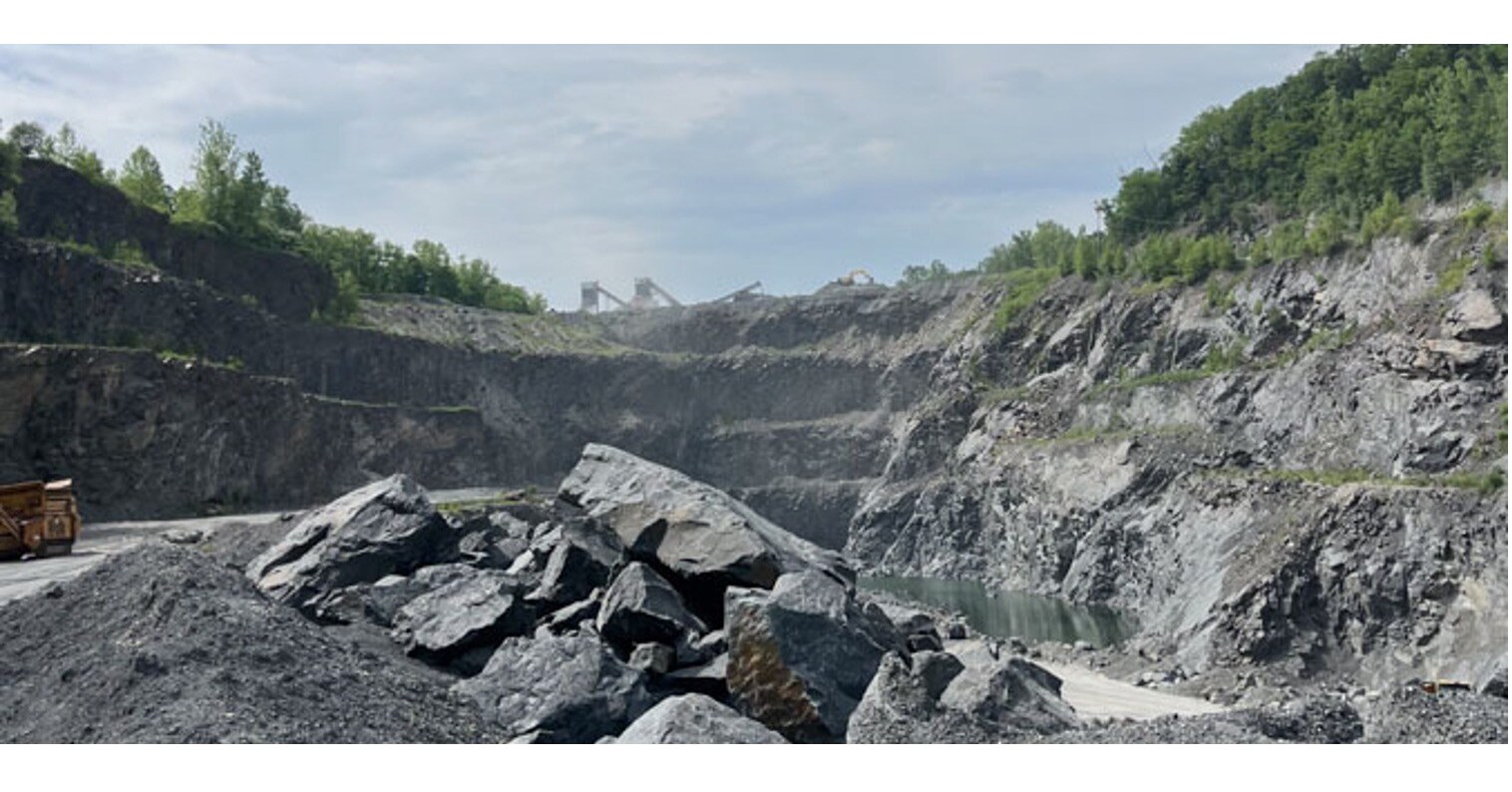
Hilco Global is marketing the sale of a fully permitted 198± acre aggregate quarry and production facility in Woodbury, NY, backed by an estimated 37.3M tons of reserves and 28.9M tons of probable reserves. The asset is positioned near major Northeast transport corridors (incl. NY Route 32 and Interstates 87/84) and supplies NYSDOT-spec materials for road, asphalt, and concrete applications. The transaction is subject to U.S. Bankruptcy Court approval (EDNY, Case No. 8-2670730-spg), with bids due August 14.
This is more of a scarcity signal than a demand event. In Northeast aggregates, the edge comes from permitted reserves, trucking radius, and entitlement friction; a functioning quarry in the NYC orbit is worth more as a strategic bottleneck than as a simple tonnage asset. That favors incumbents with existing permits and distribution density, especially large diversified materials platforms like CRH, because replacement capacity is the real constraint, not geology.
The second-order effect is inflation persistence in local construction inputs, but with a lag. If the asset changes hands to an operator that keeps production running, the market impact is basically neutral; if the buyer is financial and underinvests, nearby quarries could enjoy tighter supply and better realized pricing over the next 6-18 months. Contractors and public works budgets are the eventual losers, but most of the near-term pain should be passed through rather than absorbed at the equity level.
There is no obvious day-one trade in ORIX/IX; this is too small to move a global balance sheet. The real catalyst is the auction result and any disclosure around clearing price versus replacement cost: a strong bid would validate scarcity value, while a weak bid would suggest the market is still discounting low-margin, high-logistics complexity. Consensus may be overestimating the permanence of the supply squeeze—stone can be shipped, and if NYC demand softens or the new owner ramps capex, the pricing tailwind could fade within 1-3 quarters.
AI-powered research, real-time alerts, and portfolio analytics for institutional investors.
Overall Sentiment
neutral
Sentiment Score
0.05
Ticker Sentiment
