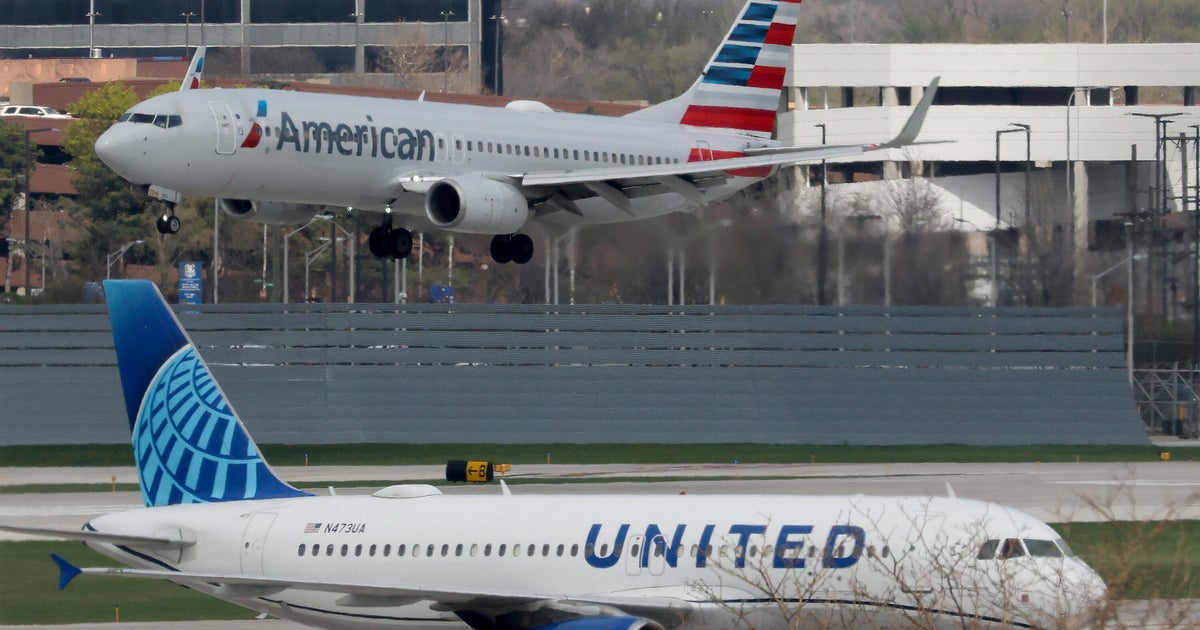
Homeland Security Secretary Markwayne Mullin is considering removing CBP agents from airports in sanctuary cities like Chicago, which could disrupt international processing at hubs such as O'Hare, where 130+ nonstop international flights operate daily. FAA Administrator Bryan Bedford and Transportation Secretary Sean Duffy oppose the idea, warning there are very limited alternatives to shift international flights. The proposal could force airlines to reroute traffic and face legal challenges, creating operational risk for major carriers and hub airports.
The market is likely underpricing how quickly a “paper threat” can become a real operating constraint once airlines and airport authorities start planning around regulatory uncertainty. The first-order impact is not on passenger demand, but on hub economics: international connectivity is what makes dense domestic networks efficient, so any disruption to inbound customs processing threatens connection banks, premium-cabin mix, and aircraft utilization. That is especially relevant for legacy carriers with fortress hubs, where even a small reduction in international feed can compress operating margins disproportionately.
The second-order effect is network displacement rather than outright traffic destruction. If one or two hub airports become operationally unstable, airlines will re-time or re-route marginal international flying to alternative gateways, but that is a slow, capacity-constrained process measured in quarters, not days. The beneficiaries are likely airports and carriers with spare customs capacity in less politically fraught jurisdictions, while the losers are the large hub operators whose slot scarcity and ground infrastructure are already optimized around current flows. This also has an infrastructure/legal angle: once carriers perceive regulatory risk as non-zero, they begin to discount future capex and fleet assignment plans tied to those hubs.
The key contrarian point is that the political theater may be more valuable as leverage than as policy. That means the worst-case airline disruption may never fully materialize, but the overhang alone can widen risk premiums for hub-dependent names and airport-adjacent assets. The cleaner trade is not a crash thesis on travel demand; it is a relative-value trade on regulatory fragility versus operational flexibility, with the highest payoff if the rhetoric persists into the summer schedule-construction window.
Catalysts are legislative pushback, court injunction risk, and airline lobbying if scheduling teams start flagging international bank disruption. Time horizon is 1-3 months for sentiment and booking changes, 3-12 months for any real network reconfiguration. If federal officials back away, the trade should mean-revert quickly; if they formalize the move, the adjustment in airline route maps could last multiple planning cycles.
AI-powered research, real-time alerts, and portfolio analytics for institutional investors.
Request DemoOverall Sentiment
mildly negative
Sentiment Score
-0.20
