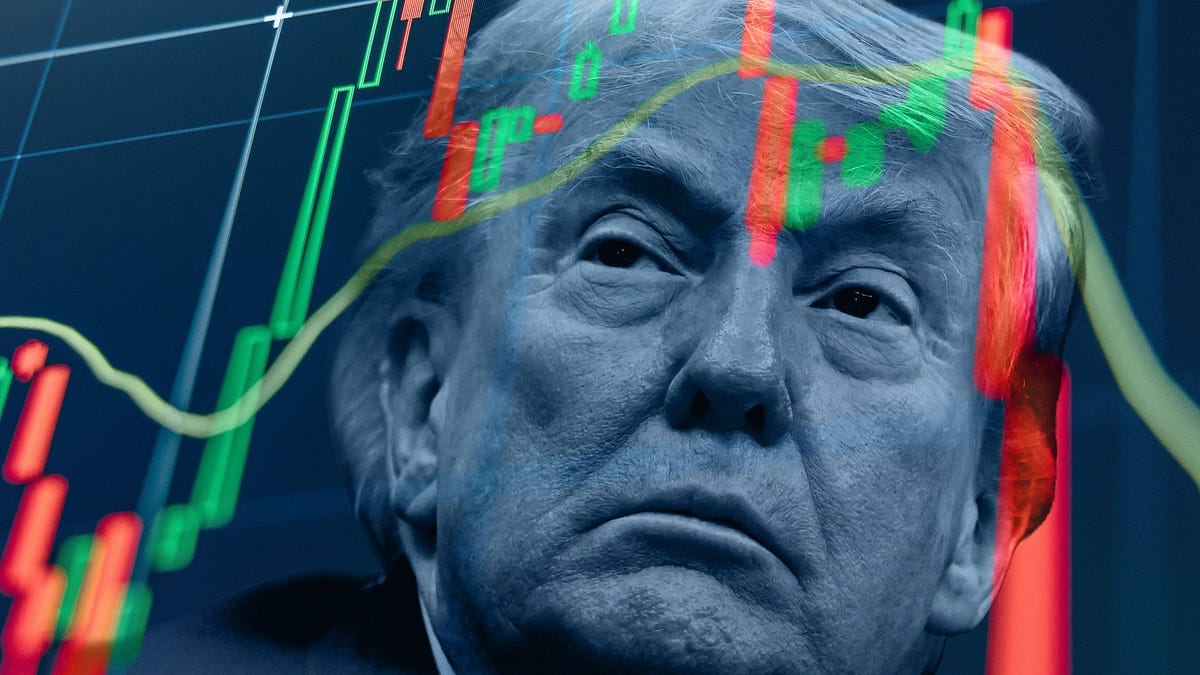
Trump disclosed more than 3,600 stock and bond trades worth up to $750 million in the first three months of 2026, highlighting unusually large personal trading activity while in office. The article frames these trades as ethically problematic and potentially corrupt, especially given his administration’s ability to influence companies through policy and public statements. The piece is politically charged but has limited direct market impact beyond governance and ethics concerns.
The market implication is less about any single name and more about a widening “policy alpha” discount: firms that are highly exposed to discretionary federal favor, licensing, procurement, antitrust posture, or regulatory forbearance should trade with a larger governance risk premium until there is clarity on disclosure, enforcement, or any structural restraint. That premium should be highest in sectors where headlines can move valuation multiple before fundamentals move earnings — especially technology, banks, media, defense-adjacent contractors, and politically sensitive platforms.
Second-order effect: elevated perceived conflict risk can accelerate behavior inside corporate America. Boards may tighten political spending, delay lobbying-dependent M&A, and become more conservative on strategic initiatives that require an agency blessing. Over the next 3-12 months, that can slow deal closure rates and extend approval timelines, which disproportionately hurts smaller acquisitive names and companies with weak standalone cash flow that rely on transaction optionality.
The overhang is also bipartisan and sticky. Even if the specific trading scrutiny fades, the precedent raises the probability of future disclosure regimes, committee hearings, and litigation discovery into decision-making processes. That means the risk is not a one-day sentiment shock; it is a months-long compliance and headline cycle that can keep volatility elevated in the exact segments most sensitive to Washington access.
Contrarian view: the consensus may be overestimating the direct impact on broad indices and underestimating the unevenness by sector. This is not an economy-wide earnings event; it is a relative-value event inside “government-dependent” equities. The better expression is to short the governance premium where policy dependence is highest, rather than blanket shorting market beta.
AI-powered research, real-time alerts, and portfolio analytics for institutional investors.
Request DemoOverall Sentiment
moderately negative
Sentiment Score
-0.35
