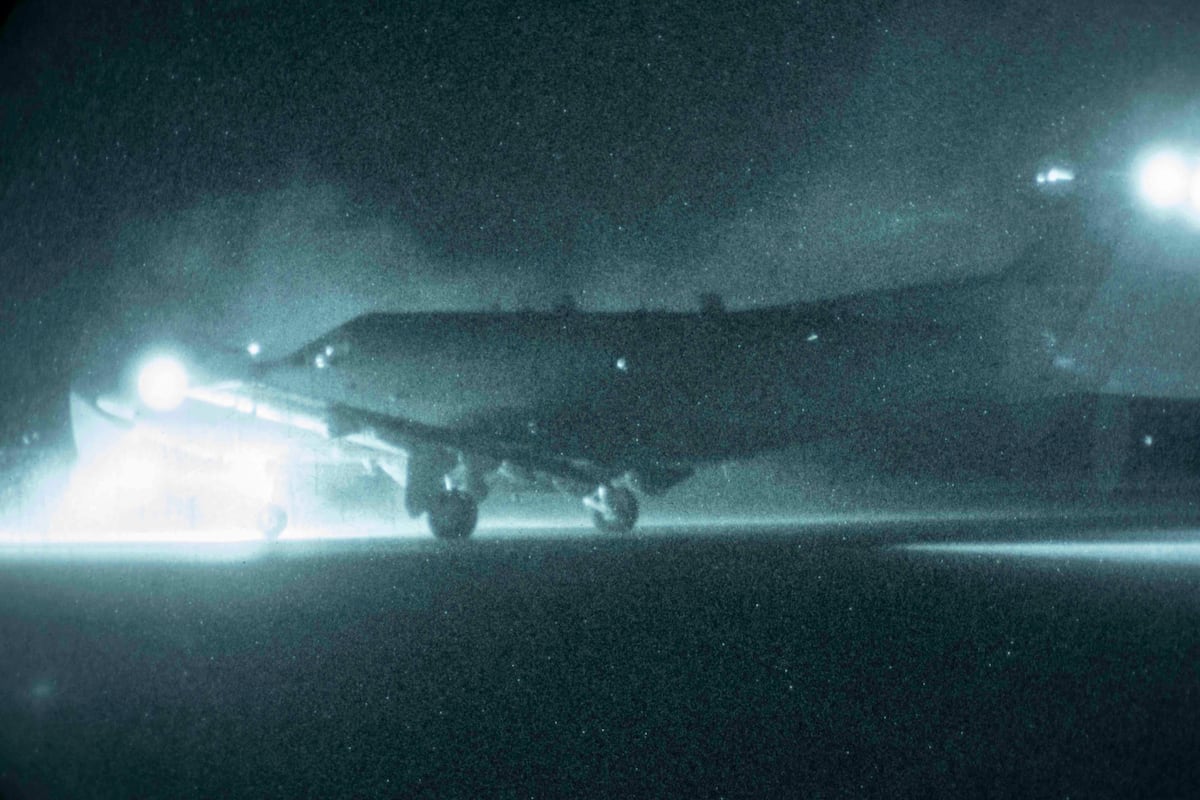
Austrian Eurofighter Typhoons scrambled on May 10 and 11 to intercept U.S. military U-28/PC-12 aircraft, but Austrian and U.S. officials later said no unauthorized airspace violation occurred. The May 11 intercept was a priority A response, and the incident was ultimately attributed to corrected overflight clearance paperwork, with any follow-up expected through diplomatic channels. The story is mainly geopolitical and procedural, with limited direct market impact.
The market impact is less about the airspace episode itself and more about the operational signal: neutral-border transit in Europe is becoming more proceduralized and politically sensitive, which raises friction costs for U.S. ISR and special-mission aviation. That is a modest tailwind for European air-defense readiness and sovereignty narratives, but the real beneficiary is the bureaucracy around overflight permissions, where even minor clerical errors can force scramble responses and diplomatic cleanup. In practice, this adds latency to U.S. collection routing through Central Europe, pushing planners toward longer, less efficient paths and increasing the value of persistent stand-off ISR assets.
Second-order, the event reinforces a structural premium for European air-defense contractors and integrated command-and-control suppliers, but only at the margin because this is not a procurement shock. The more durable effect is on doctrine: countries like Austria and Switzerland will have evidence that even non-hostile transits require higher alert levels, which can support incremental budgets for radar coverage, interceptor readiness, and airspace management software over the next 6-18 months. Suppliers with exposure to Eurofighter sustainment, mission systems, and air surveillance should see slightly better narrative support than pure-play munition names.
The contrarian point is that the article is likely overstating policy significance if read as an escalation. Once the paperwork error was corrected, the event becomes a reminder that neutral states can be operationally strict without changing strategic alignment. That argues against chasing a broad defense beta move here; the most likely outcome is a short-lived news premium, not a repricing of European defense demand. The larger risk is reputational: if repeat incidents accumulate, U.S. intelligence flights may face more scrutiny, but the timeline for any budgetary effect is months to years, not days.
AI-powered research, real-time alerts, and portfolio analytics for institutional investors.
Request DemoOverall Sentiment
neutral
Sentiment Score
-0.05
