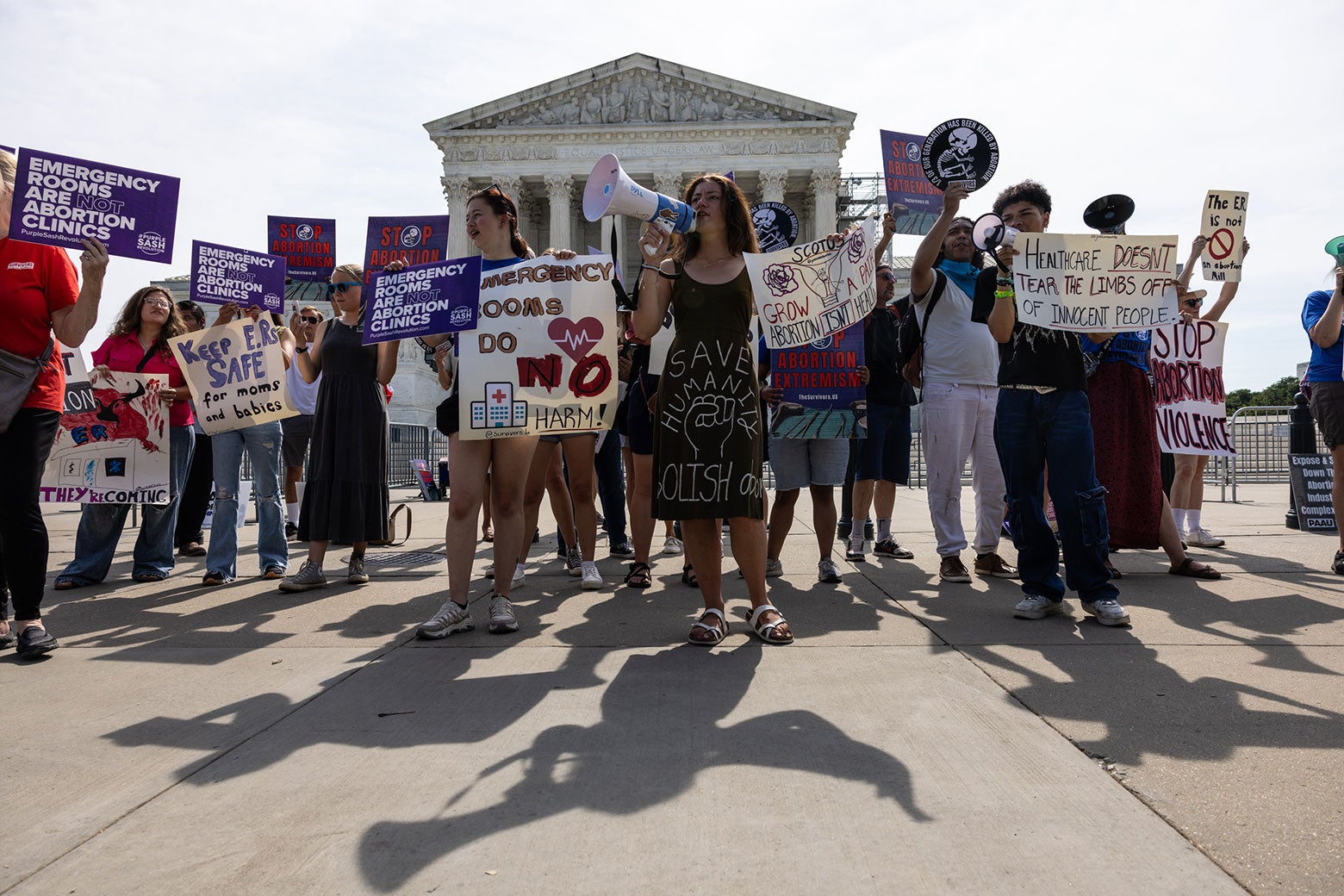
The Supreme Court temporarily restored telemedicine access to mifepristone after the 5th Circuit had barred its use nationwide, but the issue remains unresolved pending further review. The article highlights ongoing legal and regulatory chaos around abortion access, including state-level bans, shield laws, and potential FDA action on mifepristone later this year. The broader implications are material for healthcare regulation, FDA authority, and state-federal legal conflict.
The market implication is not direct healthcare beta; it is a regulatory-friction trade. The article reinforces that the highest-value battleground is distribution, not drug discovery: telehealth, pharmacy fulfillment, and mail-order channels are structurally more resilient than clinic-based models because the incremental cost of enforcement is far higher than the cost of compliance. That creates a durable moat for scaled digital care platforms and specialty pharmacies that can absorb legal noise while smaller, clinic-dependent operators face higher interruption risk.
The second-order loser is any company with meaningful exposure to conservative-state provider networks, women’s health practices, or narrow reimbursement models tied to in-person visits. Litigation uncertainty also raises operating costs through legal reserves, compliance headcount, and state-by-state workflow segregation, which should compress EBITDA multiples for abortion-adjacent healthcare services even if top-line demand remains intact. The larger macro effect is on state-level health policy credibility: once courts and AGs start cross-border enforcement, every reproductive-health participant must price in venue risk, not just medical risk.
The consensus may be overestimating the odds of a clean nationwide prohibition. The more likely medium-term outcome is a messy equilibrium where access shifts from branded clinic systems to distributed, lower-margin, harder-to-police channels. That means headline risk can be bearish for sentiment, but operationally it may accelerate consolidation in telehealth and pharmacy fulfillment as smaller rivals exit under legal pressure. The key catalyst window is 1-6 months, when FDA review headlines and further court rulings can swing enforcement odds and volatility in the space.
AI-powered research, real-time alerts, and portfolio analytics for institutional investors.
Request DemoOverall Sentiment
strongly negative
Sentiment Score
-0.60
Ticker Sentiment
