



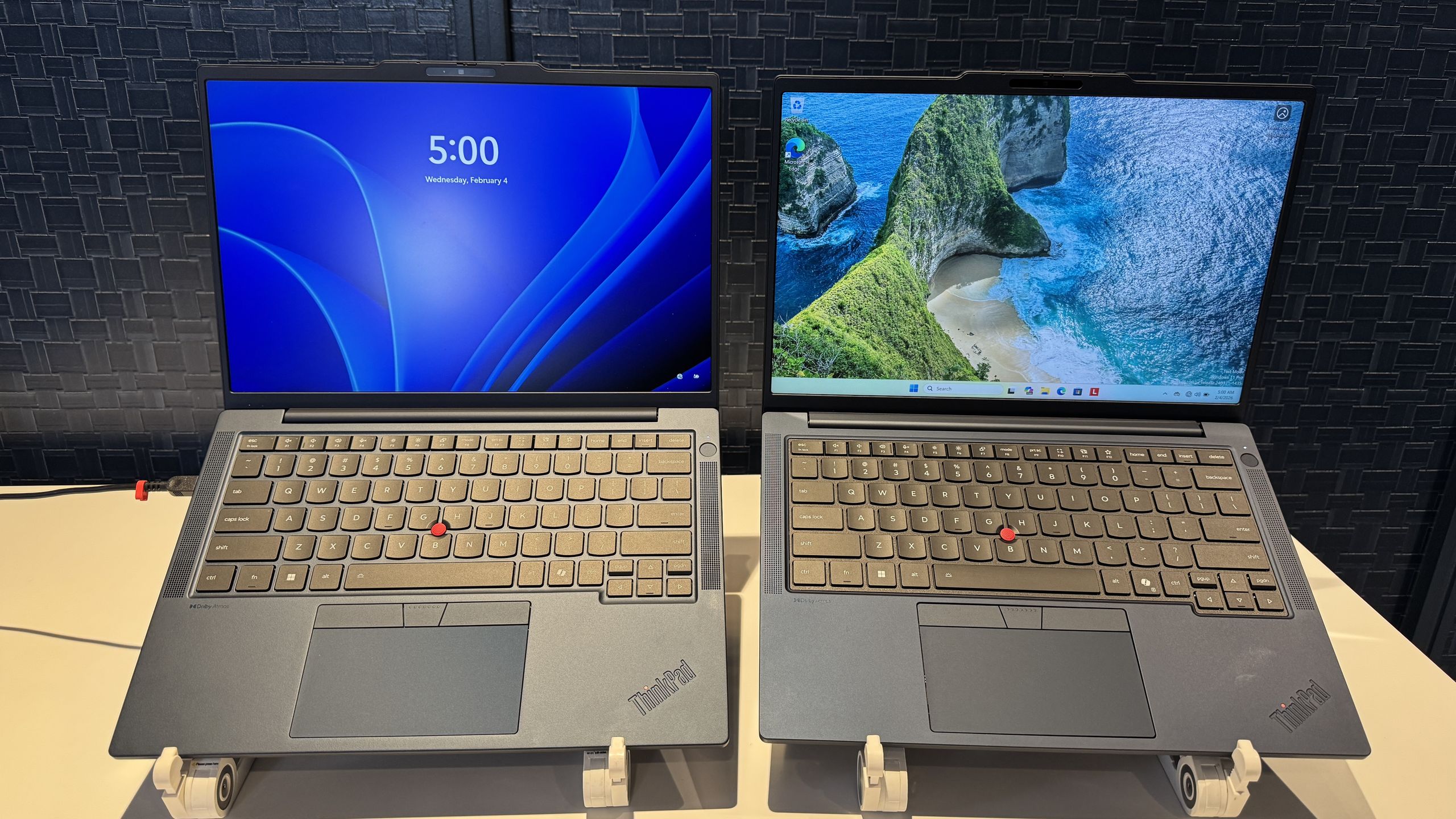
Lenovo refreshed its laptop portfolio at MWC 2026 with new ThinkPad T14/T14s Gen 7, T16 Gen 5, X13 Detachable, Yoga updates and a single gaming Legion 7a using AMD Ryzen AI/Strix Halo-class chips and Intel Core Ultra 3 vPro options. Key pricing and timing: ThinkPad T14s Gen 7 $1,899, T14s 2-in-1 $1,849, T14 $1,799, T16 $1,799 (all Q2 2026), X13 Detachable $1,999 (Q3 2026); Legion 7a starts at $2,299 in July; Yoga 9i Aura $1,949 (May), Yoga Slim 7i $1,449 (April), Yoga Pro 7a $2,099 (August). The releases emphasize repairability, new form factors and AI-branded processors—supportive for product-cycle momentum but unlikely to have material near-term market impact.
Market structure: Lenovo's MWC refresh signals rising ASPs and CPU content per PC as OEMs layer AI-capable silicon (AMD Ryzen AI Max+, Intel Core Ultra, Qualcomm X2 Elite) into mainstream T and Yoga lines; expect per-unit semiconductor content to rise ~10–25% in affected SKUs over the next 12 months, favoring AMD and suppliers of AI IP and power/thermal ICs. Higher entry prices ($1.8k–$2.3k) imply demand skew toward corporate/gaming premium segments, tightening replacement cycles for enterprise fleets but limiting volume elasticity in consumer tiers.
Risks: Key tails include underwhelming real-world AI performance (leads to returns), renewed export controls to China affecting AMD/Intel fabs, or channel inventory buildups if ODMs overproduce ahead of launches; any of these could swing margins by >200–400 bps. Near-term (0–3 months) market reaction should be muted; watch product reviews and July launch sell-through for directional conviction; medium-term (3–12 months) is where share shifts materialize.
Trade implications: Tactical overweight semiconductors—specifically AMD (buy 2–3% portfolio position) to capture AI-dice wins ahead of July–Oct sell cycles; implement 6–9 month call spreads (25–40% OTM) to cap cost and target 30–60% upside. Pair trade: long AMD vs short INTC (1:0.6 notional) over 6–12 months, and small long QCOM (1% position) to play Snapdragon wins in thin-and-light enterprise SKUs.
Contrarian angles: Consensus may overstate immediate share transfer to AMD—software optimization and thermal limits (no discrete GPU in Legion 7a) can blunt gaming adoption, creating a 3–6 month disappointment risk. Monitor channel sell-through, return rates, and AMD gross-margin guidance; if AMD misses revenue by >5% vs consensus in next quarter, trim positions by half.
AI-powered research, real-time alerts, and portfolio analytics for institutional investors.
Request TrialOverall Sentiment
neutral
Sentiment Score
0.15
Ticker Sentiment
