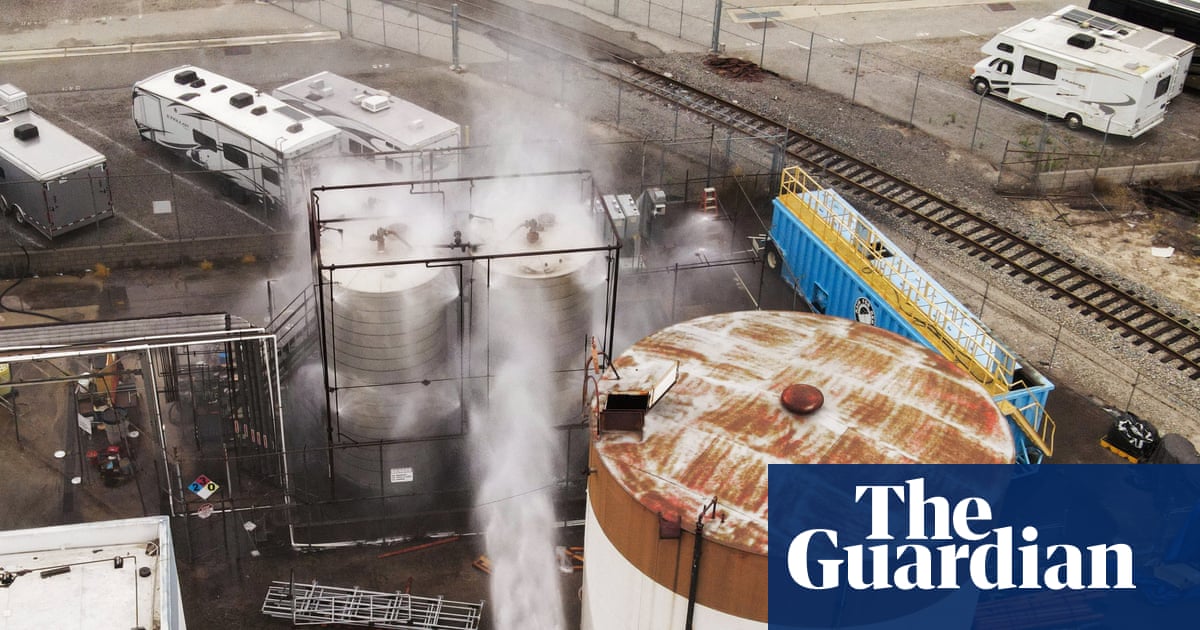
An overheating chemical tank at GKN Aerospace in Garden Grove, California, put 50,000 people under evacuation orders as officials warned the tank could fail and trigger an explosion. The tank reportedly held 6,000-7,000 gallons of methyl methacrylate, a highly flammable chemical, though firefighters later found a potential crack that may reduce explosion risk. No pollutants were detected in air-quality monitoring, but residents have already filed lawsuits over evacuation, exposure concerns, and property disruption.
This is a classic localized industrial-accident event with a misleadingly broad market footprint: the direct P&L hit is likely concentrated in the operator and its insurers, but the second-order effects matter more for adjacent aerospace suppliers with hazmat handling, property-liability writers, and municipal/industrial RE owners in dense Southern California corridors. The fact pattern points to a near-term liability overhang rather than a clean single-day event: evacuation, precautionary shutdowns, and resident claims create a multi-month discovery process that can extend well beyond the physical hazard window.
The most important trading implication is that the market should distinguish between tail-risk mitigation and actual blast probability. If the incident continues to look contained, the equity damage typically mean-reverts quickly; if there is any confirmed release or forced drainage failure, the path shifts to a protracted remediation and litigation cycle that can impair contracts, insurance renewals, and site utilization for quarters. For the broader aerospace supply chain, the key risk is not demand destruction but operational delay dispersion—small parts makers and specialty chemical handlers with single-site concentration in Southern California can see temporary disruption that is not reflected in consensus models.
The contrarian point is that the headline evacuation count can overstate terminal damage if the tank crack truly provides a pressure-relief path. That would create a short-volatility setup: the worst-case scenario priced into local names and insurance proxies may be too high if air monitoring stays clean and authorities avoid an explosion. However, the litigation layer is durable; even a benign physical outcome still supports claims, nuisance suits, and regulatory scrutiny, so any rebound is likely to be tactical rather than structural.
AI-powered research, real-time alerts, and portfolio analytics for institutional investors.
Request DemoOverall Sentiment
strongly negative
Sentiment Score
-0.62
Ticker Sentiment
