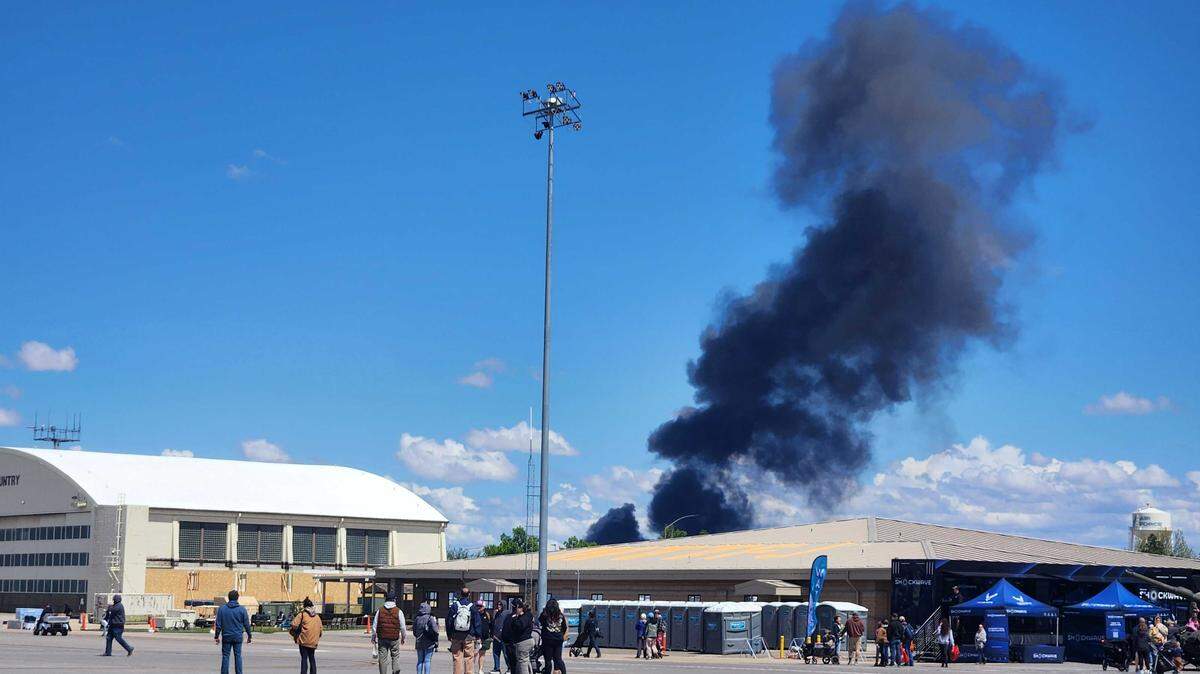
Two EA-18G Growler aircraft collided midair during the Gunfighter Skies air show at Mountain Home Air Force Base, forcing four crew members to eject; officials said all aircrew were in stable condition and injuries were not life-threatening. The crash sparked a brush fire and shut Grand View Highway (Idaho 167) for several days while investigators assess the cause. The event canceled the remainder of the air show, but the market impact is likely limited and localized.
The immediate market read is not on defense primes’ earnings, but on the rising probability of a prolonged safety review that tightens the operating envelope for demonstration teams, training flights, and public-facing aviation events. That creates a subtle but real drag on the broader military aviation ecosystem: fewer demo appearances, delayed schedules, and higher compliance costs for operators, insurers, venue hosts, and local logistics tied to air shows. The first-order financial impact is small, but the second-order effect is a near-term compression in event cadence and ancillary revenue for the travel/leisure stack around regional air shows.
The more interesting angle is legal and municipal liability. Even if the ultimate finding is pilot error or mechanical anomaly, the combination of a public event, roadway closure, medical response, and prior incident history raises the odds of tougher permit requirements, higher event insurance, and more conservative base-level approvals over the next 6-18 months. That tends to hit smaller event organizers and local hospitality demand before it shows up in any large-cap financial line item.
For defense contractors, this is not a procurement thesis either way unless the investigation uncovers a platform-specific fault pattern. If it does, the impact would be asymmetrical: any remediation burden on a niche electronic attack fleet is likely manageable, but headlines around operational reliability can still pressure sentiment and delay non-urgent orders or upgrades for weeks. The bigger risk is reputational, not fundamental, unless regulators expand the scope into fleet-wide inspections.
AI-powered research, real-time alerts, and portfolio analytics for institutional investors.
Overall Sentiment
moderately negative
Sentiment Score
-0.25
