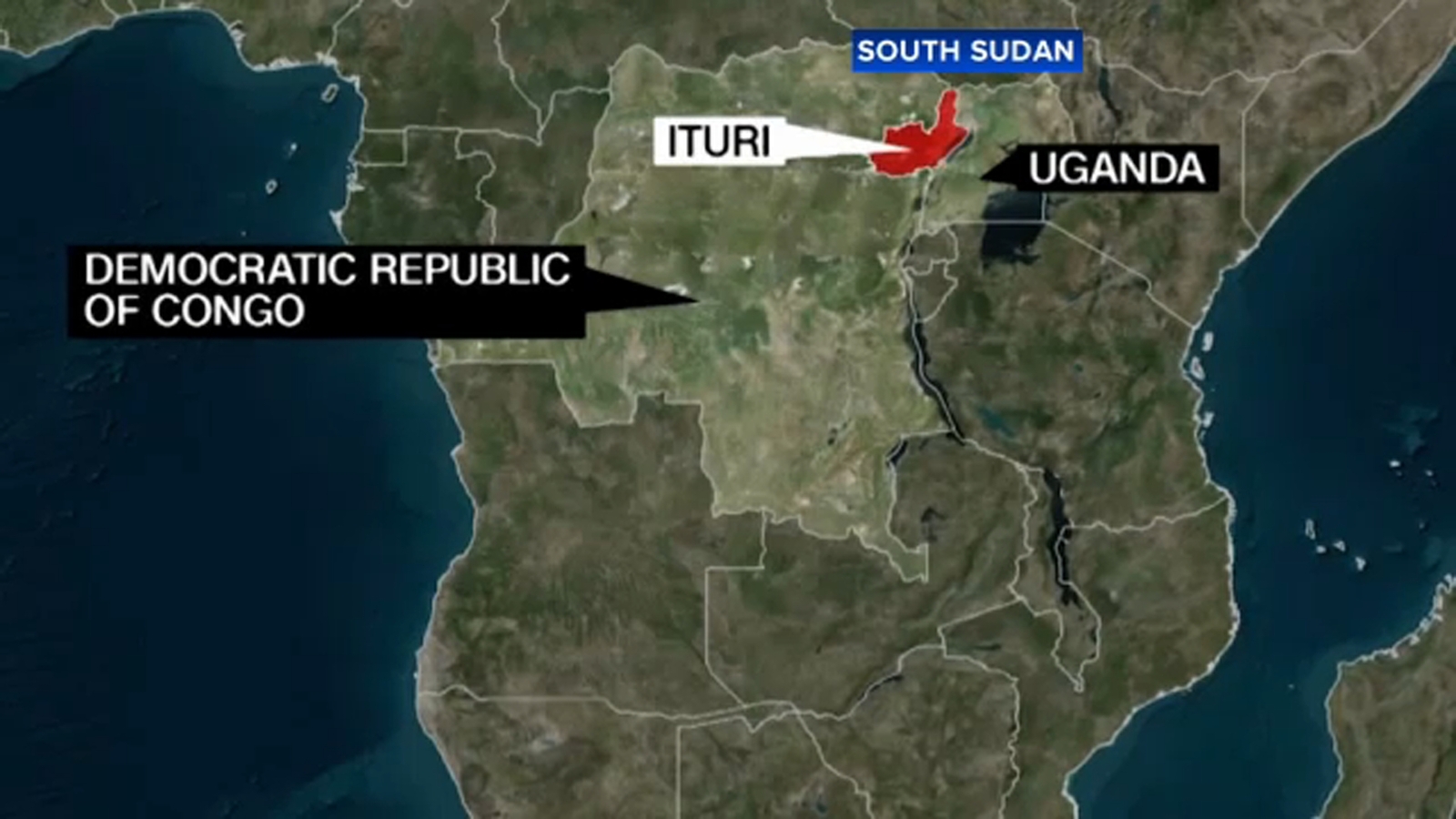
At least 51 Ebola cases have been confirmed in the ongoing outbreak in eastern DRC, with 139 suspected deaths and nearly 600 suspected cases reported as of Wednesday. The U.S. Department of Homeland Security imposed new flight arrival restrictions for passengers recently in the DRC, Uganda, or South Sudan, while the CDC also tightened entry restrictions for non-U.S. passport holders from those countries. The outbreak involves the Bundibugyo strain, for which there are no approved vaccines or therapeutics, increasing public health and travel-related risk.
The near-term market read-through is less about direct economic damage and more about a gradual tightening of operational friction across travel, aid, and border-adjacent commerce. Mandatory rerouting through a single U.S. airport raises processing time, inspection load, and the probability of secondary delays for a narrow but high-sensitivity set of routes; that matters most for charter operators, humanitarian logistics, and corporate travel tied to mining, energy, and NGO activity in East/Central Africa. The bigger second-order effect is that public-health containment is now intersecting with geopolitics: any perception that screening is leaky will force additional restrictions quickly, while overly aggressive controls risk disruption to critical supply chains and diplomatic mobility.
From a healthcare standpoint, this is a diagnosis-and-surveillance event before it is a therapeutics event. The key alpha is not broad vaccine demand, but the value of rapid assays, contact-tracing infrastructure, and outbreak-management services that can be deployed in low-resource settings; companies with field diagnostics, cold-chain, or point-of-care testing capabilities should see procurement pull-forward if case counts keep rising over the next 2-6 weeks. The fact pattern also supports incremental budget urgency for public-health agencies, which tends to benefit contractors and service providers with CDC/WHO-adjacent work rather than large pharma unless the outbreak widens materially.
The contrarian view is that the market may overprice U.S. spillover risk while underpricing the containment probability outside the epicenter. If the outbreak remains concentrated and case discovery improves, risk assets will likely fade the headline within days; the real hazard is a step-up in confirmed urban transmission or healthcare-worker infection, which would extend the risk window into months and force stronger travel/consular restrictions. For now, the setup favors event-driven volatility trades over outright directional panic, because the downside tail is real but still gated by fast surveillance response.
AI-powered research, real-time alerts, and portfolio analytics for institutional investors.
Request DemoOverall Sentiment
strongly negative
Sentiment Score
-0.55
