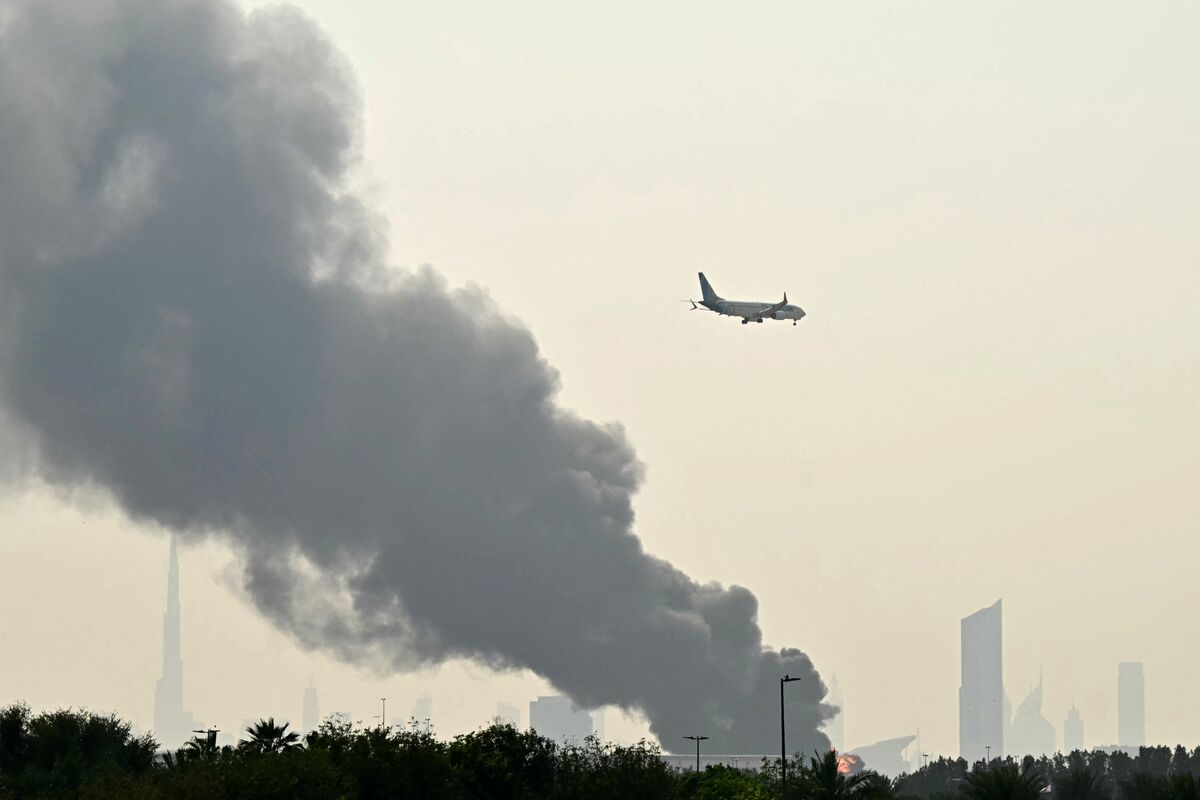
Iran has intensified attacks on Persian Gulf energy infrastructure — including setting a large gas field ablaze — and is restricting oil output to pressure the US, a development that has pushed oil prices higher and risks adding to inflation. President Trump is pressing other countries to force the Strait of Hormuz open to limit energy-price and inflationary impacts; expect elevated oil-price volatility, upside pressure on inflation, and risk-off moves in energy-linked and broader markets.
The market is pricing a Gulf-origin supply-risk premium that is both immediate (shipping disruption and insurance shock) and sticky (re-allocation of global crude flows). Historically, a ~1 mbpd effective transit disruption adds roughly $8–12/bbl to near-term Brent via rerouting and time-charter uplifts; that premium can appear inside days as VLCC/LR2 freight and war-risk insurance spike, then persist for months because spare capacity (US shale) takes 3–6 months to materially respond.
Second-order winners are fee-based midstream and spot tanker owners: charter rates and TCEs re-rate quickly, while integrated majors with downstream exposure absorb margin compression over refiner cracks. Petrochemical feedstock tightness from regionally impaired associated gas will propagate into naphtha and LNG prices, pressuring Asian refiners and chemical margins over the next 1–4 quarters and shifting buying flows to US exports.
Key catalysts that could unwind part of the premium are operational (US/coalition escorts re-opening Hormuz, measured SPR releases) which act on a days-to-weeks horizon, versus structural reversals (sustained OPEC+ supply increases or a rapid US shale restart) that play out over 3–9 months. Tail risks — deliberate strikes on commercial shipping or expanded attacks on energy infrastructure — would extend the risk premium into a 6–12 month regime and materially raise volatility and insurance costs.
Net positioning should therefore be bifurcated: short-duration, convex exposures to freight/insurance and energy-call optionality, plus selective multi-quarter longs in cash-flow-insulated midstream/defense names as insurance against a sustained geopolitical premium.
AI-powered research, real-time alerts, and portfolio analytics for institutional investors.
Overall Sentiment
strongly negative
Sentiment Score
-0.55
