

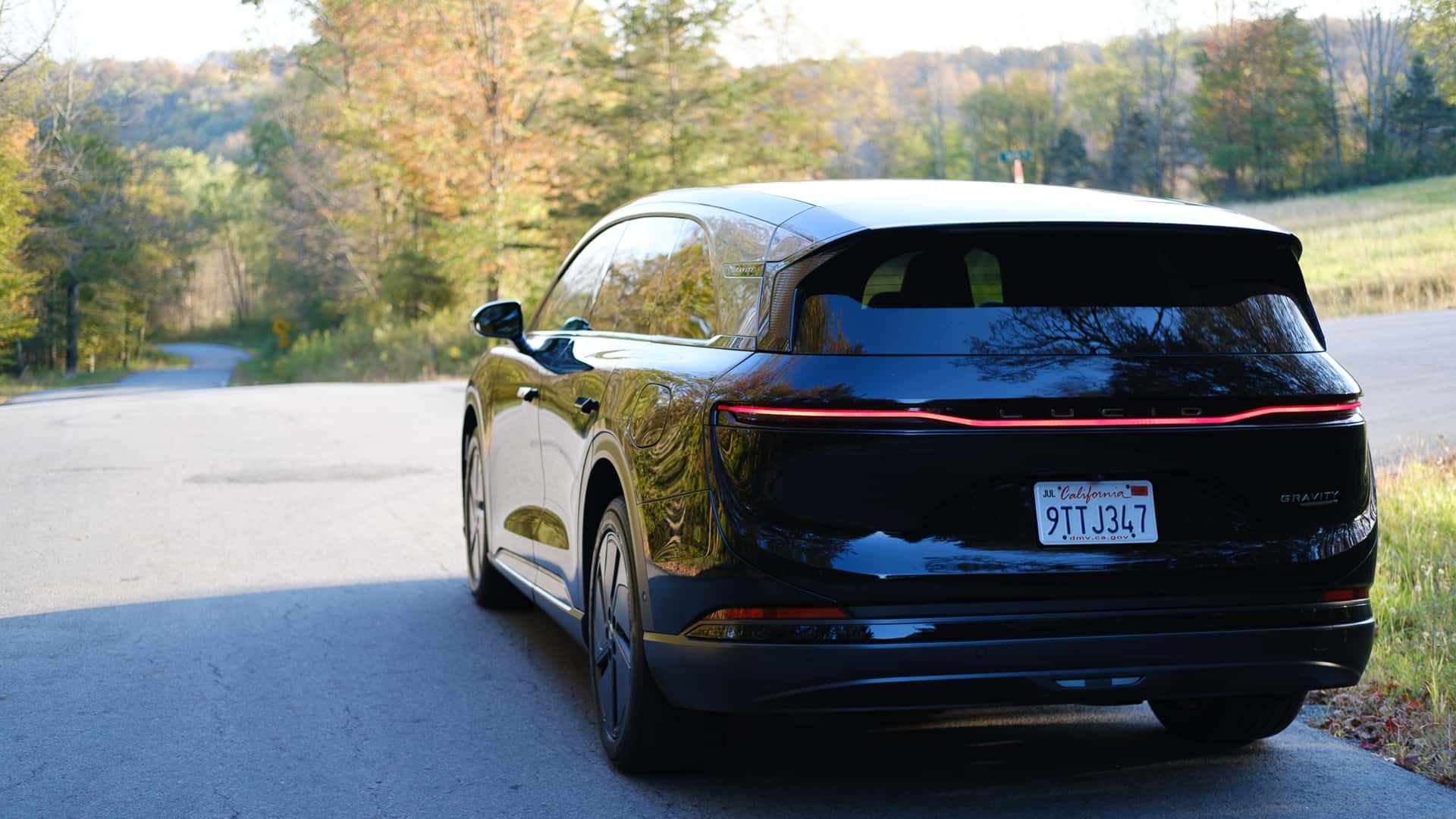
Lucid secured $750 million of incremental funding, with the Saudi Public Investment Fund providing $550 million and Uber adding $200 million to raise its total commitment to $500 million. The company also named Silvio Napoli, former CEO of Schindler Group, as its new CEO, replacing interim CEO Marc Winterhoff, who will return to COO. Uber will now purchase at least 35,000 Gravity SUVs, up from 20,000, supporting Lucid's scale-up and runway extension.
This is less about a headline CEO swap and more about signaling that Lucid is moving from engineering-first to execution-first. That usually matters only if the next 2-4 quarters are judged on manufacturing discipline, unit economics, and cash burn rather than product prestige. The new capital is the real catalyst: it reduces near-term dilution risk and buys time for the lower-priced models to prove whether Lucid can widen TAM without destroying gross margin.
The second-order winner is Uber, not Lucid. A larger Gravity commitment creates a quasi-fleet-demand anchor that can smooth early production ramp and improve supplier confidence, which is often the difference between orderly scale-up and repeated hiccups. It also increases the probability that Lucid’s parts ecosystem gets built around fleet-relevant durability and serviceability, which can improve residual values and lower lifetime cost assumptions—key inputs for any consumer adoption story.
The risk is that funding extends the runway without fixing the fundamental problem: the company still needs a credible bridge from premium halo vehicles to mass-market economics. If the lower-priced launches slip even a quarter or two, the market will quickly reprice this as a capital-structure story rather than a growth story, especially with the stock sensitive to dilution expectations. The new CEO’s outsider profile helps only if he can force hard tradeoffs on product complexity, capex sequencing, and working-capital turns.
Consensus may be underestimating how positive this is for near-term survival but overestimating what it says about long-term competitiveness. The right read is not “Lucid is fixed,” but “Lucid has bought another 12-18 months to prove scale economics.” That makes the equity more interesting as a trading vehicle around execution milestones than as a durable fundamental long.
AI-powered research, real-time alerts, and portfolio analytics for institutional investors.
Request TrialOverall Sentiment
mildly positive
Sentiment Score
0.35
Ticker Sentiment
